
Inside Huawei’s Push For 30,000 AI Experts in Malaysia
A core challenge being increasingly identified that is holding AI’s potential back in business is a lack of trained AI experts.
Taking action on this issue, Huawei Cloud announces plans to develop thirty thousand AI professionals in Malaysia over the next three years while nurturing 200 local AI partners through its Malaysia AI Talent Programme.
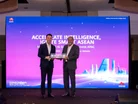
The initiative was announced at the Huawei Cloud AI Ecosystem Summit APAC 2025 in Kuala Lumpur and forms part of Huawei’s broader APAC AI Ecosystem Initiative.
The company describes the programme as designed to build an inclusive AI ecosystem across the Asia-Pacific region.
Chief Executive Officer of Huawei Technologies (Malaysia), Sdn Bhd Simon Sun, outlines the scope of the talent development initiative.
“We have set the goal of nurturing thirty thousand Malaysian AI talents, comprising students, government officials, industry leaders, think tanks, associations and others, under this initiative in the coming three years,” he says.
What’s further unique about the programme is that it also extends beyond individual training to encompass business partnerships and technology transfer.
“We also plan to nurture 200 local AI partners through engagements, knowledge transfers as well as Cloud and AI solution collaborations with top AI companies,” Simon adds.
“Huawei Cloud will also be the bridge to encourage AI investments in Malaysia, spurring homegrown AI innovation and solutions via tie-ups with local players as well as through the inception of new Malaysian AI entities,” he says.
How Malaysia is advancing its national AI technology action plan
Malaysia’s National AI Office is developing its AI Technology Action Plan 2026-2030 as the country establishes AI adoption frameworks across key economic sectors.

The regulatory initiative runs parallel to Huawei’s commercial talent development programme.
Gobind Singh Deo, Minister of Digital Malaysia, attended the summit and outlines the government’s approach to AI development.
“Our National AI Office (NAIO) has been speeding up the completion of the AI Technology Action Plan 2026–2030 and relevant regulatory frameworks to ensure the adoption of AI technology in key sectors in the country are ethical, sustainable and of high value,” he says.
- Huawei Cloud targets 30,000 AI talents in Malaysia push Company unveils plans to nurture 200 AI partners across ASEAN region as part of broader ecosystem initiative at Kuala Lumpur summit Key Facts
- Company operates five regions and 17 availability zones across ASEAN markets
- Pangu Models deployed across 30 industries and 500 scenarios globally
The minister positions Malaysia’s AI strategy within broader national digitalisation efforts, too.
“Central to this ambition is Malaysia’s Digital Economy Blueprint, powered by initiatives like Malaysia Digital (MD),” he explains.
Public-private collaboration additionally forms a central component of Malaysia’s AI development approach.
“These efforts are amplified through strategic collaborations with technology leaders like Huawei,” Deo adds.
We have set the goal of nurturing 30,000 Malaysian AI talents, comprising students, Government officials, industry leaders, think tanks, associations and others, under this initiative in the coming three years.
“Every step we take is action-driven, grounded in strong public-private collaborations, to shape Malaysia’s digital economy.”
Already, Huawei Cloud operates infrastructure across 34 regions globally, with five regions and 17 availability zones within the Association of Southeast Asian Nations (ASEAN).
So far, the company has maintained operations in Southeast Asia for 26 years, establishing cloud services in the region seven years ago.
Aka Dai, Vice President of Huawei Cloud Marketing, delivered a keynote presentation at the summit focusing on ASEAN’s role in global AI innovation.
Emphasising regional positioning within technology development trends, he notes that intelligence is a leading technological trend with cloud computing and AIat the centre of growth.
He also highlights ASEAN’s potential positioning as what he termed an “AI region” capable of capturing technological developments.
“Huawei has invested in ASEAN for 26 years and Huawei Cloud has served the region for seven years,” he adds.
The impact of Huawei Cloud deploying Pangu models across industries
The company further outlines plans for expanded regional investment and technology deployment.
“We will ramp up local investments as well as provide diverse, agile and inclusive cloud and AI technologies to help boost regional economic growth, enhance competitiveness and improve social well-being,” Dai explains.
Huawei Cloud’s infrastructure capabilities also include deployment of more than 160 open-source models to support latency-sensitive applications.
Huawei Cloud’s Pangu models, as foundation models, operate alongside the company’s ModelArts AI toolchain to support businesses developing customised AI applications.

Li Yin, CTO of Huawei Cloud Enterprise Intelligence, addresses the company’s deployment of AI across multiple industries and scenarios globally.
In her session titled Leap to Cloud, Heading to AI, she describes how organisations can utilise their data to customise models using the Pangu foundational large model and the ModelArts AI toolchain.
ModelArts functions as an integrated development environment for machine learning that enables data scientists and developers to build, train and deploy AI models at scale.
Li says: “Use their own data assets to rapidly develop customised AI models for high-quality incremental training, fine-tuning and reinforcement learning.”
The applications span multiple economic sectors including smart cities, mining, railways, healthcare and manufacturing.
The summit featured speakers from Malaysia’s National AI Office, iFLYTEK – a Chinese AIcompany specialising in speech recognition technology – Zetrix, TrustDecision Malaysia and Multimedia University Malaysia.