How AI Helps NASA Seek Life on Mars, Titan and Beyond
As NASA continues on its quest to address life's big questions – Where did we come from? Where are we going? And are we alone? – it seems AI could help find some of the answers.
In her doctoral thesis, Life and AI at NASA: An Ethnography of How Scientists and Engineers Make Tools to Explore Other Worlds, Alicja Ostrowska, a doctoral candidate at Chalmers University of Technology, dives deep into the use of AI in astrobiology.
The study is based on fieldwork with scientists and engineers at NASA Goddard Space Flight Center, who are developing the rovers, robots and rockets designed to help humans look for biosignatures, or signs of life, in distant planets and moons.
Robot missions and spectrometry
As of 2026, NASA’s Curiosity and Perseverance rovers actively roam the red planet, collecting samples and broadcasting vast amounts of data back to Earth.
They are missions in astrobiology, investigating signs of ancient life – which may have existed back when Mars was wetter and warmer.
Both rovers carry powerful mass spectrometers inside their “bellies”, which are used to identify molecules in a sample by creating a spectral image, which they send back to Earth to be analysed by the expert eyes of scientists.
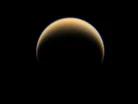
Another distant heavenly body of particular interest to scientists is Titan, Saturn’s largest moon – “the only place beyond Earth with bodies of liquids on its surface”.
The only problem is that Titan and its secrets are 1.5 billion kilometres away.
Given this distance, it would take 70-90 minutes for any data from Titan to be transmitted back to Earth.
Even then, scientists expect some data to be lost on the way, as Alicja explains: "Throughout the interstellar journey at the speed of light, the signal becomes weaker and weaker, the farther away the planet is”.
With its ambitious “Dragonfly” mission to explore the surface of Titan set to launch in July 2028, with an expected arrival in 2034, NASA has turned to AI to solve the data-distance problem.
AI for science autonomy
For a group of scientists and programmers at the NASA Goddard Space Flight Center, the solution to the challenge of data transfer is what is called “science autonomy”.
In her thesis, Alicja describes science autonomy as the principle where “scientific instruments should operate, analyse, tune and direct themselves autonomously”.
She writes: “The plan is to train algorithms – AI, machine learning, deep learning, etc – to prioritise which data is valuable in searching for signs of life and habitability on other planets and moons.
“In future missions, algorithms might make decisions about what is worth knowing about the universe.”

National institute of standards and technology (NIST) maintains authoritative mass spectrometry reference databases and NASA provides large, publicly accessible datasets from missions such as Hubble, James Webb, Kepler, TESS, Spitzer, WISE and Chandra, archived through official repositories including MAST, IRSA, HEASARC and the Planetary Data System, all of which are widely used in machine-learning applications.
Non-crewed robotic missions such as the European Space Agency's ExoMars Rosalind Franklin rover to Mars and NASA’s Dragonfly to Titan are equipped with onboard spectrometry instruments to analyse samples, with ExoMars sending data back to Earth for ML-assisted analysis, while Dragonfly will use AI to autonomously prioritise and process data on Titan.
“The AI being developed at Goddard will make decisions about which mass spectra are the most interesting to send to Earth,” Alicja notes.
“Ultimately, when NASA scientists on Earth receive the data analysed by AI, they will see it on a computer screen with a display of the top categories, suggesting which are the most likely to fit the sample”.
On its scale of 1 to 9 technology readiness level (TRL), “where 1 refers to the initial research stage and 9 to a tool that has been successfully operated in a mission to space – 'flight proven,'” NASA currently ranks the AI development at TRL 3.
Concerns of using AI for astrobiology
The major problem in using AI for these sophisticated projects is that “AI is only as good as the data it learns from”.
Since we do not have any data from Titan, scientists and programmers will be training these algorithms on data from what are called “planet analogs” – different places on Earth which are used as field sites.
Alicja notes that this data comes from places “that are accessible, popular or prestigious to study. This is one example of how the data that AI is trained on, are biased towards phenomena that are charismatic or relevant for industrial purposes, rather than planetary science.”
Even if this favouritism is ignored, the data we have is “biased heavily toward Earth life”.
As certain elements found on other planets could interfere with the instruments used for the experiments, there is a possibility for results to be skewed.
Database limitations, quality variations in the data at NIST and the presence of unknown compounds are all further problems that need to be addressed.
As a science in its infancy, taking the current mechanisms of discovery into account, some scientists say that “astrobiology as a whole is one single, great analogy".