AI for Science: How to Shorten R&D From Years to Days
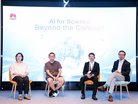
During the World Artificial Intelligence Conference (WAIC 2026) in Shanghai, Huawei convened researchers from the Beijing Academy of Artificial Intelligence (BAAI), the Chinese Academy of Sciences (CAS), the Shenzhen Loop Area Institute (SLAI) and Tsinghua University for a media roundtable titled ‘AI for Science: Beyond the Concept’.
Rather than debate theory, the four institutions presented results across neuroscience, interdisciplinary research platforms, intelligent instrumentation and life sciences.
One key takeaway underpinned all these presentations: research and development cycles that once ran for years can now be measured in days, when scientists wield AI as an augmentation tool within their work.

The context is a familiar one across the technology sector. Global R&D investment continues to rise, yet scientific discovery has not kept pace.
Experimental cycles remain long, interdisciplinary collaboration faces persistent barriers, and research workflows stay fragmented across instruments, disciplines and institutions.
The question raised repeatedly at the roundtable was how to free scientists from repetitive tasks and embed AI across the full arc from hypothesis to validation, rather than confining it to a single stage of the process.
From tool to research infrastructure
Yu Li, Director of the State Key Laboratory of Membrane Biology and Professor at the School of Life Sciences, Tsinghua University, set out the wider shift underway.
Yu argued that AI is moving from a supporting tool towards a core part of research infrastructure, with the aim not of replacing scientists but of freeing them from repetitive work so they can concentrate on scientific insight and creative thinking.
Describing the daily reality behind that ambition, Yu said: "Now, every time I see my postdoc using a pipette, repeating it hundreds or thousands of times, I think it's a waste. With humans, errors are added and efficiency is lowered. When you remove the human from it, everything accelerates and costs drop."
Instruments that run themselves
At SLAI, work with Suzhou National Laboratory has produced Owl·AuraID, a multi-agent system that automates the experimental workflow from sample preparation to data analysis.
Rather than relying on instrument APIs, its agents operate equipment the way a human researcher would – observing screens, clicking buttons and reading data – which lets the system bridge software agents, embodied scientific agents and instruments that were never designed to talk to each other.
It now covers six types of precision instruments, has cut the workload of crystal structure analysis by 50.6%, reduced morphological analysis time from nine minutes to 7.5 minutes and lifted AI autonomous completion rates from 33% to 80%. Some of the underlying hardware runs on chips developed by Huawei, and SLAI's engineers have worked with Huawei's team to adapt a range of mainstream AI models to run on the platform.
Ouyang Wanli, Vice Dean of SLAI, points to the coordination problem this solves.
Scientific characterisation demands substantial expertise and coordination across instruments, Ouyang notes, and "AI enables devices to interconnect, collaborate and optimise, freeing scientists from operations and redirecting their focus toward scientific insight".
Aligning the brain's many signals
BAAI's contribution addresses a different bottleneck: the absence of a common language for neuroscience data.
Its Wujie·Brainμ1.0 is described as the world's first multimodal neuroscience foundation model – unifying EEG, calcium imaging and neural probe signals within a single encoding framework so that previously incompatible recordings can be read together.
A study the model supported appeared in Science in June 2026, showing for the first time that memory reactivation regulates sleep in both directions – positive memories improve sleep quality, negative ones deepen fragmentation – with implications for treating sleep disorders linked to depression and anxiety.
Trained on more than 70,000 nights of sleep data, the model has run more than 12 months of automated analysis across partner laboratories. The underlying data platform, Brain Token, pools open-source recordings from more than 20 sources alongside contributions from collaborating institutes and hospitals, and currently spans three species – humans, monkeys and mice – across the field's main recording modalities.
Lei Bo, Researcher at BAAI, described the field's early-stage development, noting that data standardisation in neuroscience remains limited and its AI capabilities are still evolving.
Even so, Lei says feedback from scientists using the model has been encouraging: "This trajectory is healthier and more promising than earlier LLM development, because demand is leading capability, and real-world application is driving model iteration."
One system, many disciplines
CAS presented ScienceOne Omni, a model spanning mathematics, physics, materials science, astronomy and other fields.
Built on a three-layer architecture of unified scientific data encoding, real-world knowledge alignment and domain-specific task decoding, it draws on 170 million scientific publications and more than 8,000 specialised research tools and skill libraries, allowing a single model to handle cross-disciplinary data understanding, scientific reasoning and content generation rather than forcing a choice between narrow specialist models and shallow generalist ones.
Within CAS, it has compressed literature review from weeks to 20 minutes, lifted report generation efficiency by five to 10 times and been deployed across more than 100 research scenarios.
Tested across more than 60 scientific benchmarks, the model outperformed general-purpose systems including Gemini and GPT on tasks such as chemical property prediction and protein binding site prediction, as well as existing specialist domain models.
Applied to catalyst discovery with the Shanghai Institute of Ceramics, CAS, it cut design time from several months to 30 minutes and identified a candidate with 38% higher activity than existing options.
Xu Nan, Researcher at the Institute of Automation, CAS, frames the model as a departure from routine upgrades. ScienceOne Omni rethinks the nature of scientific foundation models, Xu says, describing its purpose as "enabling models to reason like scientists".
From point instruments to end-to-end automation, from single-discipline modeling to cross-disciplinary collaboration, from neuroscience to the life sciences — AI for Science is reshaping every stage of discovery at a tangible pace. When hypothesis generation, experimental validation, data analysis, and instrument operation can all be accelerated by AI, the boundaries of scientific discovery are being redrawn.