Huawei AI Model Set to Reshape Chinese Steel Manufacturing
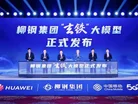
The Xuantie Model represents a significant advancement in domain-specific AI, marking the first large language model specifically engineered for the steel manufacturing sector in Guangxi, China.
Developed through collaboration between Guangxi Liuzhou Iron and Steel Group (Liuzhou Steel Group), Huawei and China Mobile Guangxi Branch, the model demonstrates how general-purpose AI architectures can be fine-tuned for specialised industrial applications.
The technical infrastructure supporting this deployment includes novel AI applications and a dedicated research facility focused on advancing machine learning capabilities within heavy manufacturing environments.
Domain-specific large models like Xuantie address a critical challenge in industrial AI: adapting general-purpose architectures to understand the unique constraints, processes and terminology of specific sectors.
The steel industry presents particular technical challenges due to its complex, multi-stage production processes and the need for real-time decision-making under high-temperature, high-pressure conditions.
Pre-training architecture and model foundations
The Xuantie Steel Model's architecture builds upon Huawei's Pangu foundation models through transfer learning and domain-specific pre-training.
According to Li Bin, Chairman of Liuzhou Steel Group, the model implements a 20+N scenario-based model system that encompasses six critical production domains: pre-smelting, steelmaking, steel rolling, logistics, environmental protection and safety.
This modular architecture allows individual sub-models to be optimised for specific tasks while maintaining coherent integration across the production pipeline.
The technical framework centres on three core computational paradigms: human-AI interaction systems, data processing and analysis capabilities, and manufacturing process optimisation.
This tripartite structure reflects current best practices in industrial AI deployment, where models must simultaneously interface with human operators, process vast quantities of sensor data and make autonomous decisions within tightly constrained operational parameters.
Jiang Wangcheng, Huawei's Corporate Vice President and CEO of the Oil, Gas & Mining BU, explained during the recent launch that the development leveraged Huawei's capabilities in AI, high-performance computing and network connectivity to create a proprietary technological foundation.
The integration of these components could enable end-to-end intelligent manufacturing, with large models deployed throughout the production chain rather than isolated to specific processes.
Neural networks in production environments
The practical implementation of AI models within Liuzhou Steel Group's operations reveals sophisticated applications of machine learning across multiple production stages.
According to Shen Min, Vice President of Liuzhou Steel Group, 33 distinct AI models have been deployed in steelmaking processes alone.
A 5G-enabled intelligent molten iron transportation system demonstrates end-to-end autonomous operation, while an intelligent scheduling model employs reinforcement learning to optimise inter-process coordination, reportedly improving productivity by 8.5%.
Neural networks applied to basic oxygen furnaces and ladle argon blowing processes have achieved measurable improvements in product quality while reducing raw material consumption.
These models likely employ predictive algorithms that analyse real-time sensor data to optimise chemical compositions and thermal profiles, reducing crude steel production costs by approximately CNY5 (US$0.73) per metric ton.
The intelligent refining solution represents a hybrid architecture combining mechanistic models – physics-based simulations of metallurgical processes – with AI prediction algorithms and parameter optimisation. This approach could address a common limitation of pure machine learning systems: the need for explainability and physical consistency in safety-critical industrial environments. The system has reportedly reduced comprehensive steel costs by CNY2 (US$0.29) per metric ton.
Algorithmic optimisation and future developments
Machine learning algorithms have been applied to plate and plywood assembly optimisation, where production planning models have increased yield from 1% to 2%.
Contract matching automation, achieving more than 90% accuracy, likely employs natural language processing and constraint satisfaction algorithms to align production capabilities with order specifications.
Shi Mao, CEO of Huawei's Steel & Non-ferrous BU, outlines a vision for intelligent manufacturing centred on three technical pillars: human-machine trust, multi-machine collaboration and autonomous synergy.
These concepts suggest advanced architectures where multiple AI agents coordinate across production systems with minimal human intervention while maintaining transparency and reliability.
The Liuzhou Steel AI Research and Innovation Center could serve as a platform for continued model development and ecosystem collaboration.
Plans include developing more than 10 high-level industrial agents for production lines and business domains, alongside more than 30 curated industrial datasets.
These datasets could prove particularly valuable, as high-quality, domain-specific training data remains a critical bottleneck in industrial AI development.
The Xuantie Model demonstrates how foundation models can be adapted to highly-specialised domains through careful pre-training, modular architecture design and integration with existing industrial control systems.
As the technology matures, such domain-specific large models could become increasingly prevalent across manufacturing sectors.