Natural language processing has rapidly evolved from a specialist capability into a core pillar of modern enterprise AI.
From conversational agents to document analysis and generative content, organisations are increasingly relying on advanced NLP platforms to unlock value from unstructured data.
This week's Top 10 from AI Magazine highlights the leading providers shaping the space, each offering distinct approaches to scalability, performance and real-world deployment across a wide range of industries.
10. Hugging Face
Year Founded: 2016
Employees: ~500+
CEO: Clément Delangue
Hugging Face plays a central role in the open-source NLP ecosystem by providing a large repository of pre-trained models and accessible tools for developers and researchers.
Its Transformers library simplifies working with state-of-the-art architectures while the model hub encourages sharing and reuse across the community.
The platform supports experimentation, fine-tuning and deployment with relatively low barriers, helping standardise NLP workflows. Its collaborative model and strong ecosystem make it a go-to resource for both prototyping and production use cases in modern language AI.
9. Kore.ai
Year Founded: 2013
Employees: 1,000+
CEO: Raj Koneru

Kore.ai specialises in enterprise conversational AI, offering a platform for building chatbots and virtual assistants that support customer service and internal workflows. Its NLP capabilities are tightly integrated with process automation, allowing organisations to design end-to-end conversational experiences rather than isolated interactions.
The platform supports multilingual deployments and connects with enterprise systems such as CRM and ERP tools. With a focus on no-code and low-code development,
Kore.ai enables faster deployment while still allowing customisation for complex enterprise requirements, making it suitable for large-scale operational environments.
8. Cohere
Year Founded: 2019
Employees: 800+
CEO: Aidan Gomez
Cohere provides large language models through an API designed for enterprise NLP applications. Its platform emphasises embeddings, retrieval augmented generation and fine-tuning, enabling businesses to tailor models to domain-specific tasks.
Developers can integrate advanced language capabilities without managing underlying infrastructure, which simplifies adoption.
Cohere also places strong emphasis on data privacy and flexible deployment, including private cloud and on-premise options. This focus makes it appealing to organisations operating in regulated industries that require control over data handling and model usage while still leveraging modern NLP capabilities.
7. Databricks
Year Founded: 2013
Employees: 12,000+
CEO: Ali Ghodsi

Databricks integrates NLP into its Lakehouse AI platform, combining data engineering, analytics and machine learning within a unified environment.
This approach allows organisations to process large datasets while training and deploying NLP models alongside structured data pipelines. It supports open-source frameworks and provides tooling for working with large language models, including fine-tuning and orchestration.
Databricks is particularly strong in scenarios that require scalable data processing and governance, making it a preferred choice for enterprises building AI systems that rely heavily on high-volume, high-quality data foundations.
6. Anthropic
Year Founded: 2021
Employees: ~2,500
CEO: Dario Amodei
Anthropic develops large language models with a strong emphasis on safety, reliability and alignment. Its Claude models are designed to perform well on reasoning, summarisation and conversational tasks while maintaining controlled outputs.
Through its API, developers can build NLP applications that require nuanced language understanding and consistent behaviour.
Anthropic differentiates itself by focusing on interpretability and responsible deployment practices, which appeals to organisations concerned with AI governance. Its positioning in the frontier model space makes it a key competitor in the evolving landscape of generative NLP platforms.
5. Amazon Web Services
Year Founded: 2002
Employees: ~143,000+
CEO: Matt Garman

Amazon Web Services offers NLP functionality through services such as Amazon Comprehend and Amazon Bedrock.
Comprehend provides pre-trained capabilities including sentiment analysis, entity recognition and key phrase extraction, while Bedrock gives access to foundation models for generative applications.
AWS is widely adopted for its scalability, reliability and integration with other cloud services, allowing organisations to deploy NLP solutions at production scale. Its ecosystem supports a wide range of use cases from document processing to conversational AI, making it a flexible choice for enterprises building AI-driven applications across different industries.
4. IBM
Year Founded: 1911
Employees: ~300,000
CEO: Arvind Krishna
IBM’s Watson NLP platform provides enterprise-focused natural language processing tools designed for tasks such as document analysis, knowledge extraction and customer interaction automation.
Built with a strong emphasis on hybrid cloud environments, it integrates with IBM Cloud and supports custom model development.
IBM has long been a leader in AI research and continues to prioritise explainability, governance and compliance in its offerings. Watson NLP is particularly suited to industries that require structured, auditable AI systems, such as finance, healthcare and government, where transparency and control are critical considerations.
3. Microsoft Azure AI Language
Year Founded: 1975
Employees: ~228,000
CEO: Satya Nadella
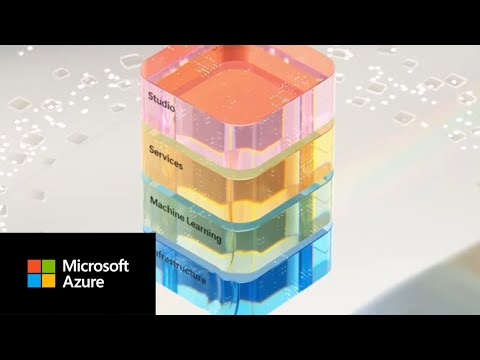
Microsoft’s Azure AI Language platform delivers a broad set of NLP services including text analytics, language understanding and custom classification. It integrates seamlessly with Azure’s wider cloud ecosystem, enabling organisations to build scalable and secure AI applications.
Microsoft has also embedded large language model capabilities into its offerings through partnerships and internal development, enhancing both conversational and generative use cases.
The platform is widely adopted in enterprise environments due to its reliability, compliance features and strong integration with existing Microsoft products, making it a practical choice for organisations already invested in the Microsoft ecosystem.
2. Google Cloud
Year Founded: 2008
Employees: ~200,000 (Google)
CEO: Thomas Kurian
Google Cloud offers a comprehensive suite of NLP capabilities through its Natural Language API and Vertex AI platform. These tools provide functions such as entity recognition, sentiment analysis and syntax parsing alongside access to advanced generative models.
Backed by Google’s extensive research in machine learning and large-scale language modelling, the platform benefits from strong performance and continuous innovation. It is particularly effective when combined with Google Cloud’s data analytics and storage services, enabling end-to-end AI pipelines.
Organisations choose Google Cloud for its scalability, integration capabilities and ability to handle complex, data-intensive NLP workloads in production environments.
1. OpenAI
Year Founded: 2015
Employees: 4,500
CEO: Sam Altman

OpenAI stands at the forefront of NLP innovation with its GPT series and ChatGPT API, which underpin a wide range of modern language applications. Its models are widely recognised for their ability to generate coherent text, follow instructions and adapt to diverse tasks including summarisation, translation, coding assistance and conversational agents.
The platform is designed for ease of integration, allowing developers to access advanced capabilities through straightforward APIs without managing underlying infrastructure. Continuous improvements in model performance and alignment have contributed to broad adoption across industries.
OpenAI’s ecosystem has become a foundational layer for generative AI, influencing how organisations build and deploy NLP-driven products at scale.
Company portals








Executives
Ali Ghodsi
CEO and Co-founder

Arvind Krishna
CEO

Clement Delangue
Co-founder & CEO

Dario Amodei
CEO and Co-Founder
Matt Garman
Chief Executive Officer

Sam Altman
Satya Nadella
Chairman and CEO

Thomas Kurian
CEO