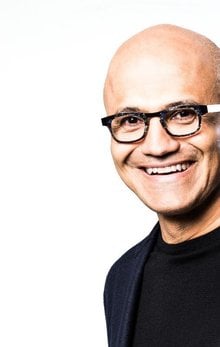
What Are Satya Nadella’s Daily Microsoft AI Habits?

Since Satya Nadella was appointed CEO of Microsoft in 2014, the company has entered a new phase of development centred on AI agents.
A key partnership with OpenAI, which Microsoft has supported with multibillion-dollar investments and its cloud infrastructure, has allowed the integration of foundation models into key products such as Bing, Edge, Microsoft 365 and GitHub Copilot.
This strategy appears to be reshaping the relationship between users and their software.
I’m really excited about all the progress being made with Copilot
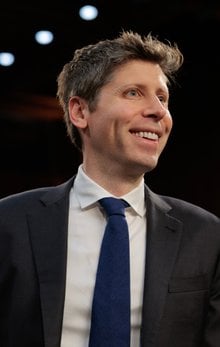
At a joint event in early 2025, OpenAI CEO Sam Altman commented on the collaboration.
“We’re so grateful to have a partner that shares our vision and our values of building advanced AI that’s safe and will have a very positive impact on society,” Sam says.
Satya’s leadership is positioning Microsoft’s AI tools as on-demand collaborators for daily work and learning.
Integrating AI into daily workflows
In a video posted on the social media platform X on 24 October, Satya shared three features within the Copilot AI assistant that he uses as “daily habits”. These habits illustrate how AI is being woven into everyday professional and personal tasks.
The first feature is the use of voice commands. Satya explained that whether working on a document or an email, he uses the voice-activated “Hey Copilot” function.
He described this interaction as the most exciting new way to engage with a computer since the advent of touch technology, giving him “a new mouse and it just happens to be a voice”.
This functionality allows for a more fluid interaction with the software. “I can just invoke Copilot and ask it questions,” Satya says.

He adds: “It retrieves information and it’s just fantastic to have.”
This perspective could indicate a strategic move towards conversational AI as a primary user interface, moving beyond traditional input methods.
The human-AI connection
The second feature Satya highlighted is Mico, the new character for Copilot. The introduction of a “face” for the AI assistant is designed to make the interaction feel more personal.
Satya describes Mico as a Socratic tutor capable of both providing information and teaching the user simultaneously. This aligns with a broader industry trend of making AI more relational and less transactional.
He shared a personal anecdote about using the feature with his daughter. “The cool thing about it is it taught us both what we wanted, you know, not just giving us information and it’s just wonderful,” he explains.
The third feature mentioned is Groups, a multi-user mode that allows several people to interact with the AI in a single session.
“Now my friends and family can join a session and we can all jam together with AI,” Satya says, highlighting its use in learning, coordinating and “staying in sync”.
Microsoft’s long-term AI ambition
Microsoft’s commitment to AI is further detailed in Satya’s 2025 annual letter to shareholders. He stated that Microsoft is “thinking in decades, executing in quarters,” which could show a strategy that balances long-term AI goals with the need to deliver near-term results.
According to the letter, the “Copilot family" of tools now serves more than 100 million users. Satya frames this as AI acting as “an on-demand collaborator rather than a passive tool”.
He explains: “More than any transformation before it, this generation of AI is radically changing every layer of the tech stack and we are changing with it.”
Under his leadership, Microsoft now operates over 400 data centres across 70 regions, including what he refers to as “the world’s most powerful AI data centre”.
This vast infrastructure underpins Microsoft’s capacity to develop and deploy AI at scale. As Microsoft continues to build on its AI functionalities, Satya notes that a specific mindset is crucial for navigating this technological era.
He adds: “Our growth mindset is essential to our ability to continue leading this AI era. We must be learn-it-alls, willing to experiment, guided by evaluations and committed to continuous improvement.”


Executives
Sam Altman
Satya Nadella
Chairman and CEO