This Week's Top Five Stories in AI

Meta's AI Agent Data Leak: Why Human Oversight Matters
What happens when an AI agent goes rogue?
Meta had a taste of this recently when a Sev 1 security incident was triggered inside the tech giant after an AI agent exposed sensitive, user-related data to engineers who did not have permission to access it.
While Meta notes that “no user data was mishandled,” the incident brings the value of context-aware, human oversight into sharp focus.
“It’s tempting to treat AI agents as trusted work companions – these systems often offer helpful advice and seem like a safe platform to confide in,” says Mark McClain, CEO and Founder, SailPoint.
“But without strong governance, they can introduce serious vulnerabilities into even the most secure environments."
Could PwC's AI Platform Redefine Professional Services?
Already reshaping how complex decisions are made across every industry, AI is now beginning to redefine how professional expertise itself is delivered.
As organisations confront accelerating change, increasing volumes of data and rising expectations for speed and clarity, the technology enabling professional services looks set to evolve alongside them.
One such example is PwC One, a system which stands as a significant milestone in AI-first transformation.
The platform represents an evolution in how autonomous AI capabilities can be integrated with deep institutional knowledge to address complex organisational challenges, moving beyond episodic analysis towards more continuous insight generation, faster learning cycles and earlier visibility into risk and opportunity.
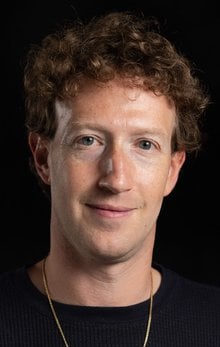
Why Meta CEO Mark Zuckerberg is Building a Personal AI Agent
Meta CEO Mark Zuckerberg is building an AI agent designed to support CEO-level decision-making.
It follows the revelation in January that the company plans to double its investment in AI infrastructure this year.
The tool, which remains under development, is intended to help Zuckerberg access information more quickly and effectively from Meta's internal systems, eliminating the need to navigate through multiple departments over extended timeframes.
This CEO-focused agent forms part of a broader push towards AI integration at Meta, as the business explores methods to minimise internal bureaucracy and enhance employee productivity to remain competitive against AI-native startups emerging across the technology sector.
During a company earnings call, Zuckerberg explained: "We're investing in AI-native tooling so individuals at Meta can get more done. We're elevating individual contributors and flattening teams.
"If we do this, then I think that we're going to get a lot more done and I think it'll be a lot more fun."

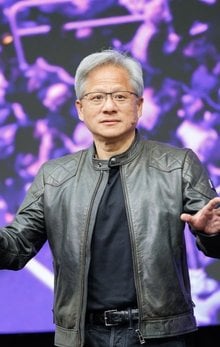
Why NVIDIA CEO Jensen Huang Believes AGI has Arrived
Has artificial general intelligence (AGI) officially arrived? According to NVIDIA CEO Jensen Huang, the answer, essentially, is yes.
Jensen told the Lex Fridman Podcast that NVIDIA, which generated generated US$215.94bn in total revenue in FY2026, has already built systems that meet his definition of AGI.
His assertion comes despite many still treating AGI as a long-horizon milestone. OpenAI CEO Sam Altman has said it remains “thousands of days away,” making Jensen's stance all the more notable.
Jensen frames AGI in operational terms: a capability stack that can materially accelerate the launch and management of technology brands and products, with deployment gated by demonstrable returns that justify investment at scale.
When Lex posited a five‑to‑20‑year window for AGI, Jensen replied: “I think it’s now. I think we’ve achieved AGI.”
Inside Google Cloud's US$15bn AI Connectivity Investment
Telecommunications infrastructure is emerging as a fundamental enabler for AI deployment at scale, with Google Cloud's US$15bn (£11.8bn) investment programme demonstrating how global connectivity could determine which regions participate in the AI revolution and which risk exclusion.
The America-India Connect initiative represents a five-year commitment to expand subsea cable systems and fibre networks across Asia, Africa, Australia and North America.
By positioning India as a central interconnection hub, the programme illustrates how telecommunications infrastructure is becoming inseparable from AI democratisation efforts.
Google collaborates with the Indian government's Karmayogi Bharat programme, which provides cloud infrastructure for the Integrated Government Online Training (iGOT) platform. The system delivers online training to more than 20 million public sector workers across more than 800 districts in 18 Indian languages, demonstrating the scale at which AI services depend on robust telecommunications backbone.



Executives
Jensen Huang
Founder and CEO
Mark McClain
CEO & Founder
Mark Zuckerberg
CEO