This Week’s Top 5 Stories in AI

WeatherNext 2: The Impact of Google’s AI Forecasting Model
Weather forecasting has become a proving ground for AI – with machine learning (ML) models increasingly challenging traditional physics-based approaches that have dominated meteorology for decades.
The stakes are high, affecting everything from international logistics to personal travel plans.
In response, Google DeepMind and Google Research have now launched WeatherNext 2, a model that processes predictions eight times faster than its predecessor while offering resolution down to one-hour intervals.
The WeatherNext team explains that “the weather affects important decisions we make everyday – from global supply chains and flight paths to your daily commute”.
“Hundreds of millions of people turn to Google Search every week for the weather,” says Nick Fox, Senior Vice President (SVP) of Knowledge and Information at Google.
“We just launched our powerful WeatherNext AI Models in Google Search to help upgrade weather forecasts. This is our most advanced weather forecasting tech in Search to date.”

“Our WeatherNext AI Models lead to big improvements in Search, like (1) more accurate weather forecasts further out – with significant improvements in the 2-10 day out range (2) a massive (!!) improvement in weather forecast granularity (in other words, highly-localised forecasts!).”
Has the US Economy Become Dependent on AI Investment?
AI has grown from a useful tool, to something driving economic growth.
Investment in data centres and computing infrastructure now represent a huge portion of GDP in developed economies.
In the US, this dependence has reached a point where economists are questioning what happens if the boom ends.
Recent volatility in AI stocks has exposed how tied the US economy has become to AI-related investment and wealth creation.
The numbers show that business investment in AI may have accounted for half of the growth in gross domestic product, adjusted for inflation, during the first six months of this year.
“It’s certainly plausible that the economy would already be in a recession” without the AI boom, says Peter Berezin, Chief Global Strategist at BCA Research, an investment research firm, according to The Wall Street Journal.
Strip away AI spending and the picture looks worrying.
How Anthropic’s Claude Opus 4.5 Beats The Best Human Coders
There’s a tech storm ahead.
At the centre of it, is Anthropic’s latest intelligent AI model: Claude Opus 4.5.
Faster, token-efficient and capable of handling a plethora of every day tasks and tools, Claude Opus 4.5, the company says is currently the best model in the world for coding, agents and computer use.
In a notoriously difficult engineering test Anthropic gave to prospective engineering candidates, Opus 4.5 did not just win the trophy, but stole the whole show scoring better than any human candidate ever.
Opus 4.5 has a diverse resume that doesn’t just cover impressive software engineering, but has a knack for mathematical reasoning and creative problem solving as well.
The model is also very good at managing a team of sub-agents, thereby enabling complex and effective coordination between multi-agent systems.
When solving, exhaustive, long-running tasks, this multi-agentic approach can help achieve user objectives quicker, with improved token-efficiency and higher precision.
Opus 4.5 has the ability to find clever paths around problems as demonstrated by a test scenario where it was asked to help a distressed customer while working as an airline service agent.
How Industrial AI Drives Measurable Sustainability Gains
AI and sustainability have become two of the biggest drivers, challenges and requirements across most industries worldwide.
Now, as the demands and urgency rise for both, innovators are finding ways to make them not only closer in reach, but to accelerate each other.
With 74% of organisations aiming to achieve net zero by 2040, AI is now essential infrastructure for addressing decarbonisation challenges at the required speed and scale.
- Decarbonisation and energy efficiency
- Resource efficiency and circularity
- People centricity and society
Addressing this challenge and opportunity, Siemens has published a report: From Pilots to Performance, How Industrial AI is Helping to Scale Sustainability Impact in cooperation with Reuters Events.
The study spans 263 senior sustainability professionals, carried out in the third quarter of 2025 – and AI Magazine looks at the main takeaways.
The report finds that nearly two-thirds of organisations have moved beyond pilot projects in their industrial AI implementations focused on sustainability.
Why Nvidia CEO Wants ‘Every Task’ to be Automated With AI
It’s no secret that technology companies are pushing employees to integrate AI into their workflows as the industry races to demonstrate practical returns on massive infrastructure investments.
“If AI does not work for a specific task, use it until it does.”
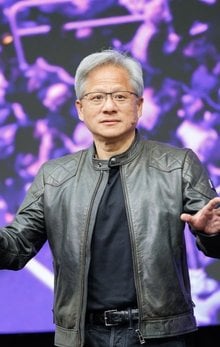
Nvidia is now taking one of the biggest stances on internal AI adoption, as CEO Jensen Huang instructs employees to automate every possible task with AI, going so far as to call managers who limit AI usage within their teams “insane”.
Speaking the day after Nvidia reported record earnings, Jensen responded to a question about managers instructing employees to reduce their AI usage.
“My understanding is that Nvidia has some managers who are telling their people to use less AI,” he said at the meeting, as reported by Business Insider.
Jensen says: “I want every task that is possible to be automated with AI to be automated with AI.
“I promise you, you will have work to do.”



Executives
Jensen Huang
Founder and CEO

Nick Fox
Senior Vice President of Knowledge and Information
Peter Berezin
Managing Editor, Global Investment Strategy