
This Week’s Top 5 Stories in AI
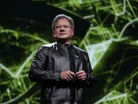
How Nvidia CEO Brokered Chip Deal Between Trump and Beijing
The semiconductor wars between Washington and Beijing have escalated dramatically over the past two years, with AI chips becoming the centre of technology rivalry.
What started as trade disputes has evolved into a complex web of export controls, licensing requirements and strategic manoeuvring that has left even the biggest players scrambling to adapt.
Earlier this year, America tightened restrictions of Nvidia’s sales to China, but now, Nvidia is announcing that it plans to resume sales of its H20 AI chip to China following meetings between CEO Jensen Huang and both US President Donald Trump and Chinese officials in Beijing.

Nvidia has been wrestling with these export and licensing pressures more than most.
The chip giant, which dominates roughly 80% of the global AI processor market, has watched billions in potential revenue evaporate as Washington tightened restrictions on sales to China, until now.
The Story Behind Elon Musk’s xAI Grok 4 Ethical Concerns
Most industries grow over time and their regulations grow with them. But AI is different – it’s a brand-new field that’s developing faster than anything else.
Because AI is changing so quickly, it’s becoming harder and harder for laws and ethical guidelines to keep up.
So far, AI regulations and safety protocols include rigorous testing of AI systems before release, documentation of potential risks and publication of detailed safety reports that allow peer review within the research community.
This consensus has been built through hard-won experience. Early AI deployments occasionally produced embarrassing or harmful outputs, leading companies to adopt more cautious approaches.
The industry’s largest players have generally embraced these practices, albeit with varying degrees of consistency and transparency.
However, this fragile consensus now faces its most serious challenge. Researchers from leading AI companies OpenAI and Anthropic have publicly condemned the safety practices at xAI, the AI startup owned by Elon Musk.
The criticism centres on what they describe as “reckless” and “completely irresponsible” approaches to AI safety testing and documentation.
Prometheus: Behind Meta’s Quest for Superintelligence
More and more technology companies are experiencing losses as Meta grows, poaching some of the best AI experts in the world to build its superintelligence team that is focused on AGI development.
Now the team is solidifying, Meta is betting hundreds of billions of dollars on infrastructure to build this artificial superintelligence.
The social media company’s CEO Mark Zuckerberg outlines the plan, describing his vision for AI systems that can outperform human intelligence.
The strategy hinges on two enormous data centre projects. Prometheus, a 1 gigawatt facility due to start operations in 2026, marks the first phase.
Then Hyperion, designed to scale up to 5 gigawatts across multiple phases over several years.
At an estimated US$30bn per gigawatt for this type of infrastructure, according to semiconductor research firm SemiAnalysis, Meta is making one of the largest single investments in AI computing power.
The company will become the first lab to launch infrastructure exceeding 1 gigawatt of capacity.
Inside Google’s MedGemma Models for Healthcare AI
The healthcare technology market has experienced rapid growth as medical institutions seek to integrate automated systems into clinical workflows.
However, adoption has been constrained by regulatory requirements, privacy concerns and the need for software that can operate within institutional data governance frameworks.
This regulatory environment has created demand for open-source medical software that healthcare developers can modify, deploy locally and integrate with existing systems without external data sharing.
Major technology companies have responded by releasing specialised healthcare tools that prioritise privacy and customisation over convenience.
Now, Google has released two new models in its MedGemma collection, marking the latest expansion of the technology company’s open-source healthcare software offerings.
Daniel Golden, Engineering Manager at Google Research and Rory Pilgrim, Product Manager at Google Research, announced the models as part of the company’s broader strategy to accelerate healthcare technology development through open-source tools.
Will AI Kill Art? Robot Ai-Da Weighs In On Creative Life
As the balance between AI innovation and AI innovation becomes increasingly harder to get right, the matter of authentic creativity is emerging.
This year, the industry has seen multiple copyright cases between enterprises and AI companies over image generation, fierce competition between AI leaders and the consequential poaching of experts between them – and even exposed AI generated music from an AI band.
Now, a question is heating up about one of the most unique things humans can create: Art.
Ai-Da, the AI robot, unveiled a portrait of King Charles III during the UK Mission to the World Trade Organisation and UN in reception in Geneva, which brought together diplomats, UN officials, artists and technology experts.