This Week’s Top 5 Stories in AI
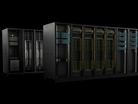
GB300 NVL72: Nvidia’s Creation for Data Centre Energy Spikes
As large-scale AI training workloads increasingly heat up data centres, Nvidia is rolling out new energy management features in its platform to address the energy demands.
It’s no secret that with thousands of GPUs operating in synchronised bursts, data centres running these tasks are creating power fluctuations that strain grid infrastructure.
This is where the GB300 NVL72 comes in, as it integrates hardware and software to smooth power spikes, aiming to reduce peak demand on the grid by up to 30%.
These new features also appear in the GB200 NVL72 platform and allow data centre operators to reduce the over-provisioning of power infrastructure, potentially lowering operating costs and increasing rack density within existing budgets.
The Nvidia GB300 NVL72 is a big step forward in performance for AI reasoning and agentic workloads, delivering up to a:
- 10x boost in user responsiveness
- 5x improvement in throughput per watt compared to the previous generation Nvidia Hopper architecture
- 50x increase in output for reasoning model inference
In July, CoreWeave became the first cloud provider to deploy the platform.
The AI Talent War: Microsoft Hires DeepMind AI Engineers
The competition within the US tech sector is intensifying, fuelled by the demand for AI expertise.
In recent months, a fervent race to recruit skilled AI engineers has reached critical levels, with many executives and AI specialists moving to rival firms.
Major AI players such as Meta, OpenAI, Apple and Amazon have been actively seeking to attract talent either from each other or from emerging AI startups.
Among the latest to feel the impact of this trend is DeepMind by Google, from which Microsoft has successfully recruited over 20 AI experts to support its Copilot strategy.
Amar Subramanya, the former Head of Engineering for Google’s Gemini chatbot, announced his move to Microsoft as Corporate Vice President of AI.
“The culture here is refreshingly low-ego yet bursting with ambition,” Amar, who is the most senior DeepMind executive to join Microsoft’s ranks, shared in a LinkedIn post.
Microsoft’s proactive recruitment also follows its acquisition of most staff from AI start-up Inflection earlier this year, in a deal that also brought Co-Founder Mustafa Suleyman, now spearheading its consumer AI strategy.
Mustafa’s inclusion has intensified Microsoft and Google's rivalry, particularly given his prior ties with DeepMind Co-Founder Sir Demis Hassabis.
Explained: Mark Zuckerberg’s ‘Personal Superintelligence’
Meta has ramped up its AI ambitions over recent months, poaching top talent from rivals and acquiring AI startups as part of CEO Mark Zuckerberg’s drive to develop what he terms “superintelligence.
Now, Zuckerberg says in a statement titled ‘Personal Superintelligence’ that “developing superintelligence is now in sight”.
The memo was published ahead of Meta’s second quarter earnings, marking the latest achievement in the company’s aggressive push into AI development.
The company has been building out its superintelligence labs team with engineers from competitors including Apple and GitHub, while investing heavily in the infrastructure needed to support such ambitious projects.
“Over the last few months we have begun to see glimpses of our AI systems improving themselves,” Zuckerberg writes, according to the Guardian.
“The improvement is slow for now, but undeniable.”
Meta says that its approach to developing superintelligence comes from “building personal superintelligence that empowers everyone”.
Why Google Signed EU's AI Code of Practice Despite Concerns
Google has announced it will sign the EU’s voluntary AI Code of Practice, joining a fractured industry response to the regulatory framework as the August 2025 compliance deadline approaches.

The company’s decision places it alongside OpenAI and Anthropic in supporting the voluntary guidelines.
However, the commitment comes with reservations about potential impacts on European innovation and competitiveness.
“We do so with the hope that this Code, as applied, will promote European citizens’ and businesses’ access to secure, first-rate AI tools as they become available,” Google says in its announcement.
The company emphasises that prompt deployment remains important, citing projections that Europe could boost its economy by 8% annually by 2034.
The Code of Practice serves as an implementation guide for the EU AI Act, the world’s first AI legislation that regulates AI systems based on their potential risks.
The voluntary framework specifically addresses general-purpose AI models - powerful systems that can perform multiple tasks rather than being designed for specific applications.
Rival AI Systems: Huawei’s CloudMatrix 384 vs Nvidia’s GB200
Huawei has introduced its CloudMatrix 384 AI computing system at Shanghai’s World Artificial Intelligence Conference, being the company’s boldest challenge yet to Nvidia’s dominance in AI hardware.
The system drew crowds at Huawei’s booth during the three-day conference, where companies across the AI sector gathered to showcase their latest developments in machine learning (ML) and neural network technologies.
For Huawei, the public debut embodied months of anticipation since the company first announced the CloudMatrix in April.
Industry watchers have been closely following the development, viewing it as a direct shot across the bow at Nvidia’s GB200 NVL72 system.
Zhang’s confirmation that the CloudMatrix 384 was operational on Huawei’s cloud platform indicates the system’s commercial readiness: “The CloudMatrix 384 system was operational on Huawei’s cloud platform,” he says.