Siemens and Rittal: Sustainable Power Systems for AI

AI's appetite for energy is reshaping the data centre industry.
Siemens and Rittal's strategic partnership is aimed at developing sustainable, standardised power systems designed specifically for AI workloads, as the technology pushes electrical infrastructure to unprecedented limits.
The challenge is stark. In data centres built to support AI applications, individual racks now routinely consume more than 100kW of power. By 2030, that figure could reach 1MW per rack – a level of intensity that would strain the capacity of current electrical and cooling systems.
The partnership between Siemens and Rittal seeks to establish a new standard capable of meeting these demands.

Addressing AI's infrastructure bottleneck
Siemens Smart Infrastructure, recognised for its intelligent power systems, and Rittal, a specialist in modular data centre hardware, appear well-suited to tackle this problem. Their combined objective is to create a future-proof, highly-efficient power distribution model within the IEC market.
The first joint innovation – a next-generation sidecar power rack – is designed to deliver power directly into the data centre's white space, positioned adjacent to the server cabinets.
This configuration is not yet standard practice, but the proximity of the power source to computing hardware could reduce energy loss and improve scalability. For operators, it could mean faster expansion as AI demand accelerates.
The sidecar rack consolidates power electronics into a dedicated module positioned alongside computing units. This design could provide a reliable, modular supply that is both rapid to deploy and straightforward to scale.
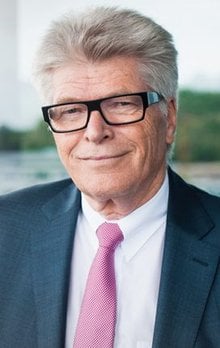
Friedhelm Loh, owner and CEO of the Friedhelm Loh Group, which owns Rittal, views the partnership as an evolution of an existing relationship.
"We have a long-standing collaboration with Siemens in a number of fields," he says. "We are proud to be taking our partnership to the next level. Both companies are driven by the desire to innovate. As technology leaders, we have a responsibility to keep strengthening our customers' competitiveness with the latest technologies."
Standardisation for rapid deployment
The partnership's emphasis on standardisation could prove particularly relevant given the pace of AI adoption. With the sector expanding rapidly, the ability to standardise infrastructure could significantly reduce construction timelines for new facilities.
According to Siemens, its approach to uniform digital infrastructure is focused on "minimising time-to-compute".
Andreas Matthé, CEO of Electrical Products at Siemens Smart Infrastructure, describes the collaboration as an important development in the company's data centre strategy.
"To enable the rapid growth of AI, we need smart, reliable, and scalable power supply solutions for data centres, and we need them quickly," he explains. "In combination with our innovative electrical products and solutions, Rittal is an ideal partner when it comes to speed and standardisation in infrastructure."
Beyond the sidecar design, additional joint projects are in progress.
Efficiency gains for AI workloads
The partnership addresses not only increasing rack power density but also broader energy performance considerations. Data centres already account for a growing proportion of global electricity consumption, and any innovation that enables operators to achieve more "tokens per watt", as the companies describe it, could have wide-reaching implications across the sector.
The combination of electrical efficiency, modularity and coordinated component design could lead to measurable improvements in both uptime and sustainability. By integrating power distribution more closely with computing infrastructure, the partners aim to reduce transmission losses and thermal management challenges that typically emerge at higher power densities.
Siemens and Rittal suggest that their standardised approach could also simplify maintenance and reduce operational complexity. With uniform components and predictable performance characteristics, data centre operators may find it easier to plan capacity expansions and manage ongoing infrastructure requirements.
Looking beyond data centres, both Siemens and Rittal see potential to extend their jointly developed architectures into other high-reliability applications. The collaboration, they suggest, represents the start of a broader shift in how industrial power distribution responds to digital demand.
For an industry attempting to balance exponential AI growth with sustainability objectives and supply constraints, this alignment could prove to be one of the decade's defining developments.
Company portals
Executives
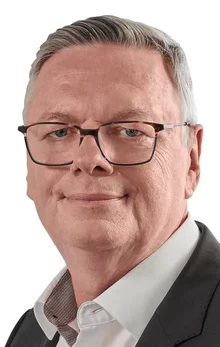
Andreas Matthé
CEO of Electrical Products at Siemens Smart Infrastructure
Friedhelm Loh
Owner