
Physical AI Central to Hitachi's Bold Restructure
A major restructure is in the works at Hitachi. The multinational conglomerate says it is accelerating a transformation towards becoming a "digital-centric company" as part of the Inspire 2027 management plans.
The company is seeking to strengthen operations to keep pace with global macroeconomic shifts, while sharpening its focus on Lumada 3.0 – the latest phase of its digital solutions platform – anchored by a growing emphasis on physical AI.
Hitachi has identified physical AI as the next evolution of artificial intelligence. The organisation's vision is to establish itself as the "world’s leading practitioner of physical AI" through a combination of IT, OT, products and its "customer zero" ecosystem, where solutions are tested and applied within its own divisions.

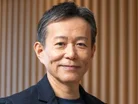
Toshiaki Tokunaga, President and CEO of Hitachi, explains: "This strategic evolution is designed to strengthen our foundations for sustainable growth and accelerate our Lumada Business, particularly through physical AI.
"The rapid evolution of AI, from generative to agentic and now physical AI, combined with shifting global policies, defines our dynamic business landscape. As we enter the second year of our Inspire 2027 strategy, this new structure enables us to respond with even greater strength, leveraging the collective power of our IT, OT and product capabilities as One Hitachi."
New structure supports Lumada 3.0 growth
At the centre of Hitachi's restructure is the reorganisation of the Connective Industries Sector. Noriharu Amiya, Senior Vice President and Executive Officer, has been appointed CEO of the sector and, under his leadership, the current three Business Units (BUs) will be reshaped to boost Lumada 3.0 development.
Elsewhere, a new Industrial Products BU is being created to focus on high-demand areas where Hitachi can build market leadership. The unit is set to channel resources into product development and accelerate growth across Lumada 3.0’s digital assets.
Another new arm, the Industrial Solutions BU, will translates physical AI innovations into new digital services, while enhancing the reach of HMAX by Hitachi, a portfolio of AI-powered solutions for social infrastructure which is already gaining significant traction in the mobility and energy sectors. To support the change, Hitachi is transferring the industrial digital transformation division to the Digital Systems & Services Sector for stronger alignment.
A third unit, the Urban Solutions & Services BU, targets fast-growing mission-critical sectors such as semiconductor manufacturing and data centres. Hitachi is integrating the capabilities of related group companies within this unit to unlock expansion opportunities in step with AI-driven infrastructure demands.
Group-wide digital expansion and integration
Hitachi is dead set on driving the digitalisation of OT and products businesses across the group.
As a result, the Digital Systems & Services Sector is also undergoing a restructure. The industrial DX division – once part of Connective Industries – is being merged with the Social Infrastructure Systems BU and Financial Institutions BU, creating the Digital Services BU.
This new unit is set to deliver AI-based front engineering, system integration and digital services across core domains: energy, telecommunications, transport, industry, public services and finance.
At the helm will be Senior Vice President Katsuya Nagano and Vice President Yasuki Imai, both of whom bring extensive experience in enterprise-scale digital transformation and are tasked with increasing market traction in Japan.

Simultaneously, Hitachi is integrating two of its digital subsidiaries – GlobalLogic and Hitachi Digital Services – to enhance its full-service digital delivery, connecting chip-to-cloud software development with mission-critical system integration and AI deployment. Ultimately, it is hoped the new entity will be well-positioned to support customers' digital transformations through close-knit collaboration.
Leadership reshuffle
In a bid to to support faster strategic decisions, Hitachi is establishing a new Corporate Strategy Group that reports to CFO Tomomi Kato. The team takes responsibility for corporate strategy, government relations, brand communications and investor relations, handling end-to-end tasks from data gathering to public disclosure and brand positioning.
The approach is designed to "turn environmental changes into growth opportunities" and sharpen focus on capital allocation, strategic planning and portfolio reform.
What's more, recognising the growing impact of international policy shifts on business operations, Hitachi appointed Hirohide Hirai to the newly-created position of Chief Government and External Relations Officer (CGRO). Hirohide, who previously served as Vice President and Executive Officer, is charged with coordinating across Hitachi’s business units and six strategic regions – the Americas, EMEA, APAC, India, China and Japan – to support decision-making and manage political risk.
Senior Vice President Masahiko Hasegawa has also taken on a new group-level role as Head of Regional Strategies, leading cross-group regional growth and aligning efforts to deliver cohesive customer value across markets.
Finally, as Hitachi looks to accelerate the use of AI and bolster cybersecurity, the organisation has promoted Satoko Fujimori to the role of Chief Digital & Security Officer (CD&SO). She previously led the AI & Software Services BU and will now drive AI transformation and security enhancement throughout the company.
Hitachi's restructure positions the company to respond rapidly to external changes, use physical AI to strengthen Lumada 3.0, and coordinate as a single, unified group.
Toshiaki adds: "I am confident this strategic alignment will further advance our transformation into a digital-centric organisation."
Company portals

Executives
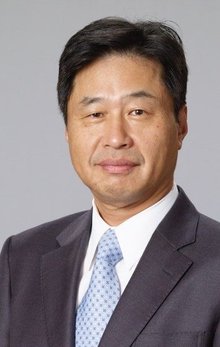
Hirohide Hirai
Chief Government and External Relations Officer (CGRO)
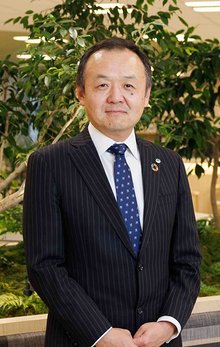
Nori Amiya
CEO Connective Industries Sector
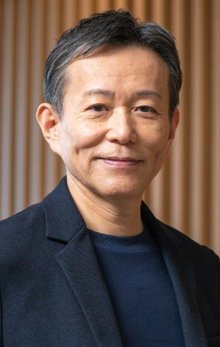
Toshiaki Tokunaga
President & CEO