PepsiCo: Harnessing the Power of AI to Transform Operations

PepsiCo is setting out a new chapter in its operational strategy, partnering with Siemens and Nvidia in a multi-year collaboration aimed at digitising supply chain and manufacturing systems using artificial intelligence (AI) and digital twin technology.
Announced at CES 2026 in Las Vegas, the partnership introduces the first application of its kind by a global consumer packaged goods (CPG) company, marking a shift in how facilities are designed, simulated and managed.

As demand grows and the need for faster and more adaptable production rises, PepsiCo is taking steps to digitally overhaul its plants and warehouses in the US.
The process involves piloting digital twins – digital replicas of real-world facilities – before making any changes to physical infrastructure.
These virtual models allow the company to simulate, test and validate new setups with speed and precision.
Ramon Laguarta, Chairman and CEO at PepsiCo, explains: "The scale and complexity of PepsiCo's business, from farm to shelf, is massive – and we are embedding AI throughout our operations to better meet the increasing demands of our consumers and customers.
"Our work with Siemens and Nvidia will help accelerate our continued journey of becoming a future-fit company, operating with agility and foresight."
Using digital twins to model, test and build smarter
PepsiCo is now adopting a digital-first strategy for facility planning.
Using physics-based digital twin simulations, the company is able to co-design operations with AI agents that help to test and refine layout choices before making any on-site changes.
These simulations are powered by Siemens’ Digital Twin Composer software, which is built using Nvidia’s Omniverse platform – a set of tools that creates real-time 3D simulations with physically accurate behaviour.
The technology enables PepsiCo to digitally reconstruct all machines, conveyor systems, operator paths and pallet flows with a high level of detail.
This helps the company identify system flaws and performance improvements virtually, eliminating the need to build or modify physical infrastructure until every variable has been tested.
According to early trial outcomes, PepsiCo improves throughput by 20% while achieving almost full design validation and reducing capital expenditure by 10% to 15%.
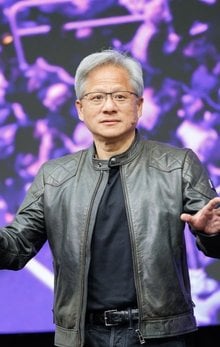
Nvidia Founder and CEO Jensen Huang sees digital twins as the foundation of AI adoption across physical industries: "Physical industries are entering the age of AI. For companies with real-world assets, digital twins are the foundation of their AI journey."
"Working with Nvidia and Siemens, PepsiCo is re-architecting its operations – using physically-accurate digital twins and AI to reinvent how it designs, optimises and runs its global operations," he adds.
The new approach will allow PepsiCo to spot up to 90% of operational issues in simulation before changes are made in the real world.
That efficiency is already visible in initial pilot sites, where PepsiCo uses AI and computer vision to optimise the end-to-end supply chain.
Building a global, intelligent supply chain
At the heart of the transformation is Siemens’ new software solution, which supports large-scale industrial metaverse environments.
These environments merge 2D and 3D data from digital twins with real-time physical information – all within a managed, high-fidelity 3D interface.
The system enables manufacturers to view and test every aspect of a facility – both virtual and physical – throughout its operational lifecycle.
Roland Busch, CEO at Siemens, says: "We are proud to partner with PepsiCo and Nvidia to digitally transform their manufacturing facilities using physics-based digital twins and AI from design to engineering to operations.
"The Digital Twin Composer is a cornerstone in enabling PepsiCo to transform manufacturing and warehousing.
"Siemens is powering the industrial AI revolution – with an unmatched industrial AI technology stack, deep domain knowhow and world-class partners.
"This collaboration sets a new standard for all industries. Customers can turn ideas into real-world impact with greater speed, quality, and efficiency."
With a clear strategy in place, PepsiCo is embarking on its digital transformation in select US locations, but has confirmed it aims to scale the approach across its global operations.
The digital twins simulate not only machinery and facility layouts but also the end-to-end supply chain, helping to establish a performance benchmark for each site.
Using AI tools, PepsiCo teams can test new layouts and system changes to refine operations and boost capacity without costly physical upgrades.
Designing plants that anticipate and adapt
In addition to creating flexible and responsive facilities, PepsiCo wants to design a new type of intelligent supply chain that predicts and adapts to changes automatically.
Athina Kanioura, CEO for Latin America and Global Chief Strategy & Transformation Officer at PepsiCo, adds: "We are deploying the first digital blueprint that reimagines how the supply chain is designed, built, and scaled, a first for the industry.
"With a unified, AI-powered digital foundation, PepsiCo is building toward a world where every plant and warehouse operates as part of a single, intelligent ecosystem.
"In this future, our facilities don't just respond to demand; they anticipate and then adapt to it."
PepsiCo is setting out to create a unified, AI-powered model for its global operations where decisions happen in real time and every facility forms part of a connected digital network.
By applying simulation, AI and real-time data, the multinational aims to make production more agile, efficient and scalable for a changing global marketplace.


Executives

Athina Kanioura
CEO of Latin America Foods and Chief Strategy & Transformation Officer
Jensen Huang
Founder and CEO
Ramon Laguarta
Chairman of the Board of Directors
Roland Busch
President and CEO of Siemens AG