GTC: What are NVIDIA's New Open Models ?

“Open models are essential to advancing innovation at global scale,” NVIDIA notes, as the tech giant unveiled a major expansion of its open model ecosystem at GTC.
With building intelligent systems as the goal and empowering developers and scientists as the means, the release of NVIDIA open models signals a push to accelerate the next generation of agentic, physical and healthcare AI.
“Open source AI has become a global force for innovation,” says Kari Briski, Vice President of Generative AI Software at NVIDIA.
“From biology and scientific discovery to robotics and autonomous machines, NVIDIA open model families extend intelligence beyond language, enabling developers worldwide to build intelligent agents and power breakthroughs across digital and physical industries.”
Nemotron models target advanced AI agents
NVIDIA’s latest releases extend this approach beyond language-based systems – to intelligent systems that can reason and act in digital and real worlds – introducing tools aimed at robotics, autonomous vehicles and scientific research.
Its growing suite includes Nemotron for agentic AI, Cosmos for physical systems, Alpamayo for self-driving technologies, Isaac GR00T for robotics and BioNeMo for biomedical applications.
A central focus of the announcement is the expansion of the Nemotron family, which underpins agentic AI systems capable of autonomous reasoning and decision-making.
The latest iteration introduces multimodal capabilities that combine language, vision and audio understanding, allowing AI agents to operate in more complex environments.

Nemotron 3 Ultra is positioned as a high-performance model for enterprise-grade applications such as coding assistants, search engines and workflow automation. NVIDIA claims it delivers significantly improved efficiency on its Blackwell platform, enabling faster processing without compromising capability.
Other models in the range include Nemotron 3 Omni, which can analyse video and document content and Nemotron 3 VoiceChat, designed for real-time conversational AI where systems can listen and respond simultaneously.
Additional safety models and retrieval pipelines aim to improve reliability by identifying harmful content and refining outputs.
The models are already gaining traction across industry. Companies including Automation Anywhere, ServiceNow and Perplexity are integrating Nemotron into their platforms, while research-focused tools such as Kosmos are using it to automate scientific workflows.
According to NVIDIA, this allows researchers to compress months of work into a single day.
The company is also encouraging localisation through sovereign AI models, enabling organisations to tailor systems to specific languages and cultural contexts.
Synthetic datasets, such as Nemotron-Personas, are intended to support this effort while preserving user privacy.
Physical AI moves closer to real-world deployment
NVIDIA is investing heavily in physical AI thereby helping the acceleration of robotic systems perceive the real world.
New foundation models and simulation tools are designed to support robots and autonomous vehicles as they navigate complex environments.
Among the most notable developments is Cosmos 3, a world foundation model that can generate synthetic worlds to help physical AI simulation, reasoning and action.
Meanwhile, Isaac GR00T N1.7 brings a major humanoid push, reaching commercial readiness for humanoid robotics, offering vision-language-action capabilities tailored to real-world tasks.
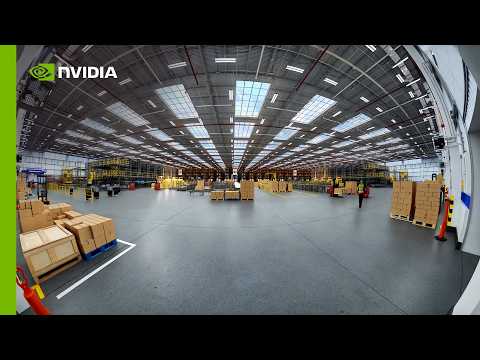
NVIDIA’s Alpamayo 1.5 – a model aimed at improving the reasoning abilities of autonomous vehicles – supports multi-camera inputs and configurable parameters, helping systems adapt to different driving conditions.
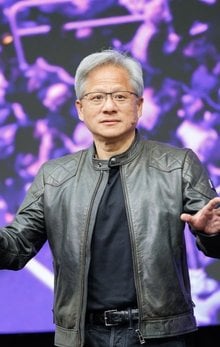
During the keynote, Jensen Huang previewed the upcoming GR00T N2, a next-generation robot foundation model. Built on a new architecture, it reportedly improves robot performance in unfamiliar environments and tasks, highlighting NVIDIA’s ambition to push robotics beyond controlled settings.
Major organisations including Toyota Research Institute and Johnson & Johnson MedTech are already adopting these tools to accelerate development and deployment of physical AI systems.
Models for healthcare and life sciences
NVIDIA’s expansion also extends into healthcare, where open models are being used to advance drug discovery, medical research and biological simulation.
The BioNeMo platform is evolving into a broader ecosystem for modelling biological systems at scale.
One key innovation is Proteina-Complexa, a generative model designed to support protein binder development. Pharmaceutical companies are already using it to design and test new therapeutic approaches more efficiently.

The company has also collaborated with leading research institutions to expand the AlphaFold Protein Structure Database, adding millions of new predictions to support the discovery of drug targets and disease mechanisms.
Another addition, nvQSP, is a GPU-accelerated simulation engine that allows researchers to test far more treatment scenarios before clinical trials begin.
NVIDIA reports 77x performance gains compared with traditional methods, enabling faster and more detailed analysis.
Taken together, these developments underline NVIDIA’s strategy to position open AI models at the centre of innovation across multiple sectors.
By combining advanced reasoning, multimodal capabilities and scalable infrastructure, the company is aiming to shape how intelligent systems are built and deployed in the years ahead.
Company portals

Executives
Jensen Huang
Founder and CEO
Kari Ann Briski
Vice President Generative AI Software for Enterprise