NVIDIA: How Vera Rubin DSX Powers Smarter AI Data Centres
Fresh out of NVIDIA GTC, the company has announced the reference design for NVIDIA Vera Rubin DSX AI Factory, redefining the modern data centre with codesigned AI infrastructure.
Alongside physical architecture, to ease large-scale AI factory buildouts, NVIDIA has made its Omniverse DSX digital twin blueprint available.
Fully compatible with NVIDIA Vera Rubon DSX, this blueprint will allow operators to model entire AI factories virtually, testing layouts, power distribution and thermal behaviour before construction.
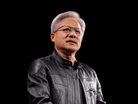
“In the age of AI, intelligence tokens are the new currency and AI factories are the infrastructure that generates them,” says Jensen Huang, Founder and CEO of NVIDIA.
“With the NVIDIA Vera Rubin DSX AI Factory reference design and Omniverse DSX Blueprint, we are providing the foundation to build the world’s most productive AI factories, accelerating time to first revenue and maximizing scale and energy efficiency.”
Big names in the industry – including Cadence, Dassault Systèmes, Eaton, Jacobs, Nscale, Phaidra, Procore, PTC, Schneider Electric, Siemens, Switch, Trane Technologies and Vertiv – have rallied behind to contribute to both the blueprint and and reference design to help build and operate new AI data centres.
Optimising data centres for power, cooling and efficiency
The NVIDIA Omniverse DSX Blueprint standardises how compute, storage, networking and operational systems work together, enabling large scale deployments to be more predictable and efficient.
Inefficiencies in one layer can bottleneck performance, but the DSX model integrates systems to ensure seamless scaling.
The Vera Rubin DSX architecture prioritises energy efficiency alongside high performance.
AI workloads demand dense, high power facilities and the modular design links compute directly with power and cooling systems.
This enables real time balancing of performance against energy availability, maximising efficiency.
Vera Rubin software stack for optimisation
The open, modular and composable Vera Rubin DSX stack connects the hardware with power and cooling to “maximise AI tokens per watt of available energy”, using its DSX Max-Q library.
This optimises workloads within fixed power budgets.
With DSX Flex linking AI facilities to power grid services, it enables dynamic adjustment of energy use and coordination with hybrid onsite generation.
This helps data centres reduce consumption while maintaining grid stability.
DSX Exchange supports secure, scalable integration of compute, networking, energy, power and cooling signals across IT, operational technology and operations teams.
Digital twins reshape data centre operations
NVIDIA Vera Rubin’s DSX Sim and DSX SimReady enable high-fidelity digital twin validation.
As AI infrastructure reaches gigawatt scale, aligning power and compute is no longer optional.
Energy and cooling are core components of performance and NVIDIA’s design treats them as such.
Simulation allows inefficiencies to be identified and configurations optimised without costly physical changes.
Once operational, digital twins enable continuous monitoring, workload adjustment and infrastructure refinement in real time.
Using the NVIDIA DSX Air platform, operators can model GPUs, networking and partner infrastructure, while 3D geometry and logistics simulations accelerate deployment, optimise day-one performance and shorten time to first revenue.
This approach marks a departure from static builds.
Facilities can now be designed, tested and optimised continuously, reducing deployment risk and improving predictability.
Wide range of industry applications
Leading technology and engineering companies are adopting NVIDIA’s Vera Rubin DSX reference design and Omniverse DSX Blueprint to transform AI factory development and operations.
Dassault Systèmes is integrating the reference design into its Model Based Systems Engineering platform to build virtual twins of AI factories, accelerating deployment while improving reliability and efficiency.

Schneider Electric and Eaton are providing digital twin models and simulation tools to optimise power distribution and cooling, ensuring facilities operate at peak efficiency.
Cadence is using SimReady models of NVIDIA GB300 NVL72 to simulate thermal and fluid dynamics, helping operators plan and optimise high-density compute environments.
Siemens is developing frameworks to balance compute, power and cooling for large-scale AI infrastructure, while Trane Technologies is focused on thermal management to reduce energy use in gigawatt-scale facilities.
Switch is leveraging Omniverse DSX for real-time telemetry and continuous digital twin updates, while CoreWeave uses NVIDIA DSX Air in the cloud to build and test digital twins, running operational rehearsals before physical deployment to shorten validation times and improve day-one performance.
Together, these industry leaders showcase the growing adoption of integrated, software-defined AI factory infrastructure.
Data centres are now no longer just warehouses of servers – they are factories optimised for performance, reliability and speed.




Executives
Jensen Huang
Founder and CEO