Cloud in the Stars: How Space Could Solve AI’s Energy Crisis
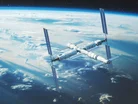
A few years ago, data centres were a concept most people did not know about. Now, technology giants are planning to put them into space.
There is no AI without data centres – and since AI demand is only accelerating, so must data centres.
However, a huge amount of energy is needed from these data centres to keep AI working efficiently – and since data centres are no small facility – there is now global strain on sustainability goals and space to accommodate them.
As data centres drive electricity consumption sharply higher while requiring huge amounts of water to cool servers, the energy constraints of keeping everything running have made leaders look to space.
Jeff Bezos has a prediction that gigawatt (GW)-scale data centres orbiting Earth within the next two decades will run more efficiently than anything we can build on the ground.
To put that in perspective, a GW is one billion watts of power – roughly what a large nuclear power plant could produce.
Speaking at Italian Tech Week in Turin, the Amazon Founder and Executive Chair laid out his vision during a fireside chat with John Elkann, who chairs Ferrari and Stellantis: "One of the things that's going to happen next is we're going to start building these giant gigawatt data centres in space."
This could be a bold claim, but while Jeff sketches out a 10 to 20-year timeline, some companies aren't waiting around. The race to orbit has already begun.
How space could accommodate AI workloads
The appeal of space is not just about the obvious: more space for data centres. It is about solving the energy problem that is threatening to throttle AI development.
What makes space attractive, Jeff argues, is access to power that Earth-based facilities cannot match. Solar panels orbiting the planet can generate electricity continuously, dodging the interruptions caused by night-time and weather that hamper ground-based solar farms.
“These giant training clusters, those will be better built in space, because we have solar power there, 24/7. There are no clouds and no rain, no weather,” he explains.
Those training clusters are groups of interconnected computers used to train AI models – a process that devours computing power and energy at an alarming rate. That constant energy supply could make space-based operations cheaper to run than terrestrial facilities relying on grid power or intermittent renewable sources.
“We will be able to beat the cost of terrestrial data centres in space in the next couple of decades,” Jeff says. He frames the idea as part of an established pattern where orbital infrastructure ends up supporting life on Earth.
Weather satellites already provide the data that makes accurate forecasting possible, while communication satellites enable global telecommunications and internet services.
“It already has happened with weather satellites. It has already happened with communication satellites. The next step is going to be data centres and then other kinds of manufacturing,” continues Jeff. It is a compelling argument, but what matters is whether anyone is actually building these things.
Crusoe and Starcloud's plans for the first commercial space cloud
Enter Crusoe and Starcloud, two companies that have decided not to wait for Jeff's two-decade timeline.
The AI infrastructure provider based in Denver, Colorado, has announced a partnership with Starcloud to deploy what the companies describe as the first public cloud operating in space, with graphics processing unit capacity expected in orbit by early 2027. The agreement will see Crusoe Cloud run on a Starcloud satellite scheduled to launch in late 2026.
It serves as an audacious attempt to sidestep the energy and physical constraints strangling Earth-based data centres by tapping into solar power available beyond the atmosphere.
Crusoe has built its reputation on doing things differently. The company's business model centres on locating data centre operations near stranded or renewable energy sources. Stranded energy refers to power that is generated but cannot be efficiently transported to users, such as natural gas flared at remote oil and gas sites.
The move into orbit extends that strategy, though the leap from repurposing flared gas in North Dakota to deploying satellites is substantial.
“At Crusoe, we believe that space will ultimately matter to the future of computing because it enables new solutions to a key scaling constraint for AI infrastructure, which is sourcing abundant, consistent and clean energy,” says Cully Cavness, Co-Founder, President and Chief Operating Officer (COO) of Crusoe.
“Since our founding, Crusoe has specialised on co-locating compute infrastructure with novel energy sources. By partnering with Starcloud, we will extend our energy-first approach from Earth to the next frontier: outer space.”
Starcloud's orbital data centre concept is a satellite-based computing platform that integrates solar power generation with processors and onboard cooling systems.
The platform eliminates the need for physical land, conventional cooling or grid connections, according to the company – addressing some of the constraints that have limited data centre expansion in recent years.
The satellite launching in 2026 will host a Crusoe Cloud module, enabling customers to deploy AI workloads from space.
Starcloud states the design is capable of handling inference and training workloads. Inference refers to running data through a trained AI model to make predictions, while training involves teaching a model to recognise patterns in data – both processes require substantial computing power and have driven much of the recent surge in GPU demand.
Philip Johnston, CEO of Starcloud, says: “Having Crusoe as the foundational cloud provider on our platform is a perfect alignment of vision and execution.
“Crusoe's expertise in building rugged, efficient and scalable computing solutions makes them the ideal partner to pioneer this new era. Together, we are building not just a data centre in space, but a new category of cloud computing that will unlock extraordinary possibilities for research, discovery and innovation.”
On Earth, Crusoe uses flared natural gas and renewable energy sources to power data centres, reducing waste emissions from energy production. The company plans to apply similar energy optimisation principles to operations in space, though the technical challenges of maintaining computing infrastructure in orbit are considerable and largely untested at commercial scale.
The obstacles facing orbital AI infrastructure
It all sounds optimistic, but the challenges are already being realised – and they will be challenges not faced before.
Maintenance is the most obvious problem. When something breaks on Earth, you send an engineer round to fix it. In space? Not so simple.
Upgrading hardware means launching components on rockets, where costs remain substantial despite efforts by SpaceX and Blue Origin – which Jeff also founded – to bring prices down through reusable technology.
Additionally, failed launches remain a genuine risk that could destroy expensive equipment in seconds.

The aforementioned companies have indicated plans to develop larger orbital data centres over time, scaling capacity as demand for AI computing increases. This could eventually create a distributed space-based cloud network, though the timeline and capital requirements for such expansion remain unclear.
Still, the partnership's long-term vision reflects a broader industry trend towards distributed and off-grid compute models. As energy costs, land constraints and environmental pressures intensify, solutions that combine efficiency, sustainability and scalability are becoming increasingly critical.
For Crusoe, launching its cloud into orbit marks the latest evolution of its mission to reimagine how compute resources are powered and deployed.
By integrating its AI infrastructure with Starcloud's orbital technology, the company is moving its data centre model from remote regions of Earth to the furthest possible edge – space itself.
As AI systems keep growing in scale and energy appetite, companies face mounting pressure to find power sources that won't strain electricity grids or pile on carbon emissions.
“It's hard to know exactly when, it's 10 plus years – and I bet it's not more than 20 years,” adds Jeff.
If he is right, the future of AI infrastructure might not be underground in vast server farms, but above us.


Executives
Cully Cavness
Co-Founder, President and COO

Jeff Bezos
Founder and Executive Chairman at Amazon
Philip Johnston
Co-Founder & CEO