Inside Nvidia and Eli Lilly's $1bn AI Drug Discovery Lab

AI is poised to reshape pharmaceutical manufacturing as Nvidia and Eli Lilly announce a $1 billion investment in a co-innovation laboratory.
The partnership brings together the world's most valuable company with a global pharmaceutical manufacturer to tackle some of the most complex challenges in drug discovery through advanced AI systems.
The collaboration centres on developing cutting-edge AI models using the Nvidia BioNeMo platform and Nvidia Vera Rubin architecture. By combining Eli Lilly's scientific expertise with Nvidia's computational capabilities, the lab aims to accelerate medicine discovery and production through robotics and physical AI deployment.
The five-year investment will fund talent acquisition, infrastructure development and computational resources for the San Francisco Bay Area facility. Scientists from both organisations will work side by side, creating what the companies describe as conditions for breakthroughs that neither could achieve independently.
Foundation models for drug development
The AI co-innovation lab will focus on building next-generation foundation and frontier models specifically designed for biology and chemistry applications. According to the companies, the initiative will leverage unprecedented computational power for the pharmaceutical industry, combined with massive high-quality data generation capabilities.
Nvidia BioNeMo serves as the critical platform underpinning this work. The open-source machine learning framework provides AI model builders with tools to accelerate biomolecular research involving DNA, RNA and protein data.

The platform includes curated training recipes, data loaders and pretrained, optimised AI model architecture examples, all domain-specific and accelerated for optimal performance. These tools enable researchers to work more efficiently with complex biological data.
The collaboration expands on Eli Lilly's previously announced AI supercomputer, which the company claims is the most powerful in the pharmaceutical industry. By building on this infrastructure, the teams can explore vast biological and chemical spaces computationally before synthesising physical molecules.
Continuous learning and agentic systems
A key focus of the partnership involves creating what the companies call a continuous learning system that connects Eli Lilly's agentic wet labs with computational dry labs. This framework could enable 24/7 AI-assisted experimentation to support biologists and chemists in their research.
The scientist-in-the-loop approach aims to create a feedback mechanism where experiments, data generation and AI model development continuously inform and improve one another. This integrated approach represents a significant shift in how pharmaceutical research can be conducted.
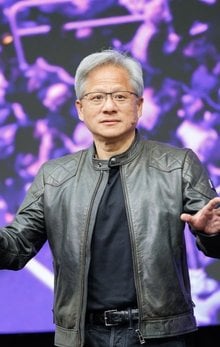
Jensen Huang, Founder and CEO of Nvidia IDIA, says in a statement: "AI is transforming every industry and its most profound impact will be in life sciences.
Nvidia and Eli Lilly's are bringing together the best of our industries to invent a new blueprint for drug discovery – one where scientists can explore vast biological and chemical spaces in silico (using computer simulation) before a single molecule is made."
David Ricks, chair and CEO of Eli Lilly's, says in a statement: "Combining our volume of data and scientific knowledge with Nvidia's computational power and model-building expertise could reinvent drug discovery as we know it. By bringing together world-class talent in a start-up environment, we're creating the conditions for breakthroughs that neither company could achieve alone."
Physical AI beyond discovery
The partnership extends beyond drug discovery into broader applications across clinical development, manufacturing and commercial operations. According to the companies, the collaboration will explore opportunities to integrate multimodal models, agentic AI, robotics and digital twins throughout Eli Lilly's operations.
The deployment of physical AI and robotics in what the companies term the AI factory could help Eli Lilly's enhance its capacity to manufacture high-demand medications. This application of AI to manufacturing processes could also strengthen supply chain reliability, addressing a critical challenge in pharmaceutical production.
The integration of these technologies represents a comprehensive approach to pharmaceutical innovation. By applying AI across the entire value chain, from discovery through to production, the partnership aims to create efficiencies at every stage.
Since 1876, Eli Lilly's has focused on bringing medicines to patients. The company's multidisciplinary team of scientists, AI researchers and engineers will now work alongside Nvidia's AI model builders to address problems that have historically limited the speed and scale of drug development.
The proximity of biological expertise and computational capabilities could generate the large-scale data needed to build powerful AI models capable of transforming medicine development timelines.

Executives
Dave Ricks
Chair, CEO
Jensen Huang
Founder and CEO