WEF: Microsoft CEO Satya Nadella on AI as a Force for Good
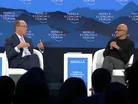
Every January, the Swiss ski resort of Davos plays host to the annual meeting of the World Economic Forum (WEF), welcoming a carefully-curated group of delegates representing global business, government, civil society, media and academia.
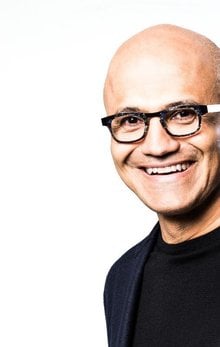
Taking to the stage on Tuesday, Microsoft CEO Satya Nadella focused on AI as a tool for global economic and societal transformation, highlighting how its growth now extends far beyond the tech sector.
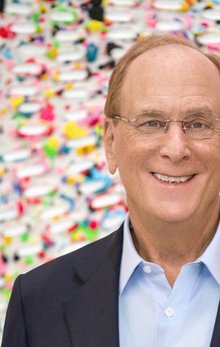
"So many people talk about there may be an AI bubble," he told Larry Fink, Chairman and CEO at BlackRock. "The most important thing that we see as an investor is the democratisation of technology and the diffusion of that technology really does then transform the demand, and the companies or the countries that diffuse it fastest are going to be the ultimate winners – not the technology creator."

AI moves into healthcare and regulated sectors
One of the most immediate areas of AI application, Satya argues, is healthcare.
He insisted the world must now move beyond theory and adopt the technology to improve real outcomes.
“We as a global community have to get to a point where we are using [AI] to do something useful that changes the outcomes of people and communities and countries and industries,” he says.
OpenAI’s recent launch of ChatGPT Health, for example, marks an intentional shift into high-impact, regulated sectors. The product focuses on helping clinicians reduce time spent on administrative tasks, prepare for appointments and summarise patient records. It also supports drug discovery and is built with attention to privacy and security compliance.
For Satya, examples like this demonstrate how AI is becoming embedded in operational systems that truly matter.
Access, education and AI’s global reach
Larry asked how to extend AI’s influence beyond already-advanced economies, noting that the majority of current applications are still “heavily weighted towards those who are educated or educated economies”. The challenge, he says, is reaching the vast portions of the global population who remain disconnected from AI's benefits.
Satya acknowledged that the gap is not due to lack of access, but a lack of relatable use cases: “These models and their output are pretty much available everywhere."
He compared AI’s spread to the early days of smartphones. It “took a long time” for them to reach every region, but now that gap has narrowed.
Recalling a pertinent example, he continues: "One of the demos I always go back to – I think this was even in the beginning of 2023 – was a rural Indian farmer who was able to use a bot built on, I think a very early GPT, essentially to reason over some farm subsidies that he heard about.
“I do think it’s in our hands even in the global south to use it to create, I would say, more of an opportunity when there isn’t one.”
The role of infrastructure and investment
Despite this optimism, Satya points to the ongoing role of capital and infrastructure in determining how broadly AI can be adopted.
He makes clear that access to technology alone is not enough. “The necessary conditions” for long-term AI use, he says, involve stable power, telecom networks and the right kind of investment – public and private.
Satya highlights that, while global tech firms are deploying funds into various parts of the world, including lower-income regions, they still depend on functioning government systems to succeed. For example, even when private companies are ready to build, “the grid is fundamentally driven by governments”.
His long-term vision includes what he calls “token factories”, a reference to AI-driven infrastructure that integrates closely with local energy systems and communications networks. This approach, he asserts, is vital for delivering both “token plus bits” – in other words, combining digital intelligence with physical infrastructure – especially across emerging markets.
Company portals




Executives
Larry Fink
Chairman and Chief Executive Officer
Satya Nadella
Chairman and CEO