Just Eat: Testing Physical AI Robots for Food Delivery
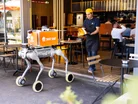
Just Eat Takeaway has begun piloting autonomous ground robots for doorstep delivery in Zurich through a partnership with Swiss robotics company RIVR.
The robots are the first deployment in Europe to combine wheels and legs powered by Physical AI, an AI system designed to help machines navigate human environments more naturally.
Physical AI processes environmental information in real time, allowing machines to adapt to changing conditions and obstacles.
The pilot programme is a practical application of robotics technology in last-mile delivery, addressing urban logistics challenges through automated solutions – reflecting broader industry trends towards automation in delivery services as companies seek to improve efficiency and reduce operational costs.
While Just Eat Takeaway operates food delivery services across multiple European markets, connecting restaurants with customers through its digital platform, RIVR develops autonomous robotics systems specifically designed for urban environments.
How RIVR Robots navigate streets using hybrid locomotion
Unlike conventional delivery robots that rely solely on wheels, the RIVR system employs hybrid locomotion technology.

The robots travel on flat surfaces using wheels but can deploy legs to climb kerbs and stairs, enabling access to doorsteps in dense urban areas without requiring ramps or human assistance.
The robots operate at approximately 15 kilometres per hour and function in various weather conditions including rain, snow, wind and heat.
Each unit features a 40-litre cargo compartment with internal barriers to prevent food spillage during transport.
The Physical AI system enables real-time reaction to common urban obstacles including bins, grass patches and uneven surfaces.
The technology allows the robots to navigate safely around pedestrians, bicycles and vehicles while maintaining delivery schedules.
The handover process mirrors traditional courier delivery methods.
Restaurant partners place orders in the robot’s secure compartment and customers receive notifications upon arrival.
Meanwhile, a locking mechanism protects the food during transit, with customers unlocking the compartment to retrieve their orders.
Each robot operates under remote monitoring from a central control facility, providing real-time tracking throughout delivery journeys.
Emergency protocols allow for automatic stopping or remote intervention when required.
Just Eat expanding automation strategy beyond drones
The robotics pilot extends Just Eat Takeaway’s automation strategy, which includes drone delivery trials launched earlier this year in Ireland through partnership with drone company Manna.
The ground-based robotics initiative addresses different delivery scenarios and urban environments where drone operations may face regulatory or practical limitations.
Zornitsa Chugreeva, Senior Global Innovation Director at Just Eat Takeaway.com, says: “At Just Eat Takeaway.com, our vision is to empower everyday convenience and we believe automation is an important driver in bringing that vision to life.”
She says: “It drives our commitment to exploring, testing and integrating innovations and technologies, all aimed at enhancing our service and driving an even better experience for our ecosystem.”
The Zurich pilot involves live customer orders from local restaurant Zekis World rather than controlled testing environments.
This approach enables immediate feedback collection on robot performance under real-world operating conditions.
The robots feature visibility enhancements including lights and flags to ensure detection by pedestrians and vehicles during day and night operations.
These safety measures address urban navigation requirements and regulatory compliance considerations.
How the partnership demonstrates physical AI applications
The collaboration between Just Eat Takeaway.com and RIVR demonstrates practical applications of Physical AI technology in commercial operations.
Physical AI differs from traditional AI systems by focusing on real-world interaction and movement rather than data processing or pattern recognition alone.
Marko Bjelonic, Chief Executive Officer at RIVR, says: “Our collaboration with Just Eat Takeaway.com is a glimpse into a future where automation blends naturally into our cities, helping people get what they need, when they need it.”
He adds: “Physical AI allows our robots to understand and adapt to the real world. It’s a step toward making autonomous delivery not only efficient, but intuitive, safe and truly human-centred.”
The pilot programme plans expansion later this year to additional European cities, though specific locations remain undisclosed.
Just Eat Takeaway.com is evaluating potential applications beyond restaurant delivery, including retail and convenience store orders.
The initiative more broadly represents a practical implementation of autonomous robotics in urban logistics, addressing challenges including labour shortages, delivery costs and service consistency.
The technology’s ability to operate continuously without breaks or weather-related disruptions offers operational advantages over human delivery personnel.
Marko concludes: “Physical AI allows our robots to understand and adapt to the real world. It’s a step toward making autonomous delivery not only efficient, but intuitive, safe and truly human-centred.”