NVIDIA's Vision for the Next Wave of AI Development
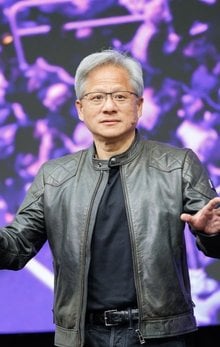
AI will not replace software tools, according to Jensen Huang, Founder, President and CEO of NVIDIA, who has sought to address growing concerns in the technology sector during a period of significant market volatility.
The debate over AI's role in the software industry has intensified in recent days after Anthropic released new specialised plug-ins for its Claude Cowork agent, designed to automate complex white-collar tasks.
The announcement triggered a massive global sell-off in software, legal tech and IT services stocks, prompting questions about the future of traditional software companies.

Understanding AI's relationship with tools
Speaking at the AI conference in San Francisco hosted by Cisco Systems on 4 February, Jensen addressed what he described as a fundamental misconception about the relationship between AI and software tools.
"There is a notion that the tool industry is in decline and will be replaced by AI," he says.
"You could tell because there's a whole bunch of software companies whose stock prices are under a lot of pressure, because somehow AI is going to replace them. It is the most illogical thing in the world and time will prove itself."
Jensen's perspective centres on the idea that software tools remain essential infrastructure for AI systems: "If you were a human or robot, artificial general robotics, would you use tools or reinvent tools? The answer is obviously to use the tools."
This view challenges the widespread market panic that followed Anthropic's announcement, suggesting that AI development will continue to rely on existing software infrastructure rather than making it obsolete.
The future of AI development
Sat alongside Chuck Robbins, Chair and CEO of Cisco, Jensen outlined his vision for the next phase of AI development, which could involve AI systems understanding the physical world and grasping causality.
He explained that, currently, AI cannot understand the idea that if you knock over one domino, it will cause the others to fall over one by one. However, Jensen predicts that this represents the future of intelligence development, enabling AI to understand what the effect of something is and what could come next.
"The industry that Chuck and I have been part of is about creating tools," he says, explaining the opportunity this presents. "We have been in the screwdriver hammer business. For the first time in history, we are going to create what people call labour, but augmented labour."
Jensen illustrated this shift by comparing a self-driving car to a digital chauffeur, noting that the lifetime of digital labour is timeless. This evolution is part of a broader shift towards becoming technology-first, which he explains means "you're dealing with electrons, not atoms and electrons, there's a lot more of them".
NVIDIA's continued AI investment
NVIDIA is demonstrating its commitment to AI through ongoing investment in the sector, continuing to fund startups such as Synthesia.
The company's funding extends beyond startups, with Jensen laying out plans to continue investing in AI powerhouse OpenAI.
Addressing speculation of disagreements between the two firms, Jensen told CNBC: "There's no drama involved. Everything's on track.
"It's complete nonsense. We love working with OpenAI. We are incredibly honoured and delighted to be able to invest in their next round. And so we're privileged that they're inviting us to invest for each one of their rounds.
"We would love to be invited, and we would consider, of course, investing in it."




Executives

Chuck Robbins
Chair and CEO
Jensen Huang
Founder and CEO