Is AI Hindering Applied Materials’ Net Zero Journey?
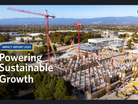
Applied Materials, the California-based semiconductor manufacturer, lays out where it stands on carbon emissions and climate goals in its 2024 Impact Report.
The company continues to chase net zero while expanding its reach and responding to the demands of AI.
Chris Librie, CSO, Head of ESG, Corporate Sustainability and Reporting, Applied Materials, says: “I’m pleased to share that Applied Materials has published our 2024 Impact Report detailing great progress in reducing our Scope 3 emissions (down 24% since 2022), controlling our scopes 1 and 2 emissions in spite of business growth and continuing to invest in the communities where we operate.
“We are transforming the future of technology innovation while we anchor purpose at the heart of our business strategy.”
However, the data shows a mixed picture: the company now uses 73% renewable electricity globally and 100% in the United States, yet Scope 1 and 2 emissions remain 4% higher than its 2019 baseline, mostly due to growing operations.
Renewable energy growth and emissions reductions
Applied Materials is pushing to ensure all its electricity comes from renewable sources by 2030.
With 73% of global operations already running on clean power and the US hitting the 100% mark, the company is on track, if not quite there yet.
Scope 1 and Scope 2 emissions, which refer to direct emissions from company-owned sources and indirect emissions from purchased electricity respectively, are still slightly above the baseline year of 2019.
Despite this, the report highlights success in controlling those emissions while growing the business.
More headway appears in Scope 3 emissions, which cover indirect emissions across the value chain.
Specifically, the firm reports a 27% drop in Scope 3 Category 11 emissions per million USD of gross profit since 2019. These emissions are linked to the energy used by semiconductor products during their lifetime. The company aims to reduce this by 55% per million USD of value added by 2030.
In energy efficiency terms, Applied has already improved energy consumption per wafer pass by 13% since 2019 and is over a third of the way towards its 30% improvement target.
Other environmental milestones for 2024 include an 11% increase in total renewable electricity sources and a 48% jump in on-site solar capacity.
The company also installed a 700kW solar array at its Tainan facility, generating more than 228,000kWh of clean energy in just three months.
- US$3.2bn R&D investment
- US$27.2bn revenue
- 35,700 employees in 207 cities, 24 countries
- More than 20,000 patents
AI and its environmental footprint
Gary E. Dickerson, CEO of Applied Materials, uses his foreword of the 2024 Impact Report to highlight the environmental and social impact of AI as the biggest challenge facing the sector.
He writes: “Tectonic shifts in technology are reshaping our lives and the global economy. Transformative innovations, like artificial intelligence and the internet of things, have near-infinite potential and we’re only beginning to explore what’s possible.”
AI and data-intensive applications bring with them a sharp rise in computing demand, increasing energy usage across the board.
For Applied, the answer lies in developing energy-efficient chips and equipment to keep power consumption in check.
Gary continues: “To scale breakthrough innovations, our industry must confront the environmental and social impacts associated with the exponential advancement of these data-intensive applications.”
He stresses that Applied Materials is in a strong position to lead the charge: “As the world’s leading semiconductor and display equipment company, Applied is uniquely positioned to accelerate our industry’s roadmap and enable more energy-efficient computing.”
That sense of urgency is matched with action. The company has launched an AI-enabled platform to match job opportunities to candidate skills and experience, another example of AI being used to streamline operations.

Supplier emissions and long-term collaboration
Applied Materials says that while its supply chain makes up around 10% of its overall carbon footprint, its wider influence across the industry makes its supply relationships critical.
The report explains that supplier engagement forms a central part of its net zero strategy.
Its SuCCESS2030 programme sets out a decade-long roadmap to strengthen both environmental and social outcomes across its supply chain.
In 2024, Applied gathered greenhouse gas data from suppliers accounting for the top 80% of its spend.
Out of 183 responding suppliers, 109 gave site-level data for Scope 1 and 2 emissions. Nearly 100 said they now have reduction goals in place, including 23 who have adopted science-based targets.
The company isn’t just collecting data – it’s working directly with suppliers to build emissions-reduction plans and offering third-party help in calculating emissions.
“We also engage a third party to help them calculate their emissions data,” the report states.
“In 2024, we began one-on-one conversations with our major suppliers to discuss our net zero aspirations and review their ability to transition their facility and suppliers to renewable energy.”
That supplier-focused effort, combined with internal investments and a deeper look at the footprint of AI, shows where Applied Materials is heading.