Samsung’s Galaxy AI Expansion: Aiming for 400m Devices

Samsung Electronics has announced plans to double the reach of Galaxy AI across its device portfolio, targeting over 400 million handheld devices by the end of 2025.
This ambitious expansion is part of the company’s 2024 milestone of integrating Galaxy AI into more than 200 million devices, beginning with the Galaxy S24 series launch.
The announcement came during Samsung’s Galaxy Unpacked event, where executives outlined their strategy for staying competitive in an increasingly crowded mobile market.
This approach demonstrates how the industry has changed – as software capabilities now matter more than raw processing power when consumers choose their next phone.
Additionally, consumer data shows strong uptake of these features among Samsung’s user base.
According to company figures, over 70% of Galaxy S25 users actively engage with tools developed through Samsung’s partnership with Google.
This collaboration has particularly boosted Google Gemini, Google’s large language model (LLM), which works closely with Samsung’s own apps.
Users becoming dependent on automated features
Research conducted by Samsung alongside Symmetry Research, a technology market analysis firm, proves how these tools have become woven into people’s daily lives.
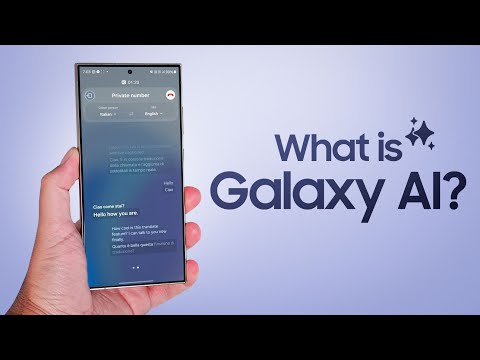
The study finds that 47% of consumers say their routines would be thrown off without features like personalised notifications, search functions and voice assistance.
The way people interact with their phones has changed too.
Samsung’s research shows 45% of smartphone users now talk to their devices as often as they type, marking a fundamental shift in how we communicate with technology.
Mindy Brooks, Vice President of Android Consumer Product & Experience at Google, says: “Through close collaboration with Samsung, Gemini works seamlessly across its devices and connects with its first-party apps to provide helpful and personalised responses.”
Furthermore, the partnership has driven Google Gemini usage up threefold among Samsung device owners, proving there’s real commercial value in tightly integrating software across hardware platforms.
Balancing performance with privacy concerns
Samsung’s expansion includes beefing up on-device processing to tackle growing privacy worries whilst keeping performance smooth.
The technical work spans multiple device types, with specific tweaks for the Galaxy Watch smartwatch range and Galaxy Flip foldable phones to work with their unique designs and capabilities.
The cross-device system ensures everything works together smoothly whilst keeping user data private through local processing rather than sending information to remote servers.
This addresses regulatory concerns about data handling whilst maintaining the quick responses consumers expect.
Meanwhile, features like Circle to Search, which lets users search by circling objects on their screen and Note Assist, which helps organise written content, serve as key selling points in Samsung’s product range.
These tools are designed to keep users engaged and encourage them to stick with Samsung devices across different product categories.
Setting new industry standards
The scale of Samsung’s integration is so grand, it could set new standards for how mobile companies deploy these technologies, potentially forcing competitors to speed up their own development.
The consumer electronics industry increasingly views these capabilities as must-have features rather than nice-to-have extras.
Samsung’s decision to make these features available across various price points, rather than keeping them exclusive to expensive models, also suggests it’s trying to grab market share beyond just premium smartphones.
This democratisation mirrors broader industry trends towards offering similar features regardless of how much consumers pay.
The move is also happening as the industry struggles with questions about where mobile technology heads next.
Some analysts suggest we’re moving towards a “post-smartphone” era, but Samsung clearly disagrees.
Jisun Park, Corporate Executive Vice President and Head of Language AI Team at Samsung, says: “Some see AI as the start of a ‘post smartphone’ era, but we see it differently.”