Freeport-McMoRan Uses AI to Transform Mining Operations
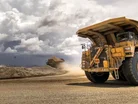
AI is fundamentally reshaping the mining sector, with Freeport-McMoRan Copper & Gold emerging as a frontrunner in deploying AI-driven solutions across its global operations.
The company's strategic integration of machine learning, autonomous systems and predictive analytics signals a broader transformation in how the industry approaches extraction, efficiency and environmental responsibility.
As mining companies grapple with labour shortages, rising operational costs and mounting pressure to reduce environmental impact, AI-powered technologies offer solutions.
Freeport-McMoRan's implementation spans operations from the Grasberg Mine in Indonesia to sites in Morenci and Bagdad, Arizona, demonstrating how intelligent automation can address the sector's most pressing challenges.
The convergence of AI with traditional mining practices creates opportunities for enhanced decision-making, reduced human error and continuous operations.
For Freeport-McMoRan, this technological evolution represents more than incremental improvement – it redefines operational resilience in an industry facing unprecedented complexity.

Autonomous haulage transforms productivity
Freeport-McMoRan's deployment of AI-driven Autonomous Haulage Systems (AHS) across Arizona and Indonesian operations represents one of the industry's most ambitious implementations of intelligent automation.
These autonomous trucks and loaders utilise advanced machine learning algorithms to optimise ore extraction, route planning and maintenance scheduling without human intervention.
The AI systems continuously analyse operational data to determine optimal speed, fuel consumption and routing decisions.
According to company reports, this has resulted in an estimated 18% increase in haulage efficiency and a 22% decrease in accident rates.
The technology enables continuous operations, eliminating shift changes and fatigue-related incidents.
Beyond productivity gains, the autonomous systems generate substantial environmental benefits.
By optimising fuel management through real-time AI analysis, the vehicles reduce greenhouse gas emissions whilst maintaining higher output levels.
This demonstrates how AI can align commercial objectives with sustainability targets.
AI-powered processing and predictive maintenance
Freeport-McMoRan has extended its AI implementation beyond haulage to encompass ore processing and operational forecasting.
The company's Advanced Ore Sorting system employs AI-powered sensors and X-ray transmission technology to enhance metal recovery rates while reducing energy and chemical consumption during extraction.
The intelligent sensors utilise machine learning algorithms to streamline metal separation, delivering an anticipated 12% reduction in energy required per tonne processed, according to company reports.
This approach generates a 20% to 25% increase in processing efficiency while simultaneously lowering emissions and waste volumes.
The company has implemented Digital Twin Modelling integrated with predictive analytics across its operations.
This system combines geological data, sensor feeds and AI simulation to create virtual representations of mining operations, providing early fault detection, maintenance prediction and scenario testing for extraction optimisation.
According to company reports, Freeport-McMoRan anticipates this AI-driven approach will reduce downtime by 30% through proactive maintenance scheduling.
By identifying potential equipment failures before they occur, the system helps avoid costly disruptions while reducing resource wastage.
Intelligence supporting environmental responsibility
Freeport-McMoRan leverages intelligent systems to enhance environmental monitoring and community engagement.
The company has implemented Real-Time Environmental Monitoring using IoT sensors and satellite data, providing continuous oversight of air, water and soil quality surrounding its operations.
This AI-enabled monitoring system offers proactive pollution mitigation through immediate detection of environmental anomalies.
The technology provides transparency for regulatory compliance while offering real-time reporting portals accessible to local communities.

Freeport-McMoRan has integrated renewable energy sources, including solar parks near Grasberg and Morenci operations and wind turbines in South America.
AI systems optimise energy distribution, managing intermittency challenges.
According to company reports, the company anticipates achieving a 30% reduction in fossil fuel reliance and a 40% cut in energy-related carbon emissions.
Advanced water management systems utilise AI to operate closed-loop recycling processes, reducing total water withdrawal by up to 50%.
The company's Community Engagement Platforms incorporate AI-driven analytics to integrate local feedback into mine planning, with Freeport-McMoRan anticipating the creation of more than 1,500 local jobs and supplier contracts annually.
By embedding artificial intelligence across operational, environmental and social dimensions, Freeport-McMoRan demonstrates how mining companies can leverage technology to build resilience and establish new benchmarks for balancing productivity with sustainability obligations.