Tesla’s AI Vision: From EVs to Autonomous Machines
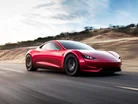
Tesla, known for its ambitious ventures with AI, recorded its largest-ever quarterly dip in vehicle deliveries in Q2 of 2025, with a total of 384,112 vehicles shipped, falling short of projections by nearly 3,000 units.
Despite these figures, the company’s stock value experienced an upward trend, undeterred by the challenges it faces, including a public social media altercation between CEO Elon Musk and the US President, Donald Trump.
While Tesla’s current revenue largely stems from electric vehicle (EV) sales, the company is actively developing a diverse array of innovations, including robotaxis, humanoid robots, solar panels and battery storage solutions.
These initiatives highlight Tesla’s commitment to pioneering advancements in AI and related technologies.
AI’s role in EV market competition
Once dominating the US EV market with a 75% share in early 2022, Tesla’s grasp has since reduced to 43.5% by Q1 of 2025.

Competitors like General Motors are closing the gap, bolstered by their diverse EV offerings across established brands such as Cadillac and Chevy.
“We’re now the #2 EV company in the US, thanks to the dozen EV models we offer across the Chevrolet, Cadillac, GMC Hummer and Buick brands,” says Cassandra Garber, Chief Sustainability Officer at General Motors.
Globally, Tesla’s market share faces competition from Chinese brands like BYD, which led in 2024 with a 22.2% market share, compared to Tesla’s 10.3%.
Other entities such as Wuling, BMW and Li Auto are also emerging as formidable contenders in the EV sector.
Expanding AI’s reach in energy solutions
Tesla has also extended its AI capabilities to its energy solutions, which include the development, manufacture, and installation of photovoltaic solar energy systems.
This strategic venture began with the acquisition of SolarCity in 2016 for US$2.6bn, aiming to form a vertically integrated sustainable energy enterprise.
In 2024, Tesla inked a substantial 15.3 GWh storage contract with Intersect Power to enhance their solar and energy storage project portfolio.
Mike Snyder, VP of Energy and Charging at Tesla, says: “Intersect continues to be an exceptional partner and their development expertise combined with the plug-and-play nature of Tesla’s vertically integrated technology enables the speed and scale needed to enhance grid resilience and support greater renewables integration.”
AI strategies in autonomous vehicle development
Tesla’s robotaxis utilise a different technological approach compared to competitors, leveraging in-vehicle cameras instead of radar and LiDAR technologies used by companies like Waymo and Zoox.
While this camera-centric strategy offers cost advantages, it has garnered its share of critiques from regulatory bodies and the public.
The US National Highway Traffic Safety Administration (NHTSA) has indicated that it doesn’t “pre-approve new technologies or vehicle systems,” requiring manufacturers to self-certify compliance with safety norms as investigations into potential safety deficiencies continue.

In June 2025, when these autonomous vehicles debuted in Austin, Texas, social media footage surfaced showing potential traffic violations, prompting the NHTSA to engage directly with Tesla to address these matters.
Development of AI-powered humanoid robots
Tesla Bot, also known as Optimus, represents Tesla’s foray into humanoid robotics
Initially announced in 2021, these advanced robots are to be powered by the same AI system Tesla is honing for its vehicular technologies.
Elon Musk has expressed his belief in the potential of Optimus to surpass the significance of Tesla’s automotive division.
According to Tesla, Optimus is designed to handle tasks that are unsafe, repetitive or tedious, underscoring the advanced AI technologies it employs in performing such activities.