Did Alibaba Illegally Extract Anthropic’s AI Capabilities?
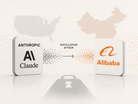
Not so long after China was accused by the White House of industrial scale extraction of western frontier models, comes the unsettling claim from Anthropic, that its Claude model’s capabilities are also being siphoned away.
The controversy comes as the AI startup has accused the Chinese e-commerce and technology giant, Alibaba, of performing distillation attacks on its models.
Anthropic notes that Alibaba performed the largest known instance of such an attack on the company, wherein bad actors are able to steal the knowledge of a proprietary AI system, thereby infringing the intellectual property of the owner of the LLM.
This is done by taking advantage of a legitimate ML training technique called knowledge distillation (KD) where new models learn from bigger, teacher models.
Threat actors use input-output pairs from the LLMs of proprietary AI models to cheaply train their own “student models”.
These attacks (also known as model extraction attacks) are able to mimic the performance of the teacher model, creating a cheap replica of the original.
The accusation was made in a letter dated 10 June 2025, which was sent by Anthropic to Senators Tim Scott and Elizabeth Warren of the U.S. Senate Banking Committee, as seen by Reuters.
The goal here, according to Anthropic’s letter, is to illicitly attain the capability level of Claude Mythos Preview.
In a campaign operating between 22 April and 5 June 2026, the AI giant says that more than 28.8 million exchanges were generated with Claude using about 25,000 fraudulent accounts.
Anthropic points the finger at operators affiliated with Alibaba along with Alibaba Qwen, the company’s AI lab.
Alibaba has not responded to Reuters’ request for comments.
The swiftly closing frontier gap
If the West once had a solid advantage in the AI arms race, new models from China have been questioning their previously unrivalled supremacy.
Case in point is the GLM-5.2 – the flagship model from Chinese startup Z.ai, with benchmark performance closely trailing behind the West’s most celebrated frontier AI.

GLM-5.2 was released a day after Anthropic disabled global access to its most advanced model, following US Government orders.
Z.ai debuted in Hong Kong markets in January and has captured US$128bn in market capitalization following the release of its flagship model.
With plans to divert its renewed funding source in an effort to reach AGI, Z.ai has closed the frontier gap to a matter of mere months.
Swarm of allegations
Accusations of such illicit extraction from Anthropic are not new.
The company had previously claimed that multiple Chinese AI firms were attempting to extract capabilities from its models through large-scale distillation campaigns.
In February, the company alleged that DeepSeek, Moonshot AI and MiniMax collectively generated millions of interactions with its Claude platform, with Moonshot and MiniMax accounting for the largest volumes.
Anthropic said the campaigns had become increasingly sophisticated and warned that countering them would require closer coordination between AI companies and governments.
The issue has also drawn scrutiny in Washington. The Pentagon added Alibaba to its list of Chinese military companies, a designation the company is contesting.
Reuters had exclusively reported that the US Commerce Department has so far held off adding DeepSeek to its trade blacklist, despite an interagency committee reportedly identifying the company as a national security concern, as officials weigh the diplomatic implications of tougher measures against Beijing.