Coherent & NVIDIA: Powering the AI Factories of the Future
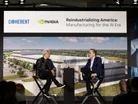
Coherent has officially broken ground on its expanded manufacturing facility in Sherman, Texas, positioning the site at the heart of global AI infrastructure.
The company, which manufactures the lasers, optical components and compound semiconductors that wire AI systems together, operates what it calls the world's first 6-inch indium phosphide (InP) fabrication plant.
The expanded Texas facility is designed to scale the production of these specialised InP wafers, which are crucial for carrying data between chips, servers and data centres at the speed of light.
The start of construction follows hot on the heels of major announcement in March 2026, when NVIDIA invested US$2bn in Coherent to secure supply, deepen research and development, and advance US-based manufacturing.
Inside the Sherman facility
Coherent’s Sherman site is a specialised 6-inch InP semiconductor manufacturing facility.
It produces the advanced compound indium phosphide semiconductors that serve as the foundation for the high-speed networking and optical interconnects required to run modern AI workloads.
The project is set to bring a significant economic boost to the region. Upon completion, the Sherman site is expected to create more than 1,000 jobs, including more than 550 direct advanced manufacturing, engineering and technical roles.
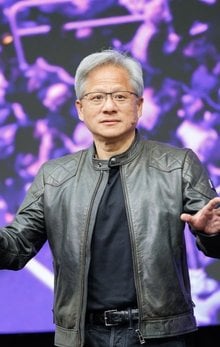
Speaking at the ground-breaking event, NVIDIA’s CEO, Jensen Huang, highlighted the strategic importance of the site at the event.
He says: “Coherent is a world-class company and the work you do is vital to our future, vital to the future of artificial intelligence and vital to reindustrialising the United States.”
Scaling up production
To help finance the expanded Sherman facility, Coherent announced a US$50m federal CHIPS Act grant during the event.
This builds on approximately US$17m in earlier regional support provided by the Texas CHIPS program and the Sherman Economic Development Corporation.
The expansion project will introduce advanced wafer fabrication equipment and additional cleanroom capacity, allowing Coherent to scale up its production of InP-based photonic devices.
According to the company, the expansion will double total manufacturing production space and quadruple overall wafer production capacity.
By significantly increasing the domestic production of these critical AI-enabling technologies, the expansion aims to reinforce American leadership in the technologies driving the broader AI economy.
Jim Anderson, CEO at Coherent, says: “Today marks an important milestone, not just for Coherent, but for American manufacturing and for the future of AI infrastructure.”
Powering NVIDIA's next-gen AI factories
As AI infrastructure scales, connecting hundreds of thousands of processors spread across thousands of feet in a data centre becomes a massive physical challenge. According to Huang, silicon photonics is the only viable solution to this problem.
For example, in the NVIDIA Vera Rubin Ultra NVL576 architecture, which links eight NVLink racks of 72 NVIDIA Rubin Ultra GPUs into a single 576-GPU domain, traditional copper cabling is no longer viable.

As signalling rates climb, the physical distance a metal trace can reliably carry a signal shrinks. Trying to span eight racks using copper would consume excessive power on retimers and signal conditioning, power that data centres would far prefer to allocate directly to compute.
At the massive scale of the NVL576, utilising light is the most power-efficient option available. NVIDIA has partnered with Coherent for nearly two decades to develop these capabilities.
Jensen adds: “AI factories are the infrastructure of the new industrial revolution. Connecting millions of GPUs into one thinking machine requires optical technology built for scale, speed and energy efficiency.
“Coherent has been an important NVIDIA partner for more than two decades, and its expanded InP manufacturing in Texas will help strengthen the US supply chain for the AI infrastructure the world is racing to build.”


Executives
Jensen Huang
Founder and CEO
Jim Anderson
CEO