
Coca-Cola, Nike & Starbucks: Inside Retailers' AI Strategies
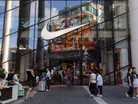
AI has come to retail – and it is transforming everything from how you order your morning coffee to which trainers appear on your phone screen.
From personalised product recommendations to supply chain optimisation, AI technologies are projected to generate a cumulative economic impact of US$22.3tn by 2030, according to IDC’s April 2025 analysis – and that transformation is now unfolding in the world’s most popular stores and shops.
The numbers tell the story, but they do not quite capture the scale of what’s happening.
Some 88% of organisations now report regular AI use in at least one business function, up from 78% a year earlier, according to McKinsey’s State of AI 2025 survey.
But beneath these adoption rates lies something more profound: enterprises are moving from discrete pilots to integrated systems that personalise experiences at scale.
When Santa speaks 26 languages
The Coca-Cola Company exemplifies this AI movement in style.
In just 60 days – that’s two months from concept to global deployment – the beverage giant launched its “Create Real Magic” holiday campaign using Azure AI, enabling conversational interactions with a digital Santa across 43 markets and 26 languages.
Over a million users engaged with the experience in three weeks.
The campaign is part of a US$1.1bn commitment to cloud-based and Gen AI capabilities through an expanded partnership with Microsoft announced in April 2024.
“It all started with an iconic asset and a magical idea,” says Pratik Thakar, Vice President (VP) and Global Head of Generative AI at Coca-Cola.
“We wanted to create a first-of-its-kind holiday campaign by bringing to life the famous Sundblom Santa popularised by Coca-Cola back in 1931.”
The fact that a 133-year-old beverage company can launch a multilingual AI experience faster than most startups says everything about how quickly the ground is shifting beneath retail’s feet.
How AI can find the perfect shoes
Nike’s defining moment came in the 1980s with the launch of Air Jordan, sparked by the signing of Michael Jordan, which transformed basketball footwear and culture.
Now, the company demonstrates AI’s impact – and it does it differently – through physical retail and product innovation that solves problems for customers.
The athletic brand’s House of Innovation flagship stores use RFID technology to identify customers as they enter, offering personalised shopping suggestions based on their Nike profile.

The Nike Fit feature scans customers’ feet using smartphone cameras, addressing the fact that 60% of individuals wear shoes that don’t fit correctly.
That means that more than half of us are walking around in the wrong size shoes.
Digital Commerce 360 projects Nike’s online sales will reach US$8.15bn in 2025, supported by AI-driven personalisation that helps ensure you’re not part of that 60%.
The coffee shop that knows you
Then there’s Starbucks, which has quietly built what may be the most comprehensive AI deployment in retail hospitality.
The company’s Deep Brew platform, launched in 2019, analyses data from 17 million app users to deliver personalised recommendations, optimise labour scheduling and manage inventory across 38,000 stores worldwide.
The AI Tool Report notes that Deep Brew has driven a 30% increase in return on investment and 15% growth in customer engagement.
Mobile orders now account for over 30% of US transactions. That is a fundamental rewiring of how millions of people buy coffee.
Nike’s 100 million Nike Run Club users, Coca-Cola’s billion-dollar AI investment and Starbucks’ seamless mobile ordering demonstrate that AI has moved from infrastructure to interface, from cost centre to competitive advantage.
Real Magic: Coca-Cola’s AI-powered customer engagement
Coca-Cola’s US$1.1bn investment with Microsoft, expanded from an initial US$250m agreement in 2020, positions AI at the centre of its digital transformation.
The “Create Real Magic” holiday campaign exemplifies this change.
Using Azure AI Foundry and global speech services, Coca-Cola created a custom Santa model that conversed in real-time with over a million people in 26 languages across 43 markets – all launched within 60 days.
“We wanted to create something never seen before while staying authentic to our heritage,” Pratik explains. “With Microsoft’s support, we co-created tools to solve complex technical challenges like multilingual lip sync for Santa’s avatar.”
The campaign allowed users to create personalised snow globes based on holiday memories they shared with Santa, demonstrating how AI can create emotional connections at scale.
Beyond marketing campaigns, Coca-Cola employs AI across operations in surprising ways.
The Freestyle touchscreen fountain – those machines that let you mix your own soft drink combinations – is now AI-enabled, collecting customer preference data that informs product innovation and marketing strategies.
Every flavour combination someone creates feeds into the system.
The company analyses weather patterns, purchase history and social media engagement to deliver hyper-personalised campaigns.
Just Do It: Nike’s AI revolution in retail and product design
Nike’s using RFID technology to recognise customers and deliver personalised recommendations based on app data including colour preferences, favourite sports and foot measurements.
Walk in, get recognised, receive suggestions tailored to your actual preferences rather than generic promotions.
The Nike Fit feature tackles a persistent retail problem that’s plagued footwear for generations: 60% of people wear incorrectly sized shoes, with over 500,000 purchasing the wrong size annually.
The technology captures 13 visual data points using smartphone cameras to create accurate 3D foot models, reducing returns and improving customer satisfaction.
But it’s the launch of NikeAI Beta, the conversational AI assistant, that shows a shift in how customers interact with the brand – moving from browsing and searching to simply having a conversation.
“It’s a meaningful shift in how we connect our athletes with products that fit their needs, moments and goals,” says Muge Erdirik Dogan, Executive Vice President (EVP) and Chief Technology Officer (CTO) at Nike.
In March 2025, Nike introduced Nike Adapt Link – the first AI-designed sneaker with embedded machine learning algorithms that adjust to the wearer’s foot in real-time using biometric sensors.
It learns as you move.
Deep Brew: Starbucks’ AI-powered personalisation engine
Starbucks has built AI platforms through Deep Brew and powered by Microsoft Azure.
The system analyses data from 17 million mobile app users and the broader Starbucks Rewards programme to deliver personalised recommendations, optimise store operations and predict inventory needs across 38,000 locations worldwide.
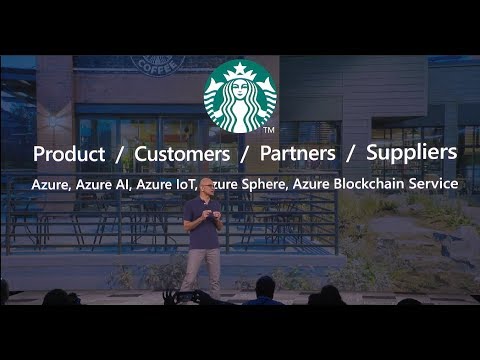
Deep Brew examines purchase history, location data, weather conditions and local events to craft tailored product suggestions.
The AI Tool Report notes that the platform has driven a 30% increase in return on investment and 15% growth in customer engagement compared to previous marketing methods.
“Advanced technology, the ability to deploy quickly and some advanced brains is a really nice unlock for Starbucks,” says Brian Ames, Lead Manager of Data Science and Analytics Operations at Starbucks.
Customisable menu boards at drive-thru locations use AI to suggest items based on weather, time of day, store inventory and individual purchase history.
Former Chief Operating Officer (COO) Roz Brewer previously said: “Every store in every country has its distinctive personality, on top of other factors like weekday, time of day, temperature, amount of traffic."
These variables – thousands of them – were all incorporated into Starbucks’ recommendation system.
The top 10 AI vendors
- Microsoft Azure AI: Enterprise-grade AI platform powering Coca-Cola and Starbucks transformations with foundation models and cloud infrastructure.
- Amazon Web Services (AWS): Market-leading cloud infrastructure with Bedrock, SageMaker and custom silicon for AI workloads.
- Google Cloud Vertex AI: Unified ML platform with AutoML capabilities and BigQuery integration for retail analytics.
- OpenAI: GPT-4 and ChatGPT Enterprise powering conversational AI experiences for consumer brands.
- Anthropic: Claude AI models emphasising safety and interpretability for customer-facing applications.
- Adobe Experience Cloud: AI-powered marketing and personalisation suite used by Coca-Cola for omnichannel campaigns.
- Salesforce Einstein: AI layer embedded across CRM functions for predictive analytics and customer engagement.
- IBM Watson: Cognitive computing platform for customer insights and natural language processing
- Databricks: Unified analytics platform integrating data, analytics and AI for retail intelligence.
- SAP Customer Experience: Enterprise platform with embedded AI for commerce and customer data management.
Company portals










Executives

Dr. Muge Erdirik Dogan
EVP & Chief Technology Officer, NIKE, Inc.