
How Parag Agrawal’s Parallel Web Systems Raised $100m for AI

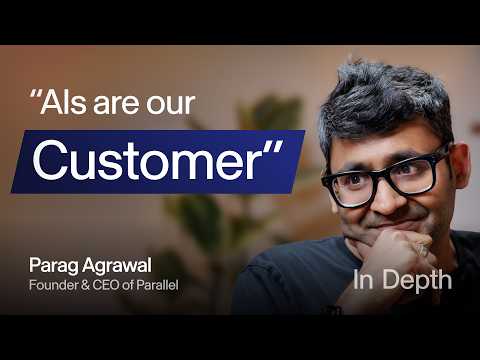
Parallel Web Systems, a startup from former Twitter CEO Parag Agrawal, has secured US$100m in a Series A funding round.
Parallel Web Systems is focused on building web search infrastructure specifically for AI agents. Parag told Reuters the funding will support this development and be used for deals with online content owners.
The investment round was co-led by Kleiner Perkins and Index Ventures with participation from other backers, including Khosla Ventures.
According to a report by The Economic Times, the funding places Parallel Web Systems' valuation at approximately US$740m following an earlier US$30m funding round in January 2024.
In a LinkedIn post announcing the funding, Parallel Web Systems says: “Our mission is to keep the web open, transparent and competitive. We build the best infrastructure for AI agent applications and systems to access and think with the web. Our team is lean. Our ambitions are big.”
AI-specific search and retrieval
Founded in 2023 and officially launched in August 2025, Parallel Web Systems develops application programming interfaces (APIs) that enable AI systems to search the live web for current information needed to perform tasks.
The company’s flagship product, the Parallel Search API, was announced in early November. It is described by Parallel Web Systems as “the most accurate web search for AI agents built using our proprietary web index and retrieval infrastructure.”
Unlike a traditional search engine that provides ranked links for human users, Parallel’s system delivers optimised content designed to be fed directly into an AI model’s context window.
Parallel Web Systems states this method could reduce the occurrence of "hallucinations" or false information and lower operational costs for its enterprise customers.
Parag explained that these customers use Parallel to power AI agents for tasks such as writing software code, analysing sales data and assessing insurance underwriting risk.

Addressing web access for AI
A portion of the funding will be directed toward the challenge of AI systems accessing content behind paywalls and logins. This is a growing issue as more websites deploy measures to prevent AI from scanning their content freely.
Parag told Reuters that Parallel Web Systems intends to create an “open market mechanism”, which would be an economic model designed to give websites an incentive to maintain content accessibility for AI.
He highlights the importance of web access for professional roles and their AI counterparts.
“How many jobs are there where we could turn off web access and ask you to do the same job fully?” Parag says.
He adds: “You can’t deprive an M&A lawyer from not being able to use the web, why would you deprive their agents?”
Uncovering new product functions
The development process at Parallel Web Systems has shown how its tools can be applied in unexpected ways. Pranay Reddy Samala, a Member of the Technical Staff at the firm, shared an example on LinkedIn regarding the company’s Monitor API.
“When we first built the Monitor API, we made the classic mistake of thinking we knew what it was for. We opened up access to the team left for lunch and came back to see that our colleagues had begun testing it out for all kinds of needs,” he explained.
Pranay listed several functions created by team members, including a tool to find a roommate and another to monitor wish lists for price drops. These emergent uses demonstrated the API’s wider potential.
“After watching our team’s creativity run wild, we realised we couldn’t be gatekeeping this. So we launched the API version,” Pranay says.
Pranay adds: “Because the best use cases are the ones that we haven’t even thought of yet.”
Company portals

Executives

Parag Agrawal
Founder