
Nvidia: Behind Sweden's Largest Enterprise AI Supercomputer
European governments are accelerating investments in domestic AI infrastructure as concerns mount over technological dependence on foreign suppliers.
The drive for digital sovereignty has intensified following supply chain disruptions and geopolitical tensions, prompting nations to establish local capabilities in critical technologies.
Sweden now joins a growing list of European countries developing sovereign AI computing resources. France has launched its own national AI strategy, whilst Germany and the Netherlands have announced similar infrastructure investments. All initiatives reflecting broader EU efforts to reduce reliance on American and Chinese technology providers whilst building competitive AI ecosystems.
The semiconductor industry has emerged as the focal point of these sovereignty concerns. Nvidia controls 80% of the global market for AI training chips, creating concentration risks for countries seeking to develop independent AI capabilities. This dominance has prompted governments to seek partnerships that provide access to advanced computing resources whilst maintaining domestic control.
Now, Nvidia has announced plans to build AI infrastructure in Sweden through a partnership with leading Swedish companies including AstraZeneca, Ericsson, Saab, bank SEB and investment firm Wallenberg Investments.
Sweden's largest enterprise AI supercomputer
The initiative centres on establishing what Nvidia terms an “AI Factory” – the project representing Sweden's first major sovereign AI infrastructure investment as European nations seek to reduce dependence on foreign technology providers.

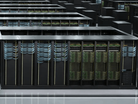
The partnership will deploy two Nvidia DGX SuperPODs featuring the company's Grace Blackwell GB300 systems.
These systems combine central processing units with graphics processing units optimised for AI workloads. Once operational, the installation will constitute Sweden's largest enterprise AI supercomputer.
Wallenberg investments leading industry consortium
Marcus Wallenberg, Chair of Wallenberg Investments, positions the project as essential for Swedish industrial competitiveness. His investments operate as the investment arm of the Wallenberg family business empire, which controls stakes in multiple Swedish industrial companies.
“Investing in cutting-edge AI infrastructure is a crucial step toward accelerating the development and adoption of AI across Swedish industry,” Marcus says.
“This initiative will generate valuable spillover effects – by enabling upskilling, fostering new collaborations and strengthening the broader national AI ecosystem.”
AstraZeneca, the British-Swedish pharmaceutical company, plans to use the infrastructure for drug discovery applications. The company will focus on foundation model training.
Ericsson, Saab and SEB targeting AI model development
Ericsson will leverage the infrastructure to develop AI models for network optimisation and customer experience enhancement, since the company serves billions of mobile network users globally through its equipment and software platforms.
Additionally Saab, the Swedish aerospace and defence company, will focus on integrating AI methodology with defence applications – as the company produces military aircraft, radar systems and other defence technologies for Swedish and international customers.
Meanwhile, SEB, one of Sweden's major banks, will use the infrastructure to enhance customer offerings and operational efficiency. The banking sector has adopted AI for fraud detection, customer service and risk assessment, though regulatory constraints limit some applications.
Nvidia establishing a Swedish technology centre
The project includes establishment of Nvidia's first AI Technology Centre in Sweden – which will support research collaboration between Nvidia and the Swedish partner companies while providing training through Nvidia's Deep Learning Institute programme.
Jensen Huang, Nvidia Founder and CEO, says: “As electricity powered the industrial age and the Internet fuelled the digital age, AI is the engine of the next industrial revolution.”
The Swedish project forms part of Nvidia's global AI Factory strategy, which involves partnerships with companies and governments to establish regional AI infrastructure. The approach addresses growing demand for AI computing capacity while navigating geopolitical concerns about technology access and control.
Nvidia has announced similar AI infrastructure projects in the US, responding to potential trade restrictions under President Donald Trump's administration. The company's international partnerships aim to maintain market access while supporting local AI development capabilities.
The consortium will operate the AI infrastructure through a joint company structure, providing secure and sovereign computing resources to participating organisations. This model allows cost sharing while maintaining domestic control over critical technology infrastructure.
Jensen adds: “Through the visionary initiative of Wallenberg Investments and Sweden's industry leaders, the country is building its first AI infrastructure – laying the foundation for breakthroughs across science, industry and society and securing Sweden's place at the forefront of the AI era.”
Explore the latest edition of AI Magazine and be part of the conversation at our global conference series, Tech & AI LIVE.
Discover all our upcoming events and secure your tickets today.
Also sign up to our free weekly newsletter for the latest insights and stories straight into your inbox.
AI Magazine is a BizClik brand
