Sundar Pichai: Public Right to be Concerned About AI
The AI led layoffs have given the technology and its advocates troublesome public encounters – most notable was the booing of former Google CEO Eric Schmidt by University of Arizona students after the executive praised AI’s potential.
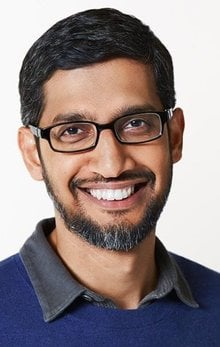
Sundar Pichai, Google's current CEO has since acknowledged that public anxiety around AI is justified. His comments come as young people express concern about how automation could affect their career prospects and the workforce they are entering.
Sundar spoke on the "Hard Fork" podcast ahead of his address at Stanford University in June. He was asked about his "boo strategy" following the University of Arizona incident.
Public concern reflects workforce changes
Sundar says graduates would help shape AI's development whilst also dealing with its consequences. "These graduates are actually both going to be a big part of that driving that progress and also dealing with the impact of that technology," he says.

In the podcast, Sundar was asked about a New York Times poll which found that only 16% of people felt positively towards AI, whereas 35% felt negatively.
Sundar responds: "AI is always viewed as the most profound technology humanity will ever work on. It's progressing at an extraordinary pace."
The CEO said "humans aren't evolved to process that much change" and that people were understandably anxious about the future, as the technology becomes more integrated.
When scaling up the essential AI infrastructure, the CEO notes that there are more things to do to improve how those projects are delivered and operated.
Technology shifts historically improved living standards
While acknowledging the short term troubles, Sundar defended AI's long term potential. He argued that major technology shifts have historically improved living standards and pushed innovation forward, even when transition periods were uncomfortable.
"I've always been extraordinarily optimistic about the next generation," Sundar says, noting that young people face a job market already reshaped by automation and emerging AI systems.
Public resistance to AI integration stems from worries about job displacement and automation reducing entry-level roles. Corporate layoffs linked to AI efficiency have added to these concerns.
Graduate unemployment reaches four-year high
According to Business Insider, unemployment among recent graduates has reached a four-year high as companies adopt AI tools. Several surveys suggest young Americans are becoming more sceptical of the technology's effects on employment and society.
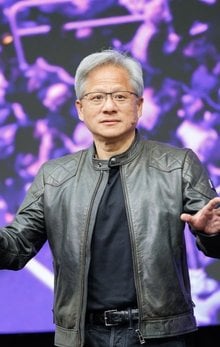
NVIDIA CEO Jensen Huang has previously made similar observations to Sundar regarding the long-term potential of AI. He indicated that this technology shift is comparable to previous shifts in history.
Speaking to graduates at Stanford University, Jensen says: "There'll be more people working at the end of this industrial revolution than at the beginning of it."
Sundar added that decision-making would always be down to the people behind the technology, while admitting that the tech industry had not explained AI's benefits clearly enough to the public.
"I think we as an industry have to do a lot more to continue driving and showing the benefits that's possible with technology," Sundar says.


Executives
Jensen Huang
Founder and CEO
Sundar Pichai
CEO