Uber CEO: Executives are Not Transparent About AI

Executives across the technology sector are pointing to increased productivity and emerging job categories as AI continues its rapid integration into business operations.
However, behind closed doors, a different conversation could be taking place about the scale of workforce disruption ahead.
According to Roland Busch, CEO of Siemens, AI will support and help transform the company's manufacturing operations, while Zoom's Eric Yuan has suggested AI optimisation of routine tasks could lead towards a three-day working week.
Yet these optimistic public statements may not reflect the private discussions happening in boardrooms across the industry.
The disconnect between public and private
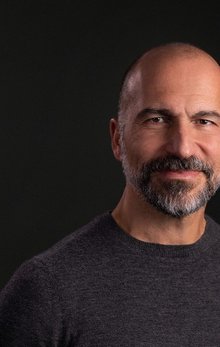
During a recent appearance on The Diary of a CEO, Dara Khosrowshahi, CEO of Uber, addressed the gap between what technology leaders say publicly about AI and their private conversations.
Dara acknowledges this disconnect and reveals he has witnessed multiple discussions between executives about the "sheer amount of disruption" they anticipate from AI, only to see those same leaders tell audiences on channels like CNBC not to expect significant challenges with the technology.

"I understand the incentive," Dara says, explaining that excessive transparency around job displacement concerns could deter potential investors and fundraising opportunities.
His estimates suggest AI could replace the work currently performed by 70% to 80% of humans, with intellectual positions vulnerable within 10 years and physical roles in driving, logistics and robotics at risk within 15 to 20 years.
With 9.5 million drivers and couriers operating on the Uber platform, Dara does not avoid the reality that AI could impact his own workforce, indicating that autonomous vehicles could fulfil the majority of trips.
When questioned about the fate of those 9.5 million drivers in a theoretical era of widespread autonomous driving, Dara's response was simple: "I don't know."
Companies citing AI in workforce reductions
As concerns around AI-driven redundancies mount, some CEOs have already implemented measures to reduce costs through automation.
Block CEO Jack Dorsey eliminated roughly 4,000 positions in February, representing nearly 40% of the company's workforce, in what stands as one of the largest AI-attributed layoffs in technology sector history.
Explaining this decision on X, Jack says AI tools have "fundamentally changed what it means to build and run a company. And that's rapidly accelerating".
Companies including Crypto.com, eBay and Pinterest have similarly referenced AI in recent workforce reduction announcements.
According to Challenger, Gray & Christmas, companies cited AI in 55,000 job cuts during 2025, representing 12 times the figure from 2023.
Some 12,000 AI-linked job cuts have already been announced in 2025, with Goldman Sachs Research placing the baseline displacement estimate at 6 to 7% of the entire US workforce if AI achieves widespread adoption.
However, certain economists remain sceptical, with organisations like Oxford Economics suggesting some companies may be using AI as justification rather than acknowledging tariff impacts, pandemic-era overhiring or profit maximisation strategies.
Integrating AI agents into operations
While Uber has not yet implemented autonomous driving as a customer-facing feature, the company has already begun integrating AI technologies throughout its operations.
According to the company, 90% of Uber's engineers now use AI tools daily, with 30% of users rewriting entire systems from scratch using AI agents.
Customer service operations have also been restructured around agentic AI, with the company replacing rigid, rule-based policies with systems capable of making personalised decisions in real time.
This shift represents a fundamental change in how the company approaches customer interactions, moving away from scripted responses towards more adaptive solutions.
Additionally, employees have created an AI clone of Dara himself, named Dara AI, which is being utilised to rehearse presentations before delivering them to the actual CEO.
When asked during the podcast whether Uber's team might present Dara AI to the board instead of him, Dara responded with amusement that when AI models can learn in real time, "that is the point at which I'm going to think that, yeah, we are all replaceable".