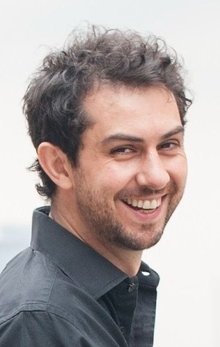
Why WPP’s AI Chief Advocates Researching Conscious Machines

Daniel Hulme, Chief AI Officer at WPP and founder of Conscium and Satalia, has experienced a dramatic shift in his thinking about artificial superintelligence – now believing it could arrive within a decade rather than his previous 40-year estimate.
In an exclusive interview with AI Magazine, Daniel outlines his position that consciousness might serve as a critical safety mechanism in superintelligent systems.
He says: "The question that I'm really asking myself now is: can we – and should we – build a conscious superintelligence?”
Conscium, which Daniel founded 18 months ago, focuses on two key areas: building neuromorphic computing systems that mimic biological brains and verifying AI agents, including testing for consciousness.
Unlike large language models that require enormous power and data, neuromorphic systems use spiking neural networks operating at brain-like efficiency.
"Your brain operates on the power of a light bulb and you learn incredibly quickly," Daniel explains.
At WPP, where Daniel became Chief AI Officer four years ago, he oversees the company's AI platform WPP Open while leading democratisation efforts across the organisation.
He identifies seven distinct "singularities" spanning social, technological, economic, environmental, legal and ethical dimensions, with the economic singularity presenting both the greatest risk and opportunity for humanity.
Company portals

Executives
Daniel Hulme
Chief AI Officer