As AI transitions from experimental code to the backbone of global enterprise, the spotlight has shifted to the physical frameworks making it work.
With supply chain backlogs and soaring data centre energy demands, the competition is no longer just about smarter algorithms. The race for raw physical capability is now reshaping the entire technology sector.
Developing, training and deploying large-scale neural networks requires an unprecedented level of computational power, specialised networking and thermal efficiency.
This article breaks down the industry heavyweights spanning foundational silicon pioneers, hyperscale cloud ecosystems and hyper-optimised hardware manufacturers.
10. Supermicro (AI Servers and GPU Systems)
Founded: 1993
Headquartered: San Jose, California
CEO: Charles Liang
Founded during the early rise of modern data centres, Supermicro has spent more than 30 years pioneering enterprise infrastructure through its custom building blocks.
The company has positioned itself as the hardware bedrock of the technology revolution through its modular server solutions.
Highly regarded for its rapid time-to-market, the company designs and builds hyper-dense GPU systems which are optimised for gen AI training.
As data centre power constraints grow increasingly critical, the pioneering work of Charles Liang in direct-to-chip liquid cooling technology allows enterprises to maximize compute density.
These rack-scale solutions seamlessly bundle compute, storage and advanced cooling into turnkey infrastructure deployments.
9. Hewlett Packard Enterprise (HPE AI Infrastructure)
Founded: 2015 (HPE)
Headquartered: Spring, Texas
CEO: Antonio Neri
Launched in a rented garage, Hewlett Packard Enterprise was co-founded by Bill Hewlett and Dave Packard in 1939. Today, it brings an expansive hybrid-cloud vision to the enterprise landscape, focusing heavily on what it dubs the agentic enterprise.
By integrating its deep supercomputing lineage with the strategic acquisition of Juniper Networks, the company has placed advanced networking at the centre of the stack.
The premier offering from Hewlett Packard Enterprise enables organisations to safely train and govern custom models.
Antonio Neri, who took the reins of the company as its CEO in 2018, ensures that the vast amounts of data crossing the network are processed securely across public, private and edge environments.
8. Dell Technologies (AI Factory Infrastructure)
Founded: 1984 (Dell)
Headquartered: Round Rock, Texas
CEO: Michael Dell
In 2023, Dell Technologies completed a season of unprecedented innovation to build out the world’s broadest gen AI infrastructure portfolio to help lead the AI revolution.
Since then, the company has fundamentally re-engineered enterprise IT with its comprehensive AI Factory portfolio.
Designed to streamline the complexities of scaling software, this infrastructure platform brings together high-performance servers, raw storage and native open-source software ecosystems.
Dell focuses on accelerating the deployment of private environments, providing businesses with predictable performance and robust data security.
By collaborating closely with top silicon providers, Michael Dell delivers highly tailored, enterprise-grade blueprints that seamlessly take machine learning projects into full-scale production.
7. CoreWeave
Founded: 2017
Headquartered: Roseland, New Jersey
CEO: Michael Intrator

Designed to tackle the core challenges of deploying AI at scale, CoreWeave operates as a highly agile cloud provider, disrupting traditional computing by offering elite, purpose-built graphics processing infrastructure.
Originally born out of crypto-mining hardware management, the company pivoted completely to provide massive-scale, on-demand GPU compute that is entirely stripped of legacy cloud overhead.
The infrastructure from CoreWeave is explicitly optimised for heavy-duty workloads like large language model training and real-time inference.
Boasting a massive backlog of top-tier silicon, the company led by Michael Intrator serves as the primary computational engine for many of the world’s leading technology laboratories.
6. IBM (watsonx AI Infrastructure)
Founded: 1911 (IBM)
Headquartered: Armonk, New York
CEO: Arvind Krishna
IBM addresses the enterprise market with its watsonx platform launched in 2023. The platform is an architecture purposefully designed for data management, model governance and hybrid-cloud flexibility.
Rather than focusing solely on raw compute numbers, the infrastructure from IBM prioritises data lineage, regulatory compliance and trust.
Clients have access to the toolset, technology, infrastructure and consulting expertise to build or fine-tune and adapt available AI models on their own data and deploy them at scale.
Supported by Red Hat OpenShift, the underlying infrastructure allows corporations to train, validate and deploy models smoothly across complex, multi-cloud setups.
5. Oracle (OCI AI Infrastructure)
Founded: 1977 (Oracle)
Headquartered: Austin, Texas
CEO: Clay Magouyrk and Mike Sicilia

Oracle launched its Oracle Cloud Infrastructure (OCI) AI Infrastructure and supercomputing services for enterprise deployment in 2023. The company has consistently introduced major scaling updates since that time.
With superior compute performance, diverse agentic software services and strict data governance, OCI is built for demanding workloads.
It has emerged as a favourite for training, largely due to its unique, ultra-low-latency networking. By connecting thousands of elite GPUs into massive, bare-metal compute clusters, the platform allows workloads to bypass traditional virtualisation delays.
This hyper-efficient networking fabric allows vast foundational models to train across distributed nodes at incredible speeds.
4. Google Cloud (Google Cloud AI Infrastructure)
Founded: 2008
Headquartered: Mountain View, California
CEO: Thomas Kurian
In early 2018, Google launched its first generation of Cloud Tensor Processing Units (TPUs), officially bringing specialised AI training and inference infrastructure to Google Cloud users.
Now, Google Cloud Platform boasts one of the most vertically integrated stacks in existence, anchored by its proprietary TPUs.
Alongside offering traditional GPU instances, custom-designed TPU pods provide alternative, cost-effective architectures tailored for training gargantuan neural networks.
This underlying hardware directly accelerates the Vertex AI platform, giving developers a comprehensive suite of tools to build, tune and deploy models.
3. Microsoft (Azure AI Infrastructure)
Founded: 1975 (Microsoft)
Headquartered: Redmond, Washington
CEO: Satya Nadella
Microsoft launched Microsoft Azure in February 2010, originally under the name Windows Azure. The company began building its dedicated supercomputing infrastructure in 2019 through a strategic partnership with OpenAI.
As the primary computational muscle behind OpenAI, Azure now features one of the most powerful and tested supercomputers on Earth.
The infrastructure from Microsoft is defined by its scale, utilising advanced networking to link tens of thousands of top-tier accelerators into single, cohesive clusters.
Beyond raw hardware, the platform provides an end-to-end framework complete with robust safety guardrails and automated model fine-tuning.
2. AWS (AWS AI Infrastructure)
Founded: 2006
Headquartered: Seattle, Washington
CEO: Matt Garman
Amazon first used AI for its recommendation engines in the late 1990s and then eventually launched Amazon SageMaker in 2017 to provide dedicated public infrastructure.
The retail giant built these cloud tools after standardising its internal machine learning systems on its own global data networks.
Today, AWS continues to set the benchmark for cloud infrastructure flexibility with its multi-layered approach to machine learning.
The platform offers a highly diverse hardware selection, featuring the latest high-end accelerators alongside its own cost-optimised, custom silicon chips for model training and deployment.
This foundational hardware feeds directly into Amazon Bedrock, a secure service that lets developers easily build applications using a wide variety of industry-leading models.
1. NVIDIA
Founded: 1993
Headquartered: Santa Clara, California
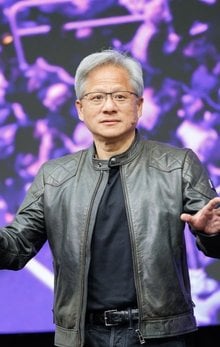
CEO: Jensen Huang

Unquestionably leading the industry, NVIDIA has evolved from a graphics hardware manufacturer into a full-stack computing platform.
The hardware pioneer secured this market dominance by investing billions of dollars into programmable chip architectures long before the generative software boom arrived.
Its Blackwell and Hopper GPU architectures serve as the definitive silicon gold standard, powering virtually every major foundational model in existence.
However, the true dominance of NVIDIA lies in its entire ecosystem, including the CUDA software platform and high-speed interconnects.
Company portals







Executives
Antonio Neri
President & CEO

Arvind Krishna
CEO

Charles Liang
CEO

Clay Magouyrk
CEO
Jensen Huang
Founder and CEO
Matt Garman
Chief Executive Officer

Michael Dell
CEO
Michael Intrator
Chief Executive Officer

Mike Sicilia
Chief Executive Officer
Satya Nadella
Chairman and CEO

Thomas Kurian
CEO