AI deployment platforms bridge the gap between model development and real-world application, ensuring machine learning models operate reliably at scale.
They provide tools for monitoring, versioning and automated scaling, which help maintain performance, reduce errors and manage data or model drift over time.
Here, AI Magazine takes a look at the Top 10 AI deployment platforms, which are accelerating time-to-value, supporting robust MLOps practices and enabling organisations to deploy AI efficiently and securely.
10. Seldon
Year founded: 2014
Headquarters: London, UK
CEO: James Perry
Number of employees: ~100
Seldon specialises in open-source model deployment tooling and monitoring for Kubernetes, enabling organisations to deploy, scale and manage machine learning models in production reliably.
With strong integration with Kubeflow and Istio, Seldon’s platform supports custom inference graphs and promotes observability through metrics and logging, making it ideal for cloud-native enterprises.
9. TensorFlow Serving
Year founded: 2016 (part of TensorFlow ecosystem)
Headquarters: Mountain View, US
CEO: Sundar Pichai (Alphabet)
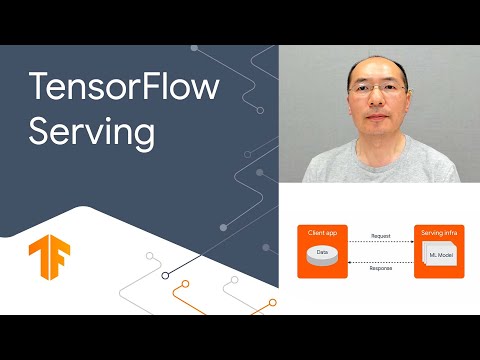
TensorFlow Serving is Google’s flexible, high-performance serving system for machine learning models.
Built to support TensorFlow models in production, it delivers low-latency inference and seamless versioning.
Although it is tightly coupled with the TensorFlow ecosystem, its modular design also allows compatible models from other frameworks, helping teams streamline deployment at scale.
8. Weights & Biases by CoreWeave
Year founded: 2017
Headquarters: San Francisco, USA
CEO: Michael Intrator (CoreWeave)
Number of employees: ~300
Weights & Biases focuses on experiment tracking, dataset versioning and model performance optimisation, with built-in deployment support for models via APIs and cloud endpoints.
Its tools help ML teams monitor model drift and reproducibility in production, bridging the gap between development and deployment with collaborative dashboards and automation features.
7. IBM Watson Machine Learning
• Year founded: 2011
• Headquarters: New York, US
• CEO: Arvind Krishna
• Number of employees: ~270,000
• Revenue: US$67.5bn

IBM Watson Machine Learning offers enterprise-grade tools for deploying models on hybrid cloud, on-premises and multicloud environments.
Integrated with IBM Cloud Pak for Data, it simplifies model governance, scaling and retraining workflows.
Watson’s strength lies in robust security, compliance and support for diverse frameworks, making it well suited for regulated industries.
6. BentoML
Year founded: 2019
Headquarters: San Francisco, USA
CEO: Chaoyu Yang
Number of employees: ~50
BentoML is an open-source model serving platform designed for flexible deployment across cloud, edge and on-premises infrastructure.
It offers a simple Python API for packaging models into production-ready containers or serverless functions.
With native support for many ML frameworks, BentoML accelerates continuous delivery and observability without heavy DevOps overhead.
5. Inference Endpoints by Hugging Face
Year founded: 2016
Headquarters: New York City, USA
CEO: Clément Delangue
Number of Employees: ~600

Hugging Face’s Inference Endpoints provide scalable, managed APIs for deploying transformer and other models with minimal configuration.
Optimised for natural language and vision models, it abstracts infrastructure concerns and offers auto-scaling with pay-per-use billing.
Developers benefit from seamless integration with the Hugging Face Hub and accelerated hardware options.
4. Databricks Model Serving
Year founded: 2013
Headquarters: San Francisco, USA
CEO: Ali Ghodsi
Number of employees: 8,000+
Revenue: US$5.4bn
Databricks’ Model Serving enables production deployment of machine learning models directly from the Lakehouse platform.
It handles autoscaling, version control and REST API endpoints, making it easy for data teams to operationalise models trained within Databricks notebooks and ML workflows.
Databricks' unified approach boosts collaboration between data engineers and ML practitioners.
3. Azure Machine Learning
Year founded: 2018
Headquarters: Redmond, USA
CEO: Satya Nadella
Number of employees: 228,000
Revenue: US$281.7bn

Azure Machine Learning provides a comprehensive platform for training, deploying and monitoring models at scale.
Integrated tightly with the Azure ecosystem, it supports MLOps pipelines, automated ML and edge deployment.
With enterprise security, compliance and global cloud infrastructure, organisations can manage production workloads across diverse environments efficiently.
2. Google Vertex AI
Year founded: 2021
Headquarters: Mountain View, USA
CEO: Sundar Pichai
Number of employees: 190,000+
Revenue: US$350.02bn (Alphabet, 2024)
Vertex AI unifies Google Cloud’s AI offerings into a single platform for end-to-end model lifecycle management.
It delivers robust tools for model training, deployment, monitoring and continuous evaluation with automated scaling and global endpoints.
Vertex AI also integrates with BigQuery and Dataproc ecosystems, facilitating seamless data workflows and strong support for custom and pretrained models.
Google’s strategic investment in AI infrastructure, tooling and generative capabilities positions Vertex AI as a leader for enterprises seeking scalability, hybrid deployment and advanced MLOps in a secure global cloud environment.
1. AWS SageMaker
Year founded: 2017
Headquarters: Seattle, USA
CEO: Andy Jassy
Number of Employees: >1.5 million (Amazon)
Revenue: US$$716.9bn

AWS SageMaker leads as a full-featured platform for machine learning deployment and operations.
It simplifies building, training and serving models with managed endpoints, model monitoring and data drift detection.
SageMaker supports diverse frameworks, automatic scaling and edge deployment via SageMaker Neo, empowering organisations of all sizes.
Its deep integration with AWS services and global cloud coverage makes it the most comprehensive choice for production ML workloads.
With extensive tooling, security and scalability, SageMaker remains the go-to for enterprises aiming to operationalise AI across varied business functions and regions.





Executives
Ali Ghodsi
CEO and Co-founder
Andy Jassy
President and CEO

Arvind Krishna
CEO
James Perry
Chief Executive Officer
Michael Intrator
Chief Executive Officer
Satya Nadella
Chairman and CEO
Sundar Pichai
CEO