How Is Nvidia's Spectrum-X Boosting AI Data Centres?
Nvidia has announced that Meta and Oracle are integrating its Spectrum-X Ethernet networking solutions to enhance the performance of their giga-scale AI data centres.
This adoption by two major hyperscale operators could represent a major expansion of Nvidia’s networking ecosystem, aiming for higher efficiency and accelerated training for large-scale machine learning models across global networks.
The integration is part of a broader industry push to develop next-generation AI facilities capable of connecting millions of graphics processing units (GPUs).
These advanced systems are engineered to handle the demands of trillion-parameter models that require extremely high levels of data throughput and network stability to function effectively.

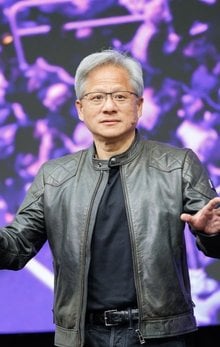
Jensen Huang, Founder and CEO of Nvidia, explains: “Trillion-parameter models are transforming data centres into giga-scale AI factories and industry leaders like Meta and Oracle are standardising on Spectrum-X Ethernet to power this industrial revolution.
“Spectrum-X is not just faster Ethernet – it’s the nervous system of the AI factory enabling hyperscalers to connect millions of GPUs into a single giant computer to train the largest models ever built.”
Purpose-built networking for AI workloads
The move by Meta and Oracle highlights a growing focus on networking architectures specifically optimised for AI.
The Nvidia Spectrum-X platform provides an open and accelerated Ethernet solution that could reduce deployment times and increase overall efficiency.
For AI developers and enterprises, this could shorten the time required to generate insights from complex datasets.
Oracle is set to incorporate Spectrum-X Ethernet switches into its Oracle Cloud Infrastructure (OCI) as a component of new AI supercomputers that will be powered by the Nvidia Vera Rubin architecture.
This collaboration expands Oracle’s cloud offerings to address the increasing global demand for generative and reasoning AI applications.
“Oracle Cloud Infrastructure is designed from the ground up for AI workloads, and our partnership with Nvidia extends that AI leadership” says Mahesh Thiagarajan, Executive Vice President of Oracle Cloud Infrastructure.
“By adopting Spectrum-X Ethernet, we can interconnect millions of GPUs with breakthrough efficiency so our customers can more quickly train, deploy and benefit from the next wave of generative and reasoning AI.”
Open networking and AI infrastructure scalability
Meta is deploying Spectrum Ethernet switches within its Facebook Open Switching System (FBOSS), a proprietary software platform for managing network switches across its extensive data centres.
This integration is designed to improve network efficiency, support faster AI model training and preserve the flexibility of Meta’s established open networking strategy.
Gaya Nagarajan, Vice President of Networking Engineering at Meta, says: “Meta’s next-generation AI infrastructure requires open and efficient networking at a scale the industry has never seen before.
“By integrating Nvidia Spectrum Ethernet into the Minipack3N switch and FBOSS, we can extend our open networking approach while unlocking the efficiency and predictability needed to train ever-larger models and bring generative AI applications to billions of people.”
Meta's decision could indicate a wider trend toward customisable high-performance networking platforms that can adapt as AI technologies continue to evolve.
The Spectrum-X Ethernet platform
The Nvidia Spectrum-X Ethernet platform, which consists of Spectrum-X Ethernet switches and Spectrum-X Ethernet SuperNICs, is the first Ethernet solution developed specifically for AI data centres.
It is engineered to allow hyperscale operators to connect millions of GPUs with high data throughput.
According to Nvidia, the platform has achieved 95% data throughput on large-scale AI supercomputers through its congestion-control technology.
This compares to standard Ethernet, which Nvidia states typically operates at around 60% throughput in similar conditions due to issues like packet collisions and flow limitations.

This increase in performance could mark an advance in the economics and design of AI-scale networking.
The platform includes features such as adaptive routing, congestion management and AI-driven telemetry.
These are all designed to maintain efficiency and predictability across complex AI training and inference clusters.
As AI workloads become more demanding, hyperscalers are increasingly focused on networking innovation to manage performance and control operational costs.
Company portals




Executives
Jensen Huang
Founder and CEO
Mahesh Thiagarajan
Executive Vice President, Oracle Cloud Infrastructure