
What Role AI and Robotics Play in bp’s Oil Production
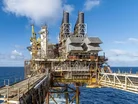
Energy infrastructure generates immense value, yet conventional extraction methods leave significant volume untapped. Saudi Aramco’s Ghawar Field demonstrates the incredible scale of upstream assets with its output of nearly four million barrels of oil daily.
However, vast operational inefficiencies remain standard across the sector. International Energy Agency (IEA) data indicates that conventional recovery techniques extract roughly 30% of reservoir reserves, stranding the remaining 70% below ground.
For large-scale producers, applying incremental technological refinements across entire fields unlocks substantial production gains. British supermajor bp demonstrates this approach, reporting that digital integration drove a 2% annual production rise over the last five years.
That growth delivers approximately 20,000 additional barrels of oil equivalent each day. Furthermore, the firm credits its automated and intelligent systems with preventing an average of 4% of overall production from dropping offline.
By deploying AI, advanced analytics and autonomous systems, bp extracts far more value from its natural reserves and physical assets. Subsurface mapping through seismic imaging represents one of the most effective applications of these technologies.
Seismic imaging and digital models drive speed
Recent computational breakthroughs allow operators like bp to deploy 4D seismic imaging. This method provides engineering teams with an AI-enhanced view of reservoir movements over extended periods.
The company also utilises virtual rock modeling, creating digital rock representations from physical core scans. Subsurface specialists use these computer models to run AI-assisted fluid simulations within days, replacing physical testing that historically required months.
Ricky Burns, Transformation & Technology Manager at bp, highlights how these predictive models accelerate delivery schedules.
“When we have higher confidence in what’s under the ground, we can work to bring production online safer and more quickly,” he explains.

Real-time monitoring supports operational flow
Maintaining seamless operational flow becomes the priority once extraction begins. To optimise daily operations, bp runs Optimization Genie, an AI-driven platform that continuously analyses real-time field data.
The software translates complex field metrics into actionable recommendations for engineers, suggesting precise adjustments for valve settings and flow rates.
Intelligent automation also streamlines well restarts following system maintenance or unexpected shut-ins.
The company says: “bp’s Well Startup Tool models scenarios and suggests options to enhance safety and promote speedier turnaround for bringing wells back online, helping us to reduce the time production is idle and get it back to peak sooner.”
Offshore infrastructure relies on similar real-time data feeds. In the Gulf of America, fibre optic cables spanning the full length of wellbores stream live fluid tracking data back to engineering hubs.
Jean-Charles Dumenil, who leads production technology delivery at bp, emphasises that high-quality data directly improves operational decision-making.
“Better insights lead to better judgement and the potential to produce more barrels,” Jean-Charles says.
Robotic inspection and digital twins reduce idle time
Unplanned equipment breakdowns on offshore platforms cause expensive chain-reaction delays across entire assets. Specialist monitoring teams constantly analyse operational metrics like pressure and fluid velocity to spot failures before they happen.
Autonomous machinery increasingly handles this frontline surveillance work. In the Gulf of America, compact shoebox-sized inspection robots explore underwater platform structures, eliminating the need to send human divers into hazardous environments.
This automated inspection initiative is projected to cut millions of dollars from maintenance budgets over a four-year period. Overseas in Azerbaijan, bp deploys task-based robotics alongside aerial drones, supported by a complete digital twin of its nine Caspian Sea platforms.
Engineers use this virtual platform model to run diagnostic simulations and execute maintenance planning remotely. Following success offshore, the organisation is evaluating plans to expand digital twin modeling to its onshore Sangachal Terminal.
Marianna Kerimova, Transformation & Technology Manager at bp, identifies safety and operational clarity as the key measures of success for these tools.
“It delivers its greatest value when it keeps people safe, removes complexity and helps teams make better decisions,” Marianna explains.
These individual technological implementations yield cumulative performance gains across global sites. Herlinde Mannaerts-Drew, SVP Upstream Research & Development at bp, notes that sustained investment in digital transformation is generating clear returns.
“Years of focused technology integration is now paying off, helping to lift production and set new performance records in parts of the business,” Herlinde says.
Company portals
Executives

Herlinde Mannaerts-Drew
SVP of Upstream Research & Development

Jean-Charles Dumenil
Senior Principal Portfolio Delivery Manager - Digital Technology for Oil & Gas Production & Regions

Marianna Kerimova
Transformation & Technology Manager

Ricky Burns
Transformation & Technology Manager