What’s Behind Microsoft’s US$2.5bn AI Operating Business?

Keeping up with the pace of AI adoption is no longer an option for enterprises as businesses around the world are transforming their operations to focus entirely on delivering measurable outcomes.
Organisations have moved well beyond experimentation, understanding the critical importance of integrating technology to scale capabilities. They are now concentrating on achieving a clear return on their investments while ensuring their intellectual property remains secure.
To address these global demands, Microsoft is launching a new operating business called Microsoft Frontier Company to focus on delivering end-to-end transformation through advanced engineering for international clients.
Backed by a US$2.5bn investment, the entity will embed 6,000 industry and engineering experts directly at customer sites to co-design, deploy and continuously improve AI systems at scale.
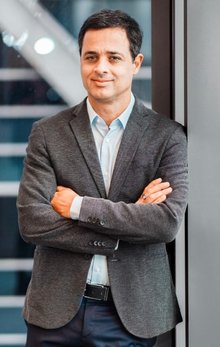
In a blog published on 2 July, Judson Althoff, CEO at Microsoft Commercial Business, revealed that the new organisation will be led by Rodrigo Kede Lima, who has spent the past six years at the company.
Outpacing traditional FDE models
The new business will provide a unique combination of skills inclusive of deep industry knowledge, change management and continuous improvement experience and enterprise-grade AI engineering expertise.
According to Judson, this offering goes beyond what has been labelled as Forward Deployed Engineering (FDE) and will be the largest, most capable, outcome-driven engineering organisation in the industry.
To achieve the scale, Microsoft will work closely with its partner ecosystem to extend this unique value to customers across all markets and segments globally.
The business has robust FDE partnerships with Global SI partners that include Accenture, Capgemini, EY, KPMG, PwC and others.
Since last November, Judson has been quite vocal about how he believes Intelligence + Trust to be the two most important components of any AI solution and how customers can use different levers to manage cost.
He says: “Companies need to establish an intelligence platform so their unique IQ – their proprietary data, expertise, workflows and decision-making processes – compounds over time from within, using their choice of models to build AI solutions and workflows.
“They need a trusted platform that allows them to observe, govern, manage and secure AI solutions across every layer of the technology stack, using FinOps to assess their ROI.”
Enterprise AI engineering expertise with deep industry knowledge is therefore required to build a system that acts as a continuous loop of improvement between the two platforms to fine-tune agentic business processes.
This loop ensures that a customer’s intelligence compounds over time and delivers real business outcomes.
Yielding measurable market results
An end-to-end Frontier Transformation approach enables customers to amplify their IQ with AI while refining their differentiated value in the markets that they serve.
Early results are already demonstrating a meaningful impact across several global organisations.
For example, Microsoft engineers and industry experts partnered with LSEG to embed AI into LSEG Workspace. This deployment helps finance professionals ask complex questions and get quick answers across structured and unstructured financial content.
The solution is underpinned by a foundation that is iteratively refined through client feedback and real-time user testing that accelerates each cycle and steadily improves model quality and scope.
This same differentiated approach is also delivering measurable outcomes for Land O’Lakes, Unilever and Novo Nordisk on individual corporate transformation journeys.

- Microsoft’s US$2.5bn investment in Microsoft Frontier Company will scale enterprise AI engineering globally
- The new operating business embeds 6,000 industry and engineering experts directly inside customer organisations
Keeping customer IP protected
The customer’s IQ being protected is central to the new organisation.
Their data, intellectual property and competitive advantage will not be used to train models in ways that commoditise what differentiates them in their industry.
Recently, Satya Nadella, CEO of Microsoft, stated that there is no societal permission for an AI future that eats the intelligence of the companies it is deployed inside. Microsoft built Microsoft Frontier Company to make sure that does not happen.
Judson adds: “We protect that intelligence with a model-diverse, open, heterogeneous AI platform. Customers shouldn’t be locked into a single model any more than they should be locked into a single technology vendor.
“Microsoft’s platform gives organisations the flexibility to run the right model for each scenario – whether it comes from OpenAI, Anthropic, Microsoft AI, open source or a specialised model tuned for a specific industry – without ceding control to any one of them.”
Rodrigo will oversee these secure operations as the President of Microsoft Frontier Company, bringing 30 years of industry experience to the role.










Executives
Judson Althoff
Chief Commercial Officer and CEO of Commercial Business
Rodrigo Kede Lima
Member of the Board of Advisors - The Edwards Deming Center
Satya Nadella
Chairman and CEO