What Does OpenAI's New Chief People Officer Plan to Change?
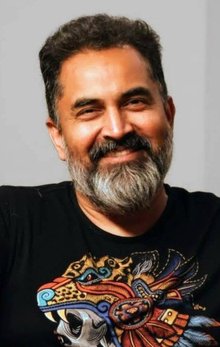
OpenAI has just appointed Arvind KC as its Chief People Officer. The move comes at a time when the organisation is not only scaling rapidly but also fundamentally rethinking its workforce operations and its employee development.
Arvind joins from Roblox, where he served as the gaming company's Chief People & Systems Officer, taking over from Julia Villagra who departed in September 2025.
His arrival could mark a pivotal moment for OpenAI as it balances explosive growth with the need to preserve its mission-focused culture while embedding AI deeper into daily operations.
Fidji Simo, CEO of Applications at OpenAI, said in a company statement: "We believe the way we scale OpenAI should reflect the future we're helping to create. KC will play a key role in ensuring our people processes, policies and systems match our ambition while preserving the culture and operating principles that have helped us get here."
AI-native workforce development
The challenge facing Arvind is significant. OpenAI has experienced extraordinary growth, with annual revenue surging from US$30m in 2020 to an estimated US$13bn-US$20bn in 2025.
This rapid expansion has occurred alongside a fundamental shift in how the company approaches work itself, with AI capabilities increasingly changing operational workflows.
OpenAI has already begun embedding its own tools within employees' daily workflows, ensuring that staff use the technology to enhance their efficiency.
This represents more than simple automation; it could signal a broader transformation in how technical teams operate when AI becomes a core collaborator rather than just a tool.
Arvind's background spans senior leadership roles across people and IT functions at companies including Google, Meta, Palantir and Roblox.
According to OpenAI, this dual expertise provides him with crucial context for understanding how high-performing technical teams function, allowing him to develop people strategies that can sustain the company's culture whilst embracing AI-driven change.

Reskilling for an AI-powered future
Central to Arvind's remit will be preparing OpenAI's workforce for an increasingly AI-enabled era. The company has developed OpenAI Academy, which is designed to democratise AI learning and skills such as prompt engineering across the organisation.
This investment in employee development comes as the company acknowledges what it describes as an "obligation" to ensure talent growth keeps pace with technological advancement.
The OpenAI residency programme exemplifies this approach. The six-month, in-person initiative helps researchers transition into AI roles, effectively reskilling talent for more advanced AI development work. These programmes could become increasingly important as the nature of work itself evolves.
"This is a moment where every organisation is being asked to rethink how work happens, what teams need, how people grow and how to adapt as the tools change," Arvind said recently in a statement.
"I'm excited to join OpenAI as we work through those questions ourselves, and alongside our ecosystem of users, customers and partners building the future with us."
Navigating the superintelligence transition
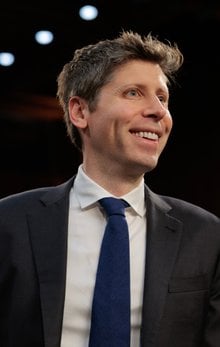
The appointment comes as OpenAI CEO Sam Altman has made striking predictions about AI's potential to surpass human capabilities.
At the AI Impact Summit in New Delhi, Sam said: "AI superintelligence at some point on its development curve would be capable of doing a better job being the CEO of a major company than any executive, certainly me".
These projections have translated into concrete operational changes. In January 2026, Sam shared at a town hall event that the company is planning to reduce its hiring processes. He said: "We are planning to dramatically slow down how quickly we grow because we think we will be able to do so much more with fewer people".
This statement could suggest that OpenAI anticipates AI tools enabling greater productivity with smaller teams, fundamentally altering traditional approaches to workforce scaling.
For Arvind, the challenge will be managing this transition whilst ensuring employee growth, maintaining culture and developing people strategies fit for an AI-native organisation. His role could prove central to how successfully OpenAI navigates what may be one of the most significant workplace transformations in corporate history.
Company portals

Executives
Arvind KC
Chief People and Systems Officer
Fidji Simo
CEO, Applications at OpenAI
Sam Altman