How OpenAI Led Google to Rethink its AI Strategy

The AI competition between technology companies took a sharp turn in November 2022 when OpenAI released ChatGPT to the public.
Within days, millions of people were experimenting with conversational AI and the technology market had fundamentally changed.
Google, despite years of AI research and development, found itself playing catch-up.
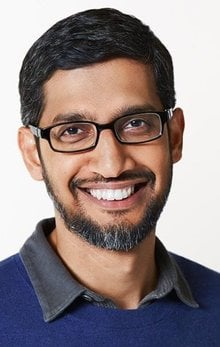
Sundar Pichai, CEO of Google and its parent company Alphabet, admits his company was still working on its own chatbot when OpenAI moved first.
Speaking at Dreamforce, the annual conference hosted by Salesforce, the enterprise software company, Sundar says: “We were making a lot of progress, but credit to OpenAI, you know, they put it out first,” he says.
Google had been building AI capabilities for decades, yet the startup backed by Microsoft beat it to market with a product that captured public attention immediately.
Google chatbot was months away from launch when OpenAI released ChatGPT
Sundar reveals the company’s internal timeline when ChatGPT appeared: “We knew in a different world, we would’ve probably launched our chatbot maybe a few months down the line,” he says.
The delay came down to standards. Google had a chatbot ready, or nearly ready, but the technology wasn’t quite there.
Large language models (LLMs), which power ChatGPT by processing vast amounts of text to generate human-like responses, were still producing too many errors.
“We hadn’t quite gotten it to the level where you could put it out and people would’ve been okay with Google putting out that product,” Sundar says.
He adds there was “a lot of risk putting it out at that point”.
This reveals the challenge facing established technology companies.
OpenAI could afford to release a product with flaws. Google, with its reputation and billions of users, faced different expectations.
The risk of getting it wrong was considerable.
The New York Times reported that Google issued a “code red” following ChatGPT’s popularity, with Sundar directing teams to prioritise commercial AI prototypes and products.
How ChatGPT’s launch opened the window for Google’s AI strategy
Marc Benioff, CEO of Salesforce asked how Google responded when OpenAI took the lead.
Sundar’s answer is unexpected. Rather than viewing ChatGPT’s launch as a crisis, he saw it as an opening.
“Contrary to belief,” he says, he was pleased when ChatGPT launched because “the window had shifted”. If OpenAI could release imperfect technology, so could Google.
The company moved quickly. “We had been building this tech for so long, we were so AI native,” Sundar says.
“I had decided to take a full stack approach to AI, we were investing all the way from infrastructure, we built our own chips, we had world class research teams: Google Research, Google Brain, Google DeepMind.”

Google merged these research operations to develop Gemini, its answer to ChatGPT.
The investments spanned custom silicon chips called Tensor Processing Units, designed specifically for machine learning (ML) and research teams including DeepMind, the London-based AI laboratory that Google acquired in 2014.
Sundar describes the period as the “biggest opportunity in technology” and says his goal was to “seize the moment and execute well as a company”.
The company introduced Gemini in December 2023, positioning it as capable of handling text, code, audio, image and video.

At Dreamforce, Sundar confirms that Gemini 3.0 will arrive later in 2025, though Google has not set a date.
He also discusses a US$15bn investment in a data centre outside the US that runs on 80%clean energy.
The competition shows no signs of slowing. Sundar draws a comparison to the social media boom that followed YouTube and Facebook.
“Big tech firms will continue to compete and release AI developments,” Sundar says.
Company portals



Executives
Marc Benioff
Chair & CEO

Sam Altman
Sundar Pichai
CEO