Waymo: Pioneering Advanced AI in the Real World
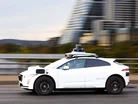
AI is moving from theoretical application to real-world deployment at an unprecedented scale.
Waymo, the autonomous vehicle company formerly known as the Google Self-Driving Car Project, has secured a US$16bn investment round, valuing the company at US$126bn. The funding could signal a pivotal moment for AI-driven transportation technology as it prepares for global expansion.
The investment provides Waymo with additional capital to expand its AI-powered autonomous taxi services to more cities in 2026, including New York, Tokyo and London.
Waymo currently operates in six US cities: Atlanta, Austin, Los Angeles, Phoenix, San Francisco and Miami. The company aims to expand to 20 more cities in 2026, targeting a September launch for its full taxi service in London.
Alphabet, Google's parent company, serves as the main investor. Significant investors also include Dragoneer Investment Group, DST Global and Sequoia Capital.
AI technology enhancing road safety
The AI systems powering Waymo's vehicles have been refined through extensive real-world testing. During test drives, safety drivers are positioned in the front seat of Jaguar vehicles. However, when the service officially launches to customers in London, potentially by September, the vehicles will be unmanned.
Waymo's AI systems have clocked up 127 million miles (204 million kilometres) of rides, surpassing 15 million rides in 2025 with a fleet of 1,000 robotaxis in San Francisco and 700 in LA. The company has achieved a 90% reduction in serious injury crashes compared to human drivers, according to Waymo's data. This demonstrates how machine learning algorithms can process road conditions and react faster than human reflexes.
"Waymo has brought autonomous driving from science fiction to reality," says Saurabh Gupta, Co-Founder of investor DST Global. "It's saving lives already, with significantly fewer serious injury crashes compared to human drivers."
"Autonomous driving, led by Waymo, will have a profound impact on how we live and work, including reimagining cities. We are excited to partner with Tekedra, Dmitri and the Waymo team to be a part of this future."
Economic potential of AI mobility
The UK Government estimates Waymo's arrival in the UK could create 40,000 new jobs and add £42bn (US$57.6bn) to the economy by 2035.
These projections suggest that AI-driven transportation could generate significant economic activity beyond the technology sector itself.
Konstantine Buhler, partner at Sequoia Capital, said: "As a technology leader in the trillion-dollar transportation market, Waymo has moved beyond research milestones to achieve operational excellence, tripling its weekly paid rides in just one year while maintaining customer delight."
“Waymo is an exceptional business, leveraging its compounding data advantage to usher in a new era of transportation and a safety culture that can save millions of lives. We’re excited to partner with Tekedra, Dmitri and team as they expand the magic of the Waymo Driver to 20 additional cities and beyond."
Waymo's plans for a September 2026 full-service launch on the streets of London could offer a more convenient, albeit more expensive, option for families as they attempt to navigate the capital. A Waymo spokesperson told the BBC that pricing would be "competitive" but "premium", and would rise at peak times.
According to TechCrunch, Waymo's average price for a ride is around US$20 in San Francisco, which equates to about £15, while Uber and Lyft's driver-operated rides were around US$15 (£11) for the same journey.
Competition in autonomous AI systems
Uber and Lyft are also expected to launch robotaxi services in the UK. Both have previously announced partnerships with Chinese company Baidu, which operates what it claims is the world's largest autonomous ride-hailing service.
The deployment of AI-powered autonomous vehicles at scale could represent a test case for how AI systems integrate into complex, safety-critical public infrastructure. The technology's ability to navigate regulatory frameworks across different jurisdictions may prove as significant as the technical achievements themselves.
The competitive landscape in autonomous vehicles demonstrates how multiple technology companies are racing to establish market dominance in AI-driven transportation. As these systems mature, the focus will shift from technical capability to operational efficiency and customer adoption.
The global expansion of autonomous vehicle services marks a significant milestone in the practical application of artificial intelligence. The success or failure of these deployments will likely influence investment and regulatory approaches to AI systems in other sectors.



Executives
David Risher
Chief Executive Officer
Konstantine Buhler
Partner

Saurabh Gupta
Managing Partner