
A New Labour Model: Salesforce to Spend US$300m on Anthropic
Salesforce had announced in 2025 that the company would halt hiring software engineers, attributing the decision to productivity improvements from AI tools in development workflows.
The company now plans to invest US$300m in Anthropic tokens during 2026, with the majority allocated to coding applications, says CEO Marc Benioff, speaking on the All-In podcast.
Marc has clarified his position since the initial announcement. He now describes AI as a tool that transforms engineering work rather than eliminating the need for human developers.
The company maintains approximately 15,000 engineers who work alongside AI systems including Anthropic models, OpenAI Codex and Cursor.
OpenAI Among the Companies Affected by TanStack Breach
AI companies faced fresh exposure to supply chain attacks in May 2026 when threat actors compromised popular software repositories used across the industry.
The Mini Shai-Hulud campaign targeted npm and PyPi ecosystems that underpin AI and software development infrastructure. One of the firms targeted by the latest breach is OpenAI, showing vulnerabilities in how AI companies manage development security.
The attack began on 11 May when threat hroup named TeamPCP published malicious packages to software repositories. TeamPCP is a financially motivated threat cluster responsible for previous supply chain attacks including Trivy and Checkmarx KICS incidents.
"The Wiz research team has been responding overnight to the latest in the many waves of TeamPCP activity," Rami McCarthy, Principal Security Researcher at Wiz, writes on LinkedIn.
“Attackers were able to exploit a GitHub actions vulnerability to publish malicious versions of popular TanStack npm packages. From there, we've seen additional attacks and community spread across @opensearch-project/opensearch, @uipath/, @mistralai/, guardrails-ai and other packages across both npm and PyPI.”

CrowdStrike: AI Puts Financial Sector in the Crosshairs
Financial institutions remain lucrative targets for big-game-hunting (BGH) cybercriminals seeking quick payouts because they hold assets of immense value.
CrowdStrike’s 2026 Financial Services Threat Landscape Report finds that hands-on-keyboard intrusions have surged 43% globally over the past two years, rising to 48% for North American firms.
The report attributes much of this growth to adversaries exploiting trusted identities and software-as-a-service applications to bypass traditional defences.
Adam Meyers, Head of Counter Adversary Operations at CrowdStrike, says: “Financial services organisations face threats from every direction and AI is making each of them harder to stop.
“The cost to create convincing identities, automate reconnaissance and accelerate credential theft is near zero.”
Behind Blackstone's US$5bn Bet on a Google Cloud AI Company
Blackstone and Google have announced a partnership to build AI infrastructure in the US, marking a collaboration between one of the world's largest asset managers and a hyperscale cloud provider.
The partnership will create a standalone business focused on AI compute services built around Google Cloud's tensor processing units (TPUs).
Blackstone is committing US$5bn in initial equity through funds it manages. The first 500MW of capacity could come online in 2027.
Thomas Kurian, CEO of Google Cloud, says: "This joint venture with Blackstone helps meet growing demand for TPUs, which are optimised specifically for efficiency and performance in the AI era.
"Together, we're accelerating AI transformation and providing more options for organisations to access accelerated compute capability."
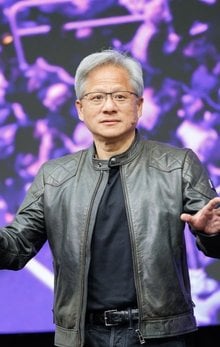
NVIDIA Q1 Revenue Climbs 85% Amid Agentic AI Proliferation
The AI boom has handed record growth to NVIDIA that blew past Wall Street expectations for its Q1 2026 results announced on 20 May.
The chipmaker reported a net income of US$58.32bn or US$2.39 per share in the February to April quarter – a massive gain compared with US$18.78bn or US$0.76 per share in the same period of 2025.
Revenue climbed 85% to US$81.62bn from US$44.01bn year on year.
The results reflected continued demand for the company's AI accelerators and data centre infrastructure components.
Jensen Huang, CEO at NVIDIA, said: "The buildout of AI factories – the largest infrastructure expansion in human history – is accelerating at extraordinary speed."







Executives

Adam Meyers
Senior Vice President, Intelligence
Jensen Huang
Founder and CEO
Marc Benioff
Chair & CEO

Rami McCarthy
Principal Security Researcher

Thomas Kurian
CEO