
Nvidia, Google & Microsoft: Using AI for Weather Forecasting
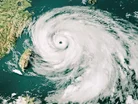
For centuries, humanity has attempted to predict the weather.
Now, AI is being used to make predictions with greater speed and accuracy at a lower cost.
This transformation is enabling organisations, including Google, Microsoft and Nvidia, to transform forecasting.
Beyond deciding whether to risk going outside, weather forecasting is a critical tool for balancing energy grids, optimising transport routes and crucially, reducing disaster mortality.
As climate change fuels more extreme weather, the need for timely and precise forecasts has never been more pressing. Continuous recalibration and forecasting are essential to manage what might happen next.
The World Meteorological Organization (WMO) reports that extreme weather, climate and water-related events resulted in almost 12,000 disasters between 1970 and 2021.
These events led to reported economic losses reaching US$4.3tn. While early warning systems have helped reduce the human cost, economic losses have grown, highlighting the need for better mitigation.
A new generation of AI forecasting models
AI could improve weather forecasts through increased speed, accuracy and cost savings, so research groups and corporations are developing new ways to apply AI in forecasting.
One example is Aardvark Weather, an AI prediction system from University of Cambridge researchers supported by entities like the Alan Turing Institute and Microsoft Research.
It learns directly from data, making it a simple and flexible tool that can be adapted for bespoke forecasts for specific industries or locations.

The University says that using just 10% of the input data of existing systems, Aardvark already outperforms the United States’ national GFS forecasting system on many variables.
Nowcasting, which focuses on the immediate hours ahead, can enhance disaster preparedness. It uses real-time information from sources like weather radars to predict sudden high-impact events.
Recognising this the WMO’s Integrated Processing and Prediction System is collaborating on an AI for Nowcasting Pilot Project (AINPP).
This project brings together experts from national meteorological services, universities and major private-sector companies like Google, Microsoft and Nvidia to advance the technology.
- Google - WeatherNext
- Microsoft - Aurora
- Nvidia - Earth-2
- IBM - Environmental Intelligence Suite
- Amazon - AWS
- Huawei - Pangu-Weather
- Alibaba Group - DAMO Academy’s “Baguan” model
- Fujitsu - supplies supercomputer for Japan Meteorological Agency
- Atos - BullSequana
- HPE - Cray EX systems
Corporate giants and their AI weather platforms
Tech industry leaders are heavily invested in developing proprietary AI-driven weather models.
Google’s WeatherNext is a family of AI models from Google DeepMind and Google Research. Google states they are “faster and more efficient than traditional physics-based weather models and yield superior forecast reliability.”
Carrie Tharp, Vice President at Google Cloud, says WeatherNext will change how businesses use AI for critical operations affected by weather, including planning for retail inventory and logistics disruptions.
By making WeatherNext available to its Cloud customers, Google aims to help businesses in sectors from energy to retail prepare for extreme weather.
Pete Battaglia, Director of Research for Sustainability at Google DeepMind, explains that it “puts companies in the driver’s seat to proactively prepare for extreme weather.”
Additionally, Microsoft has developed Aurora, a foundation model from Microsoft Research designed to forecast a wide range of environmental events.
As a foundation model with over a billion parameters, it is not limited to weather. It can be specialised for tasks like predicting air pollution or tropical cyclones, often with greater precision and at a lower cost than traditional methods.
“We’re just giving a large deep-learning model the option to learn whatever is most useful,” says Megan Stanley, a Senior Researcher at Microsoft Research AI for Science.
Accelerating prediction with advanced AI
Nvidia’s contribution is Earth-2, a cloud and GPU platform for building and running AI-accelerated weather and climate digital twins.
Its microservices include FourCastNet, an AI model that emulates atmospheric dynamics at low cost.
It also includes CorrDiff, a generative model that can turn coarse global data into kilometre-scale guidance. Nvidia says CorrDiff is up to 1,000 times faster and 3,000 times more energy-efficient than traditional methods.
Another component of StormCast is a Gen AI model that emulates high-fidelity atmospheric dynamics. This enables reliable weather prediction at a scale critical for disaster planning.
The potential for such technology is not going unnoticed. Tom Hamill, Head of Innovation at The Weather Company, described storm-scale ensemble weather forecasts as “one of the grand challenges of numerical weather prediction.”
Tom notes that “StormCast is a notable model that addresses these challenges,” and that The Weather Company is excited to collaborate with Nvidia on developing and using these models.
Company portals








Executives
Carrie Tharp
VP Global Solutions & Industries - Google Cloud
Peter Battaglia
Senior Director