
Schneider Electric: Tackling AI's Surging Energy Demands

Schneider Electric has positioned data centres as fundamental to its strategic response to the energy demands of artificial intelligence, as the company seeks to address both rising electricity consumption and climate concerns.
Speaking at Schneider's 2025 Innovation Summit in Copenhagen, CEO Olivier Blum detailed the company's transformation into what it describes as the world's leading "energy technology company", moving away from its traditional identity as an equipment manufacturer.
The French multinational is investing substantially in data centre technologies, digital platforms and connected infrastructure to tackle what could be one of the most substantial infrastructure challenges facing the industry.
Olivier says: "Energy is both the blood of modern life and a bulwark against its greatest threat: climate change."

Rising AI demands drive consumption
The expansion of artificial intelligence, automation and Internet of Things devices could trigger a 60% increase in global electricity consumption over the next 15 years, according to Olivier.
Data centres represent some of the most energy-intensive infrastructure within this landscape.
This pressure creates what Olivier characterises as "the new normal" of power volatility and unpredictable pricing, which could drive requirements for more adaptive and intelligent infrastructure.
Schneider's data centre focus addresses these evolving needs.
The company is advancing what it terms "software-defined power" – programmable energy systems within data centres that could optimise power distribution and performance dynamically.
This technology aims to support both hyperscale facilities and edge data centres as they manage variable demand whilst maintaining continuous operation.
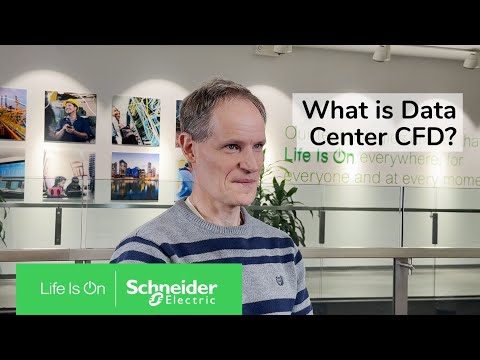
Beyond electrical efficiency, Schneider is developing AI-enhanced cooling solutions.
Liquid cooling and HVAC systems are engineered to maintain high-density server racks at safe operating temperatures without consuming excessive energy.
Schneider's SpaceLogic Room Controller employs embedded artificial intelligence to manage energy consumption in smart buildings.
Whilst designed for commercial property applications, comparable intelligence is being integrated into data centre operations to minimise energy waste.
Digital infrastructure and innovation
Olivier presents Schneider's EcoStruxure platform as the digital foundation for this industry shift.
This open, IoT-enabled architecture connects data centre systems, energy analytics, automation capabilities and remote management within a unified framework.
EcoStruxure currently operates across more than 1 million buildings and is deployed in 40% of hospitals globally.
Within data centre environments, it functions as a control layer spanning hardware and software, utilising real-time monitoring to optimise power and thermal systems.
Schneider submits more than 1,400 patent applications annually, with an increasing proportion focused on data centre applications.
From predictive maintenance platforms to scalable cooling infrastructure, this research and development effort targets facility operators confronting capacity constraints and sustainability objectives.
Olivier emphasises that grid infrastructure must become "more agile to handle volatility and renewables".
Schneider's solution combines microgrid advisory services and real-time automation designed to balance shifting loads.
The company's strategy acknowledges that energy consumption will continue rising, particularly in AI-intensive applications, and relies on technology to reduce environmental impact rather than constraining demand.
Sustainability targets and supply chains
Schneider positions itself as a sustainability leader, extending this commitment to its data centre portfolio.
The company reports a 75% reduction in its Scope 1 and 2 emissions – encompassing direct and operational emissions – since 2017, verified by the Science Based Targets initiative.
Scope 3 emissions, generated throughout its supply chain, present ongoing complexity.
Schneider operates the Zero Carbon Project, targeting decarbonisation across its supplier network, alongside the Materialize programme, which focuses on customer efficiency.
Through its venture capital division, SE Ventures, valued at more than US$1bn, Schneider supports start-ups developing green technologies, including energy storage, cooling systems and grid software relevant to data centre operations.
Schneider's network encompasses over one million professionals, including electricians and system integrators, who implement its platforms across mission-critical infrastructure such as hyperscale facilities and industrial sites.
"We can't just react to these changes – we must lead," Olivier says.
Whether Schneider can balance accelerating data centre expansion with decarbonisation timelines could prove the defining challenge.
As artificial intelligence shapes both computing requirements and energy consumption, Schneider's transition from manufacturer to energy technology partner could represent a substantial shift in how digital infrastructure navigates environmental imperatives.
Company portals

Executives

Olivier Blum
Chief Executive Officer