Samsara: Are AI Dashcams the New Seatbelts?

For decades, seatbelts faced resistance before becoming a legal requirement in the UK. Today, their role in saving lives is unquestioned.
Kingsley Hughes-Moran, Senior Director of Engineering for the EMEA region at Samsara, believes the transport industry is at a similar turning point, arguing that AI dash cams should become the “digital seatbelts” of modern fleets.
Here, he explains why mandating AI-powered safety technology could define the next generation of transport safety.
What makes AI dash cams comparable to seatbelts in terms of safety impact?
Seatbelts revolutionised road safety as a physical restraint that protects people when a crash happens. Over the years, they have saved countless lives.
To me, AI dash cams are the modern equivalent. But instead of using mechanical engineering to save lives in the event of a crash, we’re using digital engineering to prevent that incident from happening in the first place.
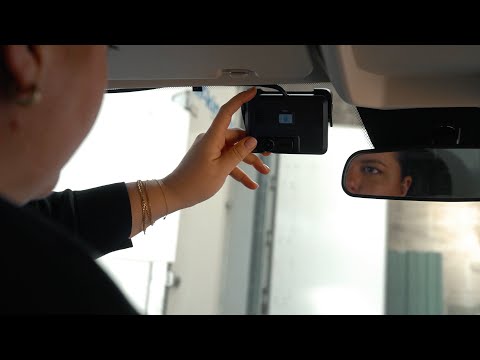
AI dash cams – smart cameras that use AI to analyse and react to driving in real time – can spot if a driver is using a phone behind the wheel and provide a preventative alert. They can detect if attention is drifting or if a driver is about to nod off. They are, quite literally, a life-saver.
What are the main barriers to mandating this technology?
While legislative timelines remain the primary hurdle, the regulatory landscape is finally starting to shift.
In January 2026, the UK Government published its Road Safety Strategy, which set out an ambitious roadmap for improving vehicle safety. Part of that includes "taking advantage of technology, data and innovation for safer vehicles and post-collision care" to help save lives.
What’s more, the Parliamentary Advisory Council for Transport Safety (PACTS) – which was instrumental in lobbying for seatbelt legislation in the 1980s – is an advocate for technology, including the introduction of AI-based roadside cameras and in-vehicle monitoring systems.
But I’m also pleased to say that many of the fleet managers I speak to aren’t waiting for a mandate. They already see the benefits and are introducing this technology across thousands of vehicles to protect their teams.
How do you balance safety benefits with privacy concerns?
Modern systems incorporate privacy by design, adhering to strict rules around encryption, GDPR and access controls. We also provide functionality that enables drivers or fleet managers to disable cameras during their breaks or when visiting sensitive sites.
For many drivers, the safety benefits far outweigh privacy concerns. One of our organisations shared a real-life example of AI-based drowsiness detection in action: a driver was nodding off just as the forward-facing camera picked up standing traffic ahead. Without the alert that woke him in time, he would have run into those vehicles. Similarly, we have customers whose drivers won't enter a cab without a Samsara dash cam installed.
There is always a balance to be struck and responsible vendors will do what is necessary to protect data. But when technology can intervene and prevent a serious incident, safety must take precedence.
What role should the government play in adoption?
While the government may eventually mandate certain safety features, it also plays a role in shaping the conditions for wider adoption. That means setting clear standards, building a strong evidence base and giving industry the confidence to invest in these technologies.
Education is also vital. Helping operators, drivers and the wider public understand how these systems work – and that they are there to coach and protect, not just monitor – is just as important as the technology itself.
How might AI dash cams evolve to further improve road safety?
Today, AI dash cams act as a second set of eyes by detecting risk in real time. The next step is to use data to identify patterns and intervene even earlier. I can also see that data being fed into connected traffic systems to help build a clearer picture of risk across road networks.
Looking further ahead, AI dash cams will be part of an increasingly automated driving experience. But before that happens, their biggest evolution will be their ubiquity. No cars are built today without seatbelts and most of us don’t think twice about using them. The same will soon be true of AI dash cams. Just like seatbelts, they will be responsible for saving countless lives.