PwC: US CEO's Forthright Message About AI Adoption

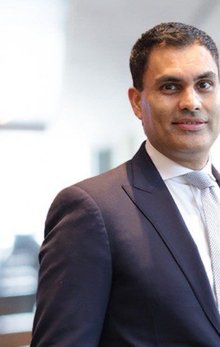
Since taking on the role of US CEO at PwC in 2024, Paul Griggs has outlined the firm's shift towards an AI-first operating model, signalling that automation could reshape the delivery of audit and consulting services across the professional services sector.
The consulting giant is working to transform portions of its tax and consulting offerings into AI-driven tools that clients can access "in the first steps, without a PwC person in the loop", potentially through a paid annual subscription model.
According to Paul, senior staff who are "paranoid about being AI-first" could face replacement by colleagues who are more willing to adopt the technology. He says that employees who believe they can avoid engaging with AI are "not going to be here that long".
With AI continuing to reshape the professional services landscape, the firm is taking steps to prepare for potential disruptions ahead.
The Big Four firms – Deloitte, EY, KPMG and PwC – have historically recruited junior employees to handle administrative work, a practice that could be impacted as AI tools begin delivering services directly to clients without requiring additional human intervention.

Tools designed for clients
PwC recently introduced PwC One, an AI-powered platform offering multiple automated services for clients. These include an anomaly detection system capable of identifying issues in a company's sustainability data.
The platform could provide clients with cost-effective access to the firm's knowledge across areas such as mergers and acquisitions, due diligence and tax regulations.
Paul says that, by delivering these tools directly to clients, tax and consulting services can be accessed "in the first steps, without a PwC person in the loop".
According to PwC, users can expect additional services to be integrated into the PwC One platform over the coming months.
Human judgement remains central
Looking ahead, PwC says AI integration within its platforms is intended to enhance professional judgement rather than eliminate it, enabling PwC's teams to dedicate more time to strategic analysis and business decision-making.
Consulting sits among the industries that experts predict could be transformed by AI advancement, given the technology's capacity to automate tasks including accounting, research and business problem analysis.
However, data indicates that major consulting firms such as PwC, Accenture and McKinsey are gaining from clients who need assistance with AI implementation. According to K2 Consulting Research, global consulting grew by 5.5% in 2025, representing double the growth rate from the previous year.
Despite concerns surrounding automation and potential job losses, Paul says that PwC's employment approach will continue as a "net acquirer of talent" even as AI changes its operational practices.
In a company post published on LinkedIn examining the future of professional services, he says: "Our view is straightforward: AI raises the floor. Humans raise the ceiling.
"Technology can accelerate routine analysis and connect information in powerful ways. But judgment – understanding context, interpreting signals, navigating ambiguity and building trusted relationships – remains fundamentally human."
AI becomes operational standard
AI adoption is accelerating throughout the consulting sector, transitioning from experimental uses to becoming an operational requirement.
Speaking about the trajectory, Raj Abrol, CEO of Galytix, describes this evolution as unavoidable: "AI is here to stay, and the sooner businesses wake up to this fact, the better. The technology is set to bring sweeping changes to the way organisations manage risk and decision-making."
Paul continues: "What is changing now is the pace of the world around us. AI is fundamentally transforming how insight is generated and how decisions get made.
"PwC One reflects how we are evolving alongside that shift – combining advanced AI with the judgment, experience and trust our clients rely on. Our ambition is simple: to help clients move faster, see further ahead and shape what comes next."


Executives
Paul Griggs
PwC US Senior Partner and CEO
Raj Abrol
Co-founder and CEO