PwC: How is Investment in Semiconductors Driving AI & EVs?
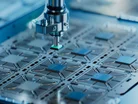
The semiconductor industry is experiencing an extraordinary expansion, driven by the increasing workload demands of AI applications and a surge in electric vehicle adoption.
This trend is spurring a global investment in fabrication facilities that is projected to exceed US$1.5tn from 2024 to 2030.
This projected figure aligns with the total investments made over the past 20 years, as detailed in PwC's Semiconductor & Beyond 2026 report.
PwC notes that according to SEMI data, there will be 18 new fab construction projects launching in 2025, with most expected to begin operations by 2026-2027.
These initiatives are heavily influenced by governmental actions, like the US CHIPS Act, which alone accounts for over US$630bn in semiconductor supply chain investments across 28 states.
The commitment level from stakeholders is remarkable. In June 2025, Texas Instruments announced a US$60bn investment plan spanning seven US semiconductor fabs, marking the largest US investment in foundational semiconductor manufacturing history.
In tandem, Intel is set to invest over US$100bn across four states, using funds from the Biden administration’s CHIPS Act, which provided them with US$7.86bn in direct funding and US$3bn for secure government manufacturing opportunities.
Glenn Burm, Global Semiconductors Leader and Partner at PwC US, says: “The industry is currently undergoing a rapid transformation, driven by AI advancements, geopolitical shifts and increased government investments.”
Data centres and AI accelerators shift semiconductor demand
The influence of AI technology is reshaping semiconductor demand, with a PwC forecast estimating that the global server market will surpass US$300bn by 2030.
This growth is fueled by the expanding AI workloads, prompting substantial growth in data centres.
According to PwC analysis, the server and network segment is poised to become the largest semiconductor demand market by 2030.
A key portion of this expansion is attributed to AI accelerators now driving approximately 50% of the total segment revenue, a significant increase from its previously modest market share years ago.
Challenging traditional chip manufacturers like Nvidia and AMD, cloud service providers such as Amazon, Google and Microsoft are developing custom AI accelerators optimised specifically for their data centres.
This transformation, along with the proliferation of AI algorithms across various sectors such as financial services and manufacturing, is generating sustainable demand for cost-effective semiconductor solutions.
High-bandwidth memory components are simultaneously flourishing, as industries seek enhanced data processing capabilities to support machine learning applications.
Data centres and AI accelerators shift semiconductor demand
The influence of AI technology is reshaping semiconductor demand, with a PwC forecast estimating that the global server market will surpass US$300bn by 2030.
This growth is fueled by the expanding AI workloads, prompting substantial growth in data centres.
According to PwC analysis, the server and network segment is poised to become the largest semiconductor demand market by 2030.
A key portion of this expansion is attributed to AI accelerators now driving approximately 50% of the total segment revenue, a significant increase from its previously modest market share years ago.
Challenging traditional chip manufacturers like Nvidia and AMD, cloud service providers such as Amazon, Google and Microsoft are developing custom AI accelerators optimised specifically for their data centres.
This transformation, along with the proliferation of AI algorithms across various sectors such as financial services and manufacturing, is generating sustainable demand for cost-effective semiconductor solutions.
High-bandwidth memory components are simultaneously flourishing, as industries seek enhanced data processing capabilities to support machine learning applications.

Semiconductors in the automotive industry
The automotive sector is the second-fastest-growing segment in the semiconductor market, with PwC forecasting a 10.7% annual growth rate.
This increase is largely driven by the rise of electric vehicles and autonomous driving technologies, as cars evolve into more sophisticated electronic devices.
PwC's analysis suggests that hybrid and electric vehicles could comprise 50% of total vehicle sales by 2030, fundamentally transforming semiconductor requirements within vehicles.
This transformation necessitates new materials, with silicon-carbide and gallium-nitride semiconductors poised to replace traditional silicon in electric vehicle power electronics.
These materials offer superior efficiency, power density, and charging speed capabilities.
By 2030, it's anticipated that over 60% of automotive power semiconductors will be composed of gallium-nitride and silicon-carbide, reflecting a significant rise from their current 23%
combined market share.
Consumer electronics bolster semiconductor growth
Beyond the realms of data centres and automotive applications, consumer electronics continue to propel semiconductor demand.
The home appliance sector is projected to grow by 5.6%, according to PwC reports, while markets for augmented reality, virtual reality and personal robots expect even more robust growth rates of 24.5% and 12.9%, respectively, by 2030.
- Global semiconductor fab investments from 2024-2030 will exceed US$1.5tn
- AI accelerators are projected to reach 50% of data centre semiconductor revenue by 2030
- The industry requires an additional 100,000 engineers by 2030
combined market share.
Consumer electronics bolster semiconductor growth
Beyond the realms of data centres and automotive applications, consumer electronics continue to propel semiconductor demand.
The home appliance sector is projected to grow by 5.6%, according to PwC reports, while markets for augmented reality, virtual reality and personal robots expect even more robust growth rates of 24.5% and 12.9%, respectively, by 2030.
AI appliances, ranging from smart refrigerators to robotic vacuum cleaners, are increasing the demand for AI processors and power management integrated circuits.
These devices necessitate local processing to decrease latency and enhance privacy, thus driving demand for edge computing semiconductors.
The PwC report elaborates on five transformative technologies predicted to influence the semiconductor market in the coming years, including Advanced AI and Robotics.
Glenn says: “As semiconductor security bears even more weight on the pace of innovation and economic growth, companies must adopt a forward-looking approach to remain competitive. Through this report, we aim to provide industry leaders, policymakers and businesses with the insights they need to navigate the future of this dynamic sector.”