
Oscars Blocks AI-Generated Films in New Rules
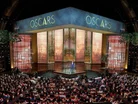
The Academy of Motion Picture Arts and Sciences (AMPAS) is reserving the right to win an Oscar exclusively for human performances and writing in a new rule cracking down on AI.
The Academy clarified that only acting "demonstrably performed by humans" and that writing "must be human-authored" in order to be nominated for an Oscar.
AMPAS, which controls the US film industry’s most prestigious award, laid these out in a new set of rules that will govern the decisions of the 99th Academy Awards in 2027.
Performances, not prompts
The new specifications mark the first time the Academy has established such a requirement on human writing and acting. This shift arrives as industries across the globe move to implement AI.
If a filmmaker uses AI tools in their work outside of acting and writing, such tools should “neither help nor harm the chances of achieving a nomination”.
It adds: “The Academy and each branch will judge the achievement, taking into account the degree to which a human was at the heart of the creative authorship when choosing which movie to award.”
The organisation also reserves the right to request more information about the nature of the use and human authorship if questions arise regarding the use of Gen AI in the creative work being assessed at Oscars.
While advancing technology has been part of filmmaking for many years, with CGI used widely since the 1990s, AI tools are seen more as a method of total automation via simple prompts.

Within the film industry, it has started to mirror human work similar to other sectors. From the posthumous recreation of Val Kilmer for a lead role in an upcoming movie to fake actors gaining global superstardom, Gen AI is increasingly permeating the craft.
The 2023 union strike representing Hollywood writers highlighted the issue of AI usage to write scripts for film and TV studios. However, the Academy did not issue a ban on AI use in films more broadly until recently.
Hollywood outbursts
The Academy’s update on rules come at a time when there has been heated discussions about the ethical use of AI in creative spaces. Many in the film industry have raised their concerns regarding the same.
Matthew McConaughey, a popular actor, recently talked about the possibility of seeing Gen AI rewarded at the Oscars. He said: "It is damn sure going to infiltrate our category. Does it become another category? Will we be, in five years, having the best AI film?”
In 2025, Hollywood actors expressed outrage over gen AI actress Tilly Norwood. SAG-AFTRA, a labour union representing actors, dancers and other creative artists, said: “Norwood is not an actor, it is a character generated by a computer program that was trained on the work of countless professional performers.”
While the Oscars fortify their requirements, the World AI Film Festival (WAIFF) recently took place in Cannes, France.
The festival showcased visions of men with fish scales and seaweed, highlighting a “nouvelle vague” of tech-backed cinema. Marco Fandi, WAIFF founder, suggests Hollywood studios are just scared of the new technology and should rather embrace the evolution.
While the recent rule change does not ban the use of Gen AI from filmmaking, it does limit its role in award recognition, giving precedence to human artistry rather than algorithmic automation.