OpenAI & Broadcom’s 10 GW AI Chips for Global Data Centres

Companies across the AI infrastructure sector are vying to design their own chips, hoping to squeeze out better performance and cut dependence on traditional suppliers.
OpenAI is the latest to make its move, announcing a partnership with Broadcom to deploy 10 GW of custom AI accelerators.
The deal brings together OpenAI’s expertise in building large language models (LLMs) with Broadcom’s semiconductor manufacturing capabilities.
OpenAI will handle the chip design while Broadcom manages production and integration.
The scale of OpenAI and Broadcom’s chip plans
The first systems are expected to arrive in the second half of 2026, with the full rollout completed by the end of 2029.

That 10 GW figure translates to substantial computing power.
For context, one gigawatt could power roughly 700,000 American homes.
The accelerators, which are specialised processors built to handle the mathematical operations that underpin AI models, will be scattered across OpenAI’s own facilities and partner data centres around the world.
Why OpenAI is taking chip design in-house
The decision to design its own hardware is a turning point for OpenAI, which has relied on external suppliers to power its infrastructure until now.
The company believes it can do better by embedding what it has learned from building models like GPT-4 directly into silicon.
“Partnering with Broadcom is a critical step in building the infrastructure needed to unlock AI’s potential and deliver real benefits for people and businesses,” says Sam Altman, OpenAI’s Co-founder and CEO.
“Developing our own accelerators adds to the broader ecosystem of partners all building the capacity required to push the frontier of AI to provide benefits to all humanity.”
Greg Brockman, President of OpenAI, frames the move as essential for pushing capabilities forward: “By building our own chip, we can embed what we’ve learned from creating frontier models and products directly into the hardware, unlocking new levels of capability and intelligence,” he says.
OpenAI now serves over 800 million people each week through ChatGPT and its enterprise products.
That user base has created enormous demand for computing resources – and the company clearly sees custom chips as part of the solution.
Why Broadcom is betting big on Ethernet
The partnership also settles a technical debate that has been brewing in AI infrastructure circles.
The rack systems will use Ethernet networking, a ubiquitous standard for connecting computers, rather than alternatives like InfiniBand that have traditionally dominated high-performance computing clusters.
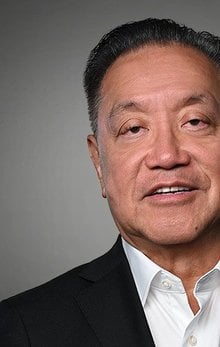
Hock Tan, Broadcom’s President and CEO, sees the deal as validation of that approach: “OpenAI has been in the forefront of the AI revolution since the ChatGPT moment – and we are thrilled to co-develop and deploy 10 GW of next generation accelerators and network systems to pave the way for the future of AI,” he says.
Charlie Kawwas, President of Broadcom’s Semiconductor Solutions Group, explains how the pieces fit together: “Custom accelerators combine remarkably well with standards-based Ethernet scale-up and scale-out networking solutions to provide cost and performance optimised next generation AI infrastructure,” he says.
“The racks include Broadcom’s end-to-end portfolio of Ethernet, PCIe and optical connectivity solutions, reaffirming our AI infrastructure portfolio leadership.”
The systems will include Broadcom’s full suite of connectivity technology, from Ethernet switches to optical links that allow data to fly between racks at high speeds.
The two companies have already signed agreements on co-development and supply – and have now added a term sheet covering the actual deployment of these systems into production environments.
“Our partnership with OpenAI continues to set new industry benchmarks for the design and deployment of open, scalable and power-efficient AI clusters,” Charlie says.


Executives
Charlie Kawwas
President

Greg Brockman
President, Chairman, & Co-Founder
Hock Tan
President and Chief Executive Officer

Sam Altman