Nobel Laureate John Jumper Leaves DeepMind for Anthropic

The AI arms have tightened the tug on the talent war, as front runners compete for the best minds to lead their programmes.
After gaining a decisive monetary lead, Anthropic now seems to be picking from the top shelf when it comes to talent, with the latest addition being a Nobel Prize winner.
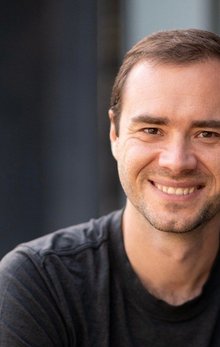
Joining Anthropic is the Vice President of Google DeepMind (GDM) John Jumper who jointly bagged the 2024 Nobel Prize in Chemistry alongside GMD CEO Demis Hassabis for their groundbreaking work on AlphaFold – the AI which solved the protein folding problem massively speeding up drug discovery.
“After nearly 9 years, I have decided to leave GMD and join Anthropic,” John writes in a post on X.
“I am incredibly grateful for my time at GDM. Demis Hassabis took a real chance letting me lead the AlphaFold team just six months after finishing my PhD and the entire GDM team taught me so much about how to do great science.
“GDM is a special place and I’ll still be excited to hear about what amazing things they discover next.”
The genius of AlphaFold
Far from empty promises of the grandeur of AI, AlphaFold – led by John – demonstrated to the world the incredible power of AI, as it cracked what was once considered an insurmountable problem in biology – accurately predicting the three-dimensional structure of proteins from their amino acid sequences.
For decades, scientists grappled with this challenge, known as the “protein folding problem”. The complexity arises from the astronomical number of possible configurations a protein could adopt, a conundrum known as Levinthal's paradox.

Traditional experimental methods such as X-ray crystallography, cryo-electron microscopy and nuclear magnetic resonance spectroscopy were time-consuming and resource-intensive.
AlphaFold 2 changed the game entirely. Using advanced machine learning techniques, it can predict protein structures with near-experimental accuracy in a matter of minutes.
“Thanks John for an extraordinary partnership and wonderful collaboration over the past nine years,” Demis writes on X, replying to John.
“What we achieved with AlphaFold changed the world and showed the field what was possible with AI for science and medicine, lighting the way for how AI can benefit humanity.”
The impact: Alphabet shares plummet 5%
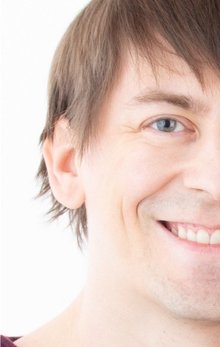
John Jumper's departure came amid a broader reshuffling of talent across the AI industry, with Google also losing Gemini co-lead Noam Shazeer to OpenAI around the same time.
The twin exits unsettled investors, sending Alphabet shares down by around 6%, wiping over US$245bn off the company's market value, according to the Motley Fool. The loss, all in a single trading session is one of the worst declines since the start of the year.
While analysts also pointed to concerns over Google's AI strategy and spending, the episode highlighted how closely investors now associate frontier AI leadership with the ability to attract and retain world-class researchers.
The talent tug of war
Anthropic's recruitment of John Jumper is much more than a simple hiring coup.
It is proof of a strong undercurrent in the AI ocean, where the new battle for frontier AI is one of human wit and Anthropic is leading the charge.
The startup was itself founded by former OpenAI executives, including siblings Dario and Daniela Amodei, who left to build a company centred on AI safety.
Since then, Anthropic has repeatedly lured high-profile researchers from rival labs. Jan Leike, who worked on AI safety at DeepMind before co-leading OpenAI's Superalignment team, joined Anthropic in 2024.
Andrej Karpathy also joined the company earlier this year after stints at OpenAI, Tesla and his education startup, Eureka Labs.
John Jumper's move from Google DeepMind adds another marquee name to a growing roster of researchers who have chosen Anthropic over some of the industry's biggest AI labs.
Much broader than isolated incidents, this trend is reflected in raw data.
SignalFire's 2025 State of Talent Report found Anthropic had become the biggest net importer of elite AI researchers.
The report showed that engineers at OpenAI were eight times more likely to move to Anthropic than the reverse, while the ratio for Google DeepMind was nearly 11-to-1 in Anthropic's favour.
The report also found Anthropic had the highest two-year retention rate among leading AI labs, underscoring its emergence as one of the industry's strongest magnets for frontier AI talent.
Company portals




Executives
Andrej Karpathy
Daniela Amodei
President and co-founder

Dario Amodei
CEO and Co-Founder
Demis Hassabis
Founder & CEO
Jan Leike
Lead for the Alignment Science team
John Jumper
To be Disclosed
Noam Shazeer
To be Disclosed