How the NHS Uses AI and Robotics to Speed Cancer Diagnosis
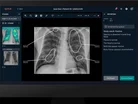
The NHS is launching an AI pilot to help clinicians detect hard-to-spot cancers sooner.
According to the British Medical Association, AI in healthcare spans applications designed to improve efficiency, diagnosis and treatment. The European Commission notes that AI systems can support mammography screening by helping identify early signs of breast cancer.
Lung cancer is another area where AI and robotics can assist with detection.
AI and robotics for cancer diagnosis
Patients with suspected lung cancer could receive answers faster through a new NHS pilot that combines artificial intelligence with robotic bronchoscopy.
The approach uses AI software to rapidly analyse lung scans and flag small nodules most likely to be cancerous, before a robotic camera guides biopsy tools deep into the airways with greater precision.
“Emerging technologies like robotics and AI will be a game-changer for so many people – speeding up access to treatment and delivering improved outcomes for patients which would have been unthinkable even a few short years ago,” says Liz Kendall, Secretary of State for Science, Innovation and Technology.
“This is what it means to be a world leader in technology, leaving no stone unturned to make sure it delivers for every community and that its potential is being harnessed to deliver cutting-edge services which change lives for the better.”
A life-changing pilot
For patients, the impact can be deeply personal. One person who has already benefited from an earlier identification of lung cancer via the NHS pilot is David Lindsay, an IT contractor from Streatham, London.
“The efficient staff scheduled me in for the bronchoscopy in the morning and I went home in the evening. It was quick and painless. I wasn’t worried because all the staff made me feel comfortable and assured,” says David.
“They clearly explained the findings and after a comprehensive discussion, it was agreed that removal of the cancer was the best option in this instance. The operation was a success.

“The deep vein thrombosis was a blessing in disguise because if it hadn’t occurred, I wouldn’t have had the scan and various tests and they wouldn’t have seen the cancer. Who knows when I would have had another check-up and the next time, the cancer may have reached stage 4.
“I’m very grateful and appreciate the work that the NHS and wonderful staff do every day.”
Reaching hard-to-detect cancers earlier
The technology is being trialled at Guy’s and St Thomas’ NHS Foundation Trust and integrates Optellum’s AI risk stratification with Intuitive’s Ion robotic bronchoscopy system in a single end-to-end diagnostic pathway.
“This pilot brings together artificial intelligence and robotic technology as genuinely disruptive tools to simplify and shorten the lung cancer diagnostic pathway,” says Dr Anne Rigg, Medical Director for Cancer and Surgery at Guy’s and St Thomas’ NHS Foundation Trust.
“By combining AI-enabled risk stratification with highly precise robotic biopsy, we are reducing delays and unnecessary steps to diagnosis.
“Crucially, this work is being co-designed with patients and frontline clinical teams, ensuring that the pathway is not only faster, but safer, more equitable and centred on the patient experience.
“Together, these changes have the potential to support earlier diagnosis and treatment for more patients, which is fundamental to improving long-term outcomes in lung cancer.”
Supporting fairer access
The pilot comes alongside plans to expand NHS lung cancer screening so every eligible person is invited for checks within five years, tackling inequalities that contribute to a full year of the nine-year life expectancy gap between richer and poorer parts of England.
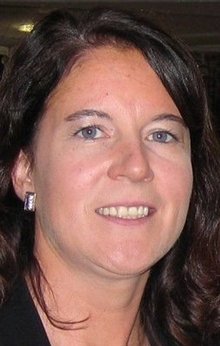
“We welcome the announcement of this pilot project at Guy’s and St Thomas’s, using AI and robotic technology to more accurately and more quickly diagnose lung cancer,” says Dr Jesme Fox, Medical Director at the charity Roy Castle Lung Cancer Foundation.
“Lung cancer, for many, remains a devastating disease. These initiatives mean that more people affected by this disease will be picked up earlier, be diagnosed faster and so have a better outcome from treatment.
“We are delighted that the 2030 timeline for the full roll-out of the Lung Cancer Screening Programme in England, has been reaffirmed. Screening for people at high risk of lung cancer, with low dose CT chest scans, works.
“The programme has already saved thousands of lives, by picking up lung cancer in the early stage, when curative treatment is possible.
“So, if you receive an invitation to take part in the Lung Cancer Screening Programme, do not ignore it.”
More than 1.5 million people have already attended NHS lung health checks since 2021
The programme is expected to invite 1.4 million people next year alone, diagnosing up to 50,000 cancers by 2035.
If successful, the pilot could support the development of a national policy to make robotic bronchoscopy more widely available across the NHS.
“When I was diagnosed with kidney cancer, the NHS saved my life using robotic technology,” says Wes Streeting, Secretary of State for Health and Social Care, UK Government.
“That experience showed me what’s possible when brilliant clinicians have access to cutting-edge innovation, it saves lives.
“Lung cancer is one of the biggest killers in the UK, taking an extra year of people’s lives in the poorest parts of the country. This pilot will help to catch it earlier, replacing weeks of invasive testing with a single targeted procedure.
“For patients waiting anxiously for answers, this speed and precision can be life-changing.
“This is our National Cancer Plan in action, shifting from late diagnosis to early intervention and from analogue to digital, ensuring every patient can benefit from the blend of human care alongside game changing technology, no matter where they live.”
Learn more at our live events
All sustainability, net zero and sustainable procurement leaders should attend:
- Procurement & Supply Chain LIVE: The Net Zero Summit – QEII Centre, London, March 4-5
- Procurement & Supply Chain LIVE: The US Summit – Navy Pier, Chicago, April 21-22
Co-located with Sustainability LIVE, these events bring together CPOs, CSCOs, CSOs, ESG leaders and senior decision-makers at a time when sustainability, supply chains and commercial performance are increasingly interconnected.
Tickets can be booked online today for The Net Zero Summit and The US Summit. Group discounts available.
Company portals

Executives

Dr Anne Rigg
Medical Director for Cancer and Surgery
Dr Jesme Fox
Medical Director
Liz Kendall
Secretary of State for Science, Innovation and Technology

Wes Streeting
Secretary of State for Health and Social Care